
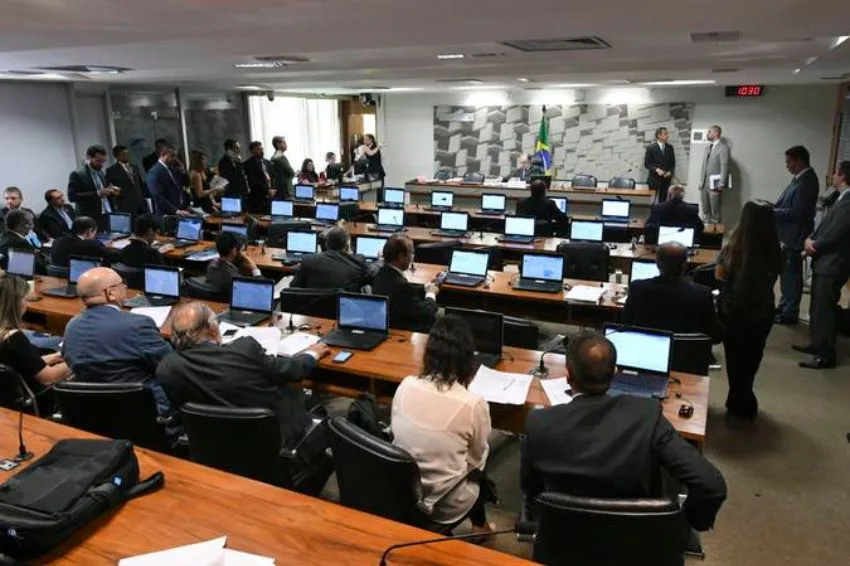
The Senate Economic Affairs Committee approved, this Tuesday (7), a bill which aims to create the National Zero Methane Program. The project now goes to the Environment Committee for analysis.
The proposal seeks to encourage energy generation from urban, industrial, and agricultural waste, as well as to establish the Zero Methane Certificate, which may be granted to projects capable of proving a reduction in methane emissions.
To obtain certification, the text requires that plants submit technical studies, monitor their emissions, and meet the environmental requirements established by the program. The bill also mandates that municipalities with more than 500 inhabitants conduct feasibility studies for the implementation of waste-to-energy technologies.
The proposal also amends the National Solid Waste Policy by establishing that urban cleaning services should prioritize energy recovery solutions where selective collection does not exist. In localities where it already exists, economically viable materials should continue to be destined for recycling.
According to the bill's author, Senator Fernando Dueire (PSD-PE), the measure could stimulate new investments and strengthen recycling cooperatives. "The bill creates an environment of legal certainty and predictability for investments, encourages technologies, and strengthens mechanisms for certification, governance, and the commercialization of environmental credits," he stated.
Which projects could benefit?
The program includes three main methods of energy recovery from waste:
- Anaerobic biodigestion plants, which transform organic waste into biogas for the generation of electricity, heat or biomethane, in addition to the production of biofertilizers;
- Co-processing plants for refuse-derived fuel (RDF), which use waste as fuel in industrial processes, such as cement manufacturing and power generation in thermal power plants;
- Municipal solid waste energy recovery plants (WWEPs), capable of producing energy through thermal or biological processes, reducing the volume of waste destined for landfills.
Among the examples cited in the project is the URE plant in Barueri (SP), which is expected to begin operations in 2027 with the capacity to process 300 tons of waste per year, generating enough energy to supply approximately 320 people.
all the content of Canal Solar is protected by copyright law, and partial or total reproduction of this site in any medium is expressly prohibited. If you are interested in collaborating or reusing part of our material, please contact us by email: redacao@canalsolar.com.br.


Comments
Comments are moderated before publication.Comments should be respectful and contribute to a healthy debate. Offensive comments may be removed. The opinions expressed here are those of the authors and do not necessarily reflect the views of the author. Canal Solar.