
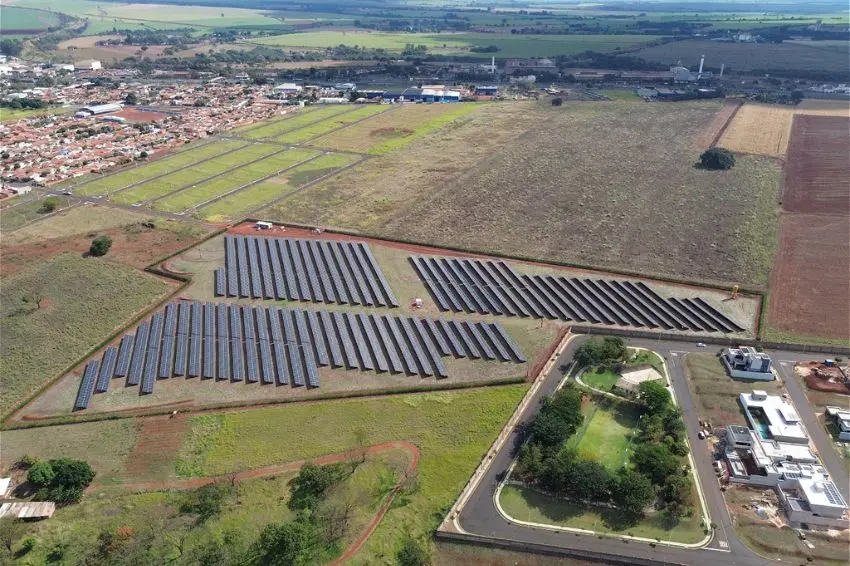
Orbis Energia plans to invest R$ 200 million by 2027 to expand its generation capacity, develop new technologies, and prepare the company's structure for a surge in the number of customers.
Founded in 2018, the company plans to build and operate seven new solar power plants by 2030. With these projects, the installed capacity of its own and third-party assets under management should reach 50 MWp.
The first unit of this new cycle was built in Lavras (MG) and is awaiting completion of the distributor's work before being connected. It is scheduled to begin operating in September.
The expansion plan comes after Orbis doubled its revenue in two years, from R$25 million in 2023 to R$50 million in 2025. In the last 12 months, the volume of energy distributed by the company also grew by 30%.
Currently, the company generates around 2 GWh per month. Half of this volume is destined for its own customer base. The remainder comes from third-party power plants managed by the company.
The strategy focuses primarily on expanding the base of small consumers. Today, 60% of Orbis' customers are residential and 40% are commercial. The goal is to grow from the current one thousand consumers to 50 by the end of 2027.
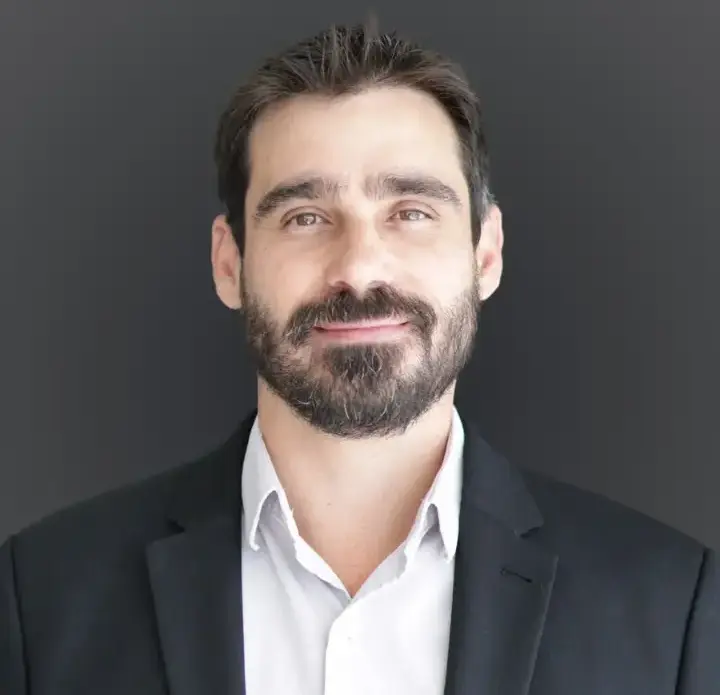
For Hugo Andrade, founder and CEO of Orbis Energia, the next stage of growth in the sector will not be defined solely by who has the most generation capacity, but also by the companies capable of understanding and meeting the demand.
According to the executive, competition for large consumers has reduced market margins. Diversifying the portfolio, while requiring more technology and operational efficiency, can improve the relationship between generation, consumption, and profitability.
"In my view and in the company's view, the next decade will be decided by whoever dominates the cargo market, that is, by whoever knows how to communicate with the end consumer," he states.
In an interview with Canal SolarAndrade explains how his experience in the affordable housing sector helped build Orbis' business model, discusses the challenges of serving thousands of small consumers, and details the company's strategy for growth in a scenario of tighter credit and rising default rates.
To begin, tell us a little about the history of Orbis Energia and its trajectory.
Orbis Energia was founded in 2018 as a personal investment of mine. I worked in the public housing sector. My family owned a construction company, and we are from the interior of Minas Gerais. Back then, solar energy was still seen as the "ugly duckling."
It had a nice sales pitch, but it didn't bring in much profitability. Even so, I decided to invest in the sector and installed my first solar power plant, using the shared generation model, in 2018. It was a 300 kW power plant.
For anyone familiar with the sector, building a distributed generation plant of this size in 2018 was almost like developing a centralized generation project. I looked around and there were practically no benchmarks.
It was very challenging to get the investment off the ground, both from a construction standpoint, because the materials we have today were not readily available, and from an operational standpoint.
The distributor wasn't ready for this market yet. The end consumer also didn't know this type of product. Even so, we had great success with the investment, made on my father's farm in the interior of Minas Gerais.
I liked the sector. Solar energy is a market with great opportunities and has seen significant progress in the last eight or ten years. That's why I decided to stay. Then, we established a PPA with a local college. We installed a system using an operating lease model.
The college uses the system and, after a few years, the asset will become the property of the institution. Since the sector is capital-intensive, those two investments consumed the resources I had available at that time. That's when I decided to apply the knowledge I had acquired in the real estate sector to the energy market.
What was the name of your family's construction company?
MD Predial. The family has already divested from the business, but I worked there from 2011 to 2020. I'm a civil engineer. As soon as I graduated, I returned to my city, Itabira, and worked for the company for nine years.
How has experience in the real estate sector been applied to solar energy?
In our view, a solar power plant involves four pillars: development, construction, investment, and operation or commercialization, usually with the support of a trading company.
I used my experience in real estate development to prospect areas in Minas Gerais and São Paulo and structure projects for investors. That's why Orbis acted as a supporting player for a long time. Perhaps that's why many people didn't see the company on their radar.
We have several clients who have contracted our projects. Today, there are large power plants built in the country that had Orbis' participation in their development phase.
So the company grew by installing solar systems in homes?
No. The company grew by developing projects for investment funds and energy trading companies. A large solar farm is born from a development process. It is necessary to establish a connection with the distributor, complete all the necessary permits, obtain the authorizations, develop the projects, and get the undertaking ready to be built by someone.
The trading company, fund, or professional investor needs to start with a project developed by a company. I like to use an analogy with the real estate sector: every building constructed by someone was developed by the construction company itself or by another company. There is "developed by" and "built by." Orbis is the "developed by" of solar power plants.
What was the volume of projects developed by Orbis?
In terms of magnitude, we have developed approximately 45 projects that have received investments. These ventures total almost R$ 1 billion, approximately 200 MW in power plants, and serve more than 100 customers. These are numbers that make us proud. We are also proud to say that all the projects we have developed were built by someone else.
When did Orbis begin working on the other stages of the projects?
In 2023, we stepped out from the wings and also began building and operating larger-scale power plants. We built two assets in the interior of São Paulo state, in São Joaquim da Barra and Igarapava. These are projects developed by Orbis itself.
We completed the entire process: development, investment, construction, operation, and maintenance. In 2025, we partnered with a real estate fund. We built an asset that is already in operation and are finalizing another in Lavras (MG), which should be connected to the utility's network in September.
The fund still has six other assets to be built. The Lavras power plant is ready, but it hasn't been connected yet. We are waiting for the utility company to complete the work. The connection is expected to be made by September 30th.
What is the installed capacity of the company's own plants and the assets under management?
We have 12 MW of our own capacity. Under management, we have 5 MW from the fund and another 5 MW that should be connected now, reaching 10 MW. There is also 30 MW in the pipeline. Therefore, we should reach 50 MW between our own and third-party assets under our management.
At what stage are the 30 MW of pipeline?
The projects were developed by us and will also be built by Orbis. They are in the final phase of technical studies and permitting. After that, we will proceed with construction, according to the fund's ability to raise capital. The fund will need to issue new bonds to build these assets.
Orbis' portfolio consists of 60% residential and 40% commercial clients. Normally, companies prioritize commercial consumers, who have higher average spending. Did Orbis adopt a different strategy?
Everyone rushed to buy large shipments. When you have a large shipment, you need fewer clients, it simplifies billing, and improves management. But the market is undergoing maturity tests. The period between 2018 and 2026 seems short from a chronological point of view, but for the sector, it's almost a century. In that time, the market has already experienced everything.
Initially, everyone wanted the big clients, and the game was focused on generation. The winner was whoever had the most generation and, consequently, the most energy to offer. The consumer was secondary. Today, whoever controls when and where energy is consumed is worth far more than whoever merely generates it. Load has become the central focus.
When everyone wants a large customer, that customer gains bargaining power. To attract them, it's necessary to offer many benefits. This can destroy value for the generator or for the rest of the process. A balance must be sought.
When Orbis opts for smaller loads, the primary intention is to democratize access to energy. We want to offer renewable energy to people who don't have the capacity to invest in their own system, but who want to save money and participate in the transition to cleaner, more sustainable energy.
From an economic standpoint, the end consumer doesn't demand such a high discount. They want attention, good service, savings, and the opportunity to be part of this movement. It's a market that I wouldn't say is underserved, but one that we value highly.
Orbis' investment plan is moving forward at a time of credit restriction, rising defaults, and regulatory challenges. Why did the company decide to go against the trend of companies selling distributed generation assets?
I come from the social housing sector, which operates on tight margins and demands lean and well-controlled operational processes. I entered the energy market as an investor. Later, we focused solely on development.
Now, we handle the entire chain: development, construction, operation, and management of energy credits. Orbis' vision for the next two- to five-year cycle is to grow with discipline, not at any cost. We've seen companies that raised a lot of money and made big moves.
Perhaps the production chain or the entire work process was not yet prepared to absorb this growth. The industry has spent ten years discussing generation. In my view and in the company's view, the next decade will be decided by whoever controls the load, that is, by whoever knows how to communicate with the end consumer.
Making investments without understanding the cargo load represents a conceptual mismatch. We plan to invest even in a challenging scenario, marked by credit restrictions and other problems faced by the sector, but we remain very attentive to consumption.
That's why we see room for growth. We think about the energy needs of our generation, not just the energy available to meet that demand. Our perspective starts from consumption.
How many clients does Orbis currently serve?
Currently, we serve one thousand clients, including residential and commercial consumers. We aim to reach 50 clients by the end of 2027. It's a very big leap, but there's an explanation. When the strategy is focused on dispersed loads, mainly residential, it's necessary to gather many customers to absorb the energy.
Our portfolio is comprised of 40% commercial establishments, but from a load perspective, this group represents several times the consumption of residential customers. One commercial establishment can be equivalent to 200 residential consumers.
In terms of the number of consumer units, the increase seems very large. In terms of load, not so much. Working with residential accounts requires volume. You need many residences to consume the available energy. This also opens up other opportunities. When we engage with the end consumer at scale, we can unlock new business opportunities.
How does Orbis intend to expand its customer base without compromising the quality of its service?
The sector is undergoing a maturity test. Those with operational efficiency are better able to navigate this cycle. We experienced this in construction and generation. Now, we are seeing the same movement in customer relations.
I like to use an analogy with supermarkets. For a long time, there was only the traditional supermarket. Then, two models emerged: the wholesale/retail hybrid and the mini-market. The wholesale/retail hybrid works with large volumes and lower prices.
The mini-market offers convenience and closer customer service, with smaller volumes per unit, but scalability through multiple stores. In the energy market, the traditional trading company is similar to a wholesale retailer. It has always dealt with large companies.
You might have a portfolio of 500 or 700 clients, but you sell a huge volume of energy because each client consumes a lot. Therefore, the relationship between the trading company and the consumer has always been technical, consultative, and of a high standard. When entering the retail market, the trading company adopts a more intimate supermarket model.
You need to work with volume; you can no longer maintain the same consultative approach for everyone, but you still need to provide good service. It was at this point that the challenges for trading companies and the energytech model emerged, which have a different origin.
They are born with concepts of volume, scalability, and digitization. Trading companies recognized this shift and began acquiring energytech companies. These models complement each other, but this mechanism is not yet perfectly adjusted.
The DNA of marketing companies is consultative, and they need to learn how to work in retail. In our view, whoever manages to get closer to the customer and maintain a closer relationship will dominate this game.
How does this assessment connect to Orbis' strategy?
Our strategy is focused on loading and managing large volumes of data and customers. We are investing heavily in this by 2026. Since 2018, we have been working with client portfolios linked to our own investments, but we had never achieved scale.
Now, we are making progress in our relationship with the end consumer. As in other sectors, we do this through digitalization, the creation of processes and channel flows, and closer engagement with regionally-based consumer groups.
What is the role of subscription-based energy in this strategy?
Energy subscription is a disruptive product. People don't wake up thinking they want to subscribe to this service. When someone moves into a house or apartment, they know they need to get internet access and request electricity and water connections.
But they may not yet know that, just as they subscribe to a streaming service, they can also contract for electricity through a subscription system. The specialized press and the press in general have an important role to play in disseminating this model. We also foresee Orbis' growth by 2027 coinciding with the opening of the free market. This process should encourage more people to adopt the product and become familiar with it.
Will the opening of the free market bring about a discovery effect in energy management?
Yes. That's the big leap we intend to follow. There will be a migration movement both towards the free market and towards the distributed generation model, which have some similarities. Once things reopen, consumers will be focused on the economy and the possibility of making choices.
He will realize that he can participate in this movement. We are paying close attention to the free market because of this. Opening it up should trigger an uptake, leading more people to seek alternatives and save money. In the end, saving money is a desire of all families.
How much does Orbis plan to invest in the coming years?
The plan is to invest R$ 200 million by 2027. The resources will be allocated to projects and the improvement of processes and technologies, preparing the company for this leap forward. I believe that those who master the operation efficiently and have a loyal customer base will continue to grow above average.
It's also necessary to maintain a balance. We've seen large financial movements and groups heavily focused on generation, which may have neglected the need to simultaneously advance in marketing and building a loyal customer base. Generation and charging need to go hand in hand.
In how many states does Orbis operate today?
In two: Minas Gerais and São Paulo.
Will the new projects also be built in those states?
Yes. We will continue in Minas Gerais and São Paulo, which are among the largest markets in the country. The product is challenging from an operational standpoint. There's the work of raising consumer awareness, the regulatory processes, and the relationship with the utility companies. Each distributor has its own way of operating.
If we spread our geographic reach too thin, we risk losing focus. We need efficiency. Orbis's middle name is operational efficiency. To be very good at what we do, we need to become specialists among specialists. Orthopedics, for example, is already a medical specialty, but today there are hand or knee orthopedists. The market demands this level of specialization. We need to be very good at what we do.
all the content of Canal Solar is protected by copyright law, and partial or total reproduction of this site in any medium is expressly prohibited. If you are interested in collaborating or reusing part of our material, please contact us by email: redacao@canalsolar.com.br.
Comments
Comments are moderated before publication.Comments should be respectful and contribute to a healthy debate. Offensive comments may be removed. The opinions expressed here are those of the authors and do not necessarily reflect the views of the author. Canal Solar.