
Researchers working at the forefront of an emerging photovoltaic technology are thinking ahead about how to scale, implement and design future solar panels so they are easily recyclable.
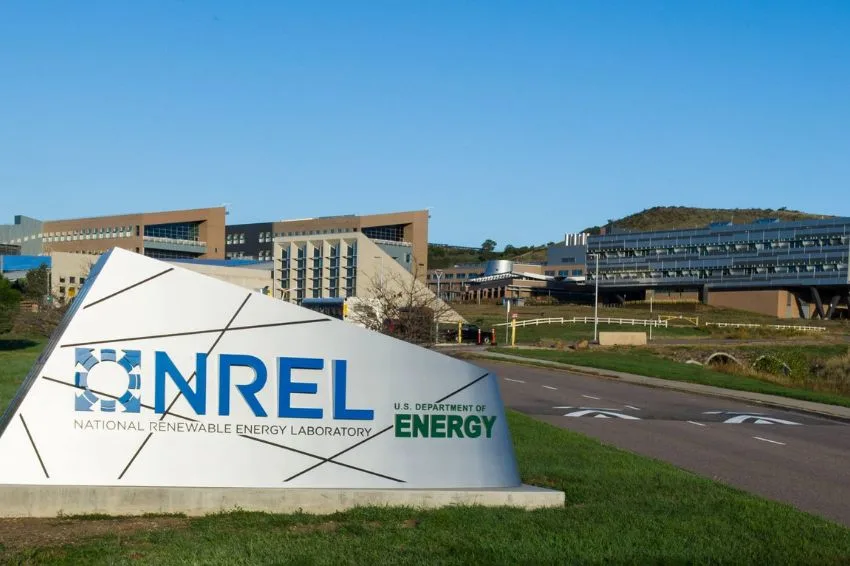
According to NREL (National Renewable Energy Laboratory), the modules made from perovskites may eventually play a important role amid global decarbonization efforts to reduce greenhouse gas emissions.
As the technology emerges from the testing stages, they said it is the Perfect moment to think critically about the best way to design modules to minimize its impact on the environment decades from now.
“When you have a technology in its early stages, you have the ability to design it better. It’s a cleaner ‘slate’,” he said. Joey Luther, senior researcher at NREL and co-author of the paper just published in Nature Materials.
“Taking perovskite PV toward improved sustainability makes the most sense at this stage. We are thinking about how we can ensure we have a sustainable product now, rather than dealing with sustainability issues at the end of its life,” he explained.
Kevin Prince, a former NREL graduate researcher who now researches perovskites at the Helmholtz Zentrum Berlin in Germany, said that perovskites could unlock the next evolution of high-efficiency photovoltaics, “and it is our responsibility to ensure that they are manufactured, used and recycled sustainably.”
According to NREL, solar panels made from silicon dominate the industry, and while they have enormous environmental and climate benefits, they were not initially designed for “circularity.”
The other leading solar technology, cadmium telluride (CdTe), has had a recycling program established from the beginning, in part to address telluride shortages. All forms of technology manufacturing come with environmental costs, such as recycling challenges and the use of potentially toxic chemicals. However, perovskites are at an inflection point, so the opportunity exists to address these concerns now.
The most efficient circular economy starts at the design phase and considers material sourcing, creates strategies for long product life, and plans for end-of-life management.
According to the researchers, the most representative way to assess the environmental impacts of solar panel manufacturing is to look at carbon emissions released during production, embodied energy, sustainable material sourcing and module circularity.

The Nature Materials article identifies critical sustainability concerns for each component of a perovskite solar panel. Lead, for example, can be diluted with other chemically similar metals, such as tin, to reduce the amount of lead in a future module.
However, to date, these replacements have come at the cost of PV efficiency and durability, requiring much more research before these proposed semiconductors are ready for use in modules.
The researchers also suggest that precious metals used in perovskite cells, including silver and gold, should be replaced with lower-cost alternatives such as aluminum, copper or nickel for commercial modules. They also said that fluorinetin oxide would be a more practical material for the cell's front electrodes than the scarcer indium used in indiumtin oxide.
“We want to have the least amount of energy embodied in manufacturing,” emphasized Joey Luther. “In addition, we want to have the lowest amount of emissions in manufacturing. At this stage, now is the chance to look at these components. I don't think we have to change anything. It’s more a question of what decisions should be made, and those arguments should certainly be discussed.”
More Details
The authors highlighted different ways of thinking about the circularity of perovskite panels. Remanufacturing, for example, comes into play when an old module is dismantled with the aim of using certain parts to make a new module. Recycling, in turn, requires the conversion of waste materials into raw materials that can be refined and reused.
One component that requires attention is the specialized glass that provides structural support for perovskite solar panels and offers protection from the elements while remaining very clear to allow in a maximum amount of sunlight.
Establishing a recycling pathway for glass will become more critical as the deployment of photovoltaic technology grows. Glass manufacturing, as it stands today, requires raw materials and is an energy-intensive process.
Silvana Ovaitt, photovoltaic energy researcher and co-author of the paper, said that as electricity on the grid becomes cleaner, panel manufacturing will also be cleaner, further reducing emissions.
“Another concern is the transportation of the final modules and raw glass, because these are the heaviest items. Local manufacturing will be a great way to reduce these carbon impacts,” he pointed out.
The researchers explain that increasing PV module durability, thereby increasing its lifetime, is a more effective approach to reducing net energy, energy return and carbon emissions than designing for circularity alone. While a panel may be designed with the end in mind, a longer lifespan means it won't need to be recycled as often.
“Ultimately, we want to make them as durable as possible. But we also want to consider the aspects of when that moment comes. We want to deliberate on how to disassemble them and reuse the critical components,” concluded Luther.
all the content of Canal Solar is protected by copyright law, and partial or total reproduction of this site in any medium is expressly prohibited. If you are interested in collaborating or reusing part of our material, please contact us by email: redacao@canalsolar.com.br.



Comments
Comments are moderated before publication.Comments should be respectful and contribute to a healthy debate. Offensive comments may be removed. The opinions expressed here are those of the authors and do not necessarily reflect the views of the author. Canal Solar.