
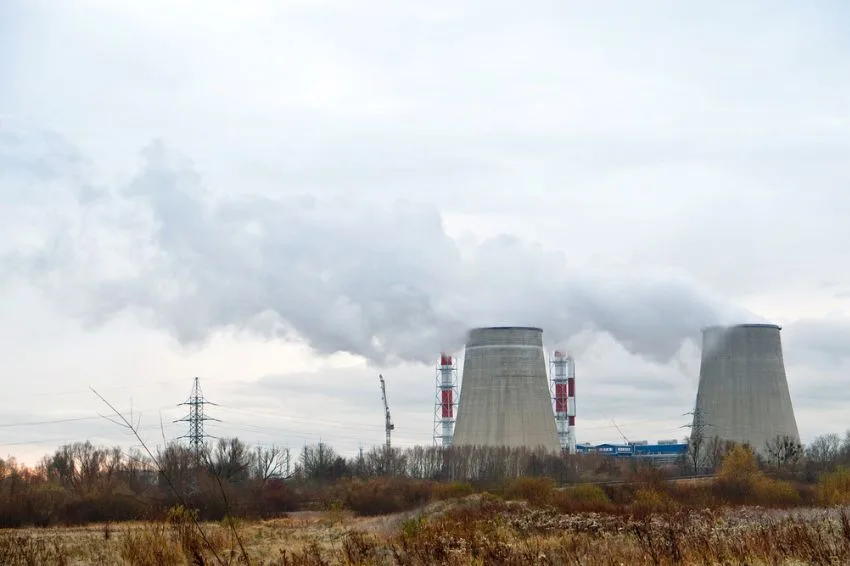
O ONS (National Electric System Operator) informed that it is in its plans to additional use of thermoelectric plants until the end of the year, with the expectation of intensify dispatch from October, mainly due to the tendency for loads to increase during winter. The goal is save hydroelectric resources until the arrival of the next wet period, which normally starts in November, but may be delayed this year.
The forecast is that the reservoirs in the Southeast/Center-West, responsible for 70% of Brazil's energy storage capacity, will reach 67,9% capacity on the last day of the year in the most optimistic hypothesis and 52,2% in the scenario pessimistic. “The result of the SE/CO subsystem is classified as the 14th lowest in history,” said the ONS in a press release.
The information was made official at the last meeting of the CMSE (Electricity Sector Monitoring Committee), held last week.
The Minister of Mines and Energy, Alexandre Silveira, said that agencies are doing their best to find solutions to increase the availability of energy resources, such as reducing the flow of the Jupiá and Porto Primavera hydroelectric plants, on the Paraná River, with the intention of preserving reservoirs during the dry period and minimizing thermoelectric dispatch. This action guaranteed around 7% additional water in the Southeast reservoirs.
“We are also advancing in investments in several works in the country and in the modernization of the electrical park, always seeking a balance between reasonable tariffs and energy security”, stated the minister in a note.
For the end of July, the expectation of Stored Energy (EARmáx) for the SIN (National Interconnected System) – an indicator that measures the level of reservoirs in the country – points to 65,1% in the lower scenario and 64,2% in the upper scenario .
At a press conference at the end of June, Nottus, a meteorological business consultancy, said that o winter will be marked for dry days with temperatures above average in Brazil.
There is a probability that the La Ninã phenomenon will begin to form in a moderate form from the end of September. The models, however, indicate a 75% probability of La Ninã materializing at the turn of the year, bringing more consistent rain to the country.
A ANEEL (National Electric Energy Agency) activated the yellow tariff flag after 26 months of green flag, precisely due to the context of intensification of thermoelectric dispatch.
The greater use of thermal plants will result in an increase in the operating costs of the electrical system, affecting the PLD (Difference Settlement Price) and, consequently, the price of energy on the Free Market.
all the content of Canal Solar is protected by copyright law, and partial or total reproduction of this site in any medium is expressly prohibited. If you are interested in collaborating or reusing part of our material, please contact us by email: redacao@canalsolar.com.br.





Comments (4)
Comments are moderated before publication.Comments should be respectful and contribute to a healthy debate. Offensive comments may be removed. The opinions expressed here are those of the authors and do not necessarily reflect the views of the author. Canal Solar.
I don't understand why they don't finish building Angra 3?
A great option.
Do you have 9 billion reais available to help?
To have Intermittents we need Constants, and there is no point in ESG marketers coming to talk about batteries, don't swallow brainwashing, batteries today last less than 8 years, reverse logistics is expensive, let's not even talk about how much water, diesel and energy is spent electricity from mining to batteries, the math doesn't add up, there is already a technology that lasts twice as long, stores 4 times as much, weighing 4 times less, but the business owners won't let it come until there is payback and huge profit from their current plants,
Natural Gas and Biogas thermogeneration are excellent, what you can't do is coal thermogeneration, like that super dirty one in Criciuma, Santa Catarina, with coal with very low calorific value, a generation that emits 70 times more than a Natural Gas one, The place to talk about energy is not that of a marketer, nor a sociologist, it is that of an ENGINEER.
Investment in wind farms would greatly minimize the need for gas-fired thermal plants (I'm not even going to waste time commenting on coal, that's a thing from the last century, as you said, they should have been decommissioned a long time ago), as the wind season in the interior in the Northeast is the opposite of the rainy season, and does not have the problem of not working at night, like solar systems. But it needs a transmission line for the expansion, which will arrive by 2027. I don't know if the current thermal plants will support the expansion of consumption until then, I'm just a curious engineer in the area. But one thing is certain: we are dispensing with marketers’ opinions, right?