
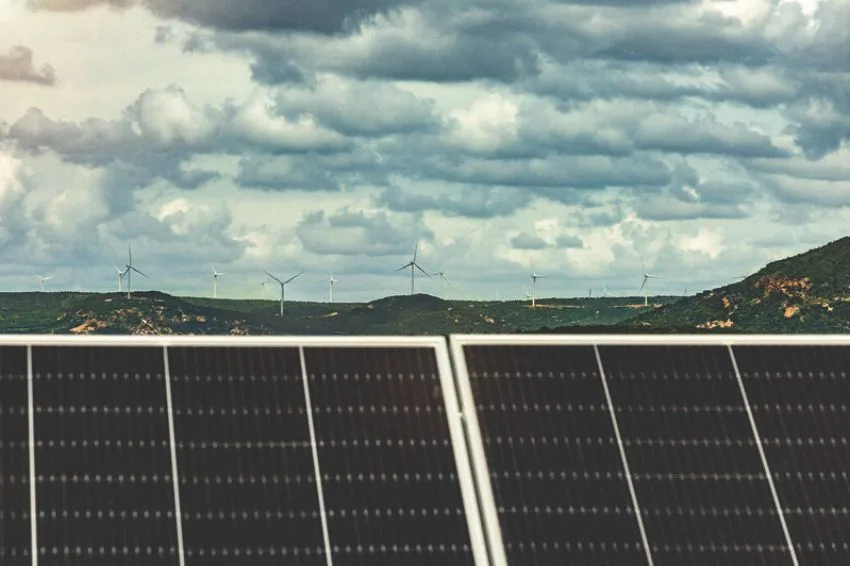
A law establishing the creation of the Patent (Energy Transition Acceleration Program) was sanctioned, with vetoes, by the Federal Government and published in the DOU (Official Gazette of the Union) this Thursday (23).
The program aims to facilitate access to credit for companies that have amounts to receive from the Union, such as court orders and tax credits, to finance projects linked to the energy transition.
The areas covered include the development of sustainable fuels, the energy recovery of waste, the modernization of energy generation and transmission infrastructure and the replacement of polluting sources with renewable alternatives.
Furthermore, the expectation is that the Paten will stimulate research and development of carbon capture and storage technologies, green hydrogen, biogas and other sustainable energy solutions.
The fund will be administered by BNDES (National Bank for Economic and Social Development). The resources will be exclusive to projects linked to the program, with states, municipalities and the Federal District being able to access them through agreements with the Union.
Vetos
In relation to the original text that was approved by the deputies and senators, the Federal Government vetoed three articles, one of which extended the benefits of PADIS (Program to Support the Technological Development of the Semiconductor Industry) to “electric accumulators and their separators”, due to the lack of an estimate of the budgetary and financial impact and compensation for the respective revenue waiver.
Another article that was discarded was the one that provided that resources not used by Paten at the end of each financial year should be transferred to the CDE (Energy Development Account), under the allegation that reallocating them could lead to a reduction in investments in research and development projects.
Finally, the Planalto also vetoed the article that authorized the use of resources from the National Fund on Climate Change in logistics mobility projects in the road, rail and waterway segments.
The claim was that the device was contrary to the public interest by allowing the allocation of resources to investments not aligned with the National Policy on Climate Change and Brazil's targets for reducing greenhouse gas emissions.
all the content of Canal Solar is protected by copyright law, and partial or total reproduction of this site in any medium is expressly prohibited. If you are interested in collaborating or reusing part of our material, please contact us by email: redacao@canalsolar.com.br.


Comments
Comments are moderated before publication.Comments should be respectful and contribute to a healthy debate. Offensive comments may be removed. The opinions expressed here are those of the authors and do not necessarily reflect the views of the author. Canal Solar.