

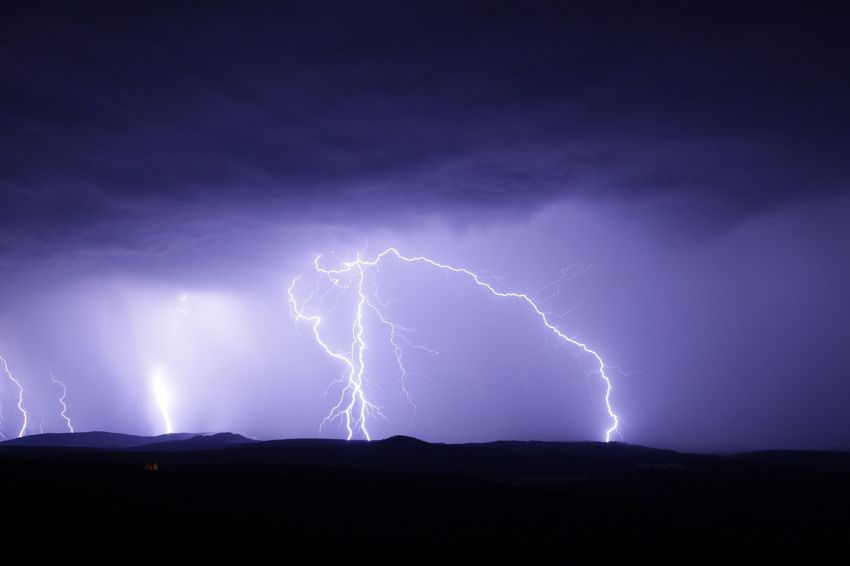
Photovoltaic generators, here abbreviated as GFV, are photovoltaic generation plants installed in consumer units, intended primarily to meet their demand for electrical energy, fully or partially, and which injects excess energy into the distribution network that serves said unit.
The concept comes from the IEC (International Electrotechnical Commission) and installations in Europe, where GFVs are distinguished from UFVs, including adopting different standards: ¾ IEC/TS 62738:2018 – Ground-mounted photovoltaic power plants – Design guidelines and recommendations; and ¾ IEC 62548 – Photovoltaic (PV) arrays – Design requirements.
We can distinguish roof GFVs, the most common, and ground GFVs. Roof GFV grounding does not have any special specifications and must only be integrated with the building's grounding, which must comply with applicable standards, especially NBR5419 (Protection of Structures against Atmospheric Discharges).
The protection of photovoltaic arrays against direct atmospheric discharges, using lightning rods, is only viable in small installations, as in the case of GFV on the roof of homes or small businesses.
GFV from warehouses or larger buildings usually end up being part of the capture network of the building's lightning protection systems.
In this case, care must be taken to ensure that the capturing elements do not cast a shadow on the photovoltaic modules, which can cause hot spots on the plates, since the shadowed cells become a load for neighboring cells and end up consuming part of the energy. energy generated by them.
Read the full article on page 63 of the 11th edition of the Magazine Canal Solar.
The opinions and information expressed are the sole responsibility of the author and do not necessarily represent the official position of the author. Canal Solar.



An answer
Good morning! When the power plant is not within the protection range of the building's lightning rod, is the risk management study of the building waived? I recently failed a technical assessment of an installation that had 95 solar modules that would be used as a roof for a party room (open area). In this case, there was no risk management and the metal structure was used as a natural collector and its metal pillars as descents (detail: everything was connected to the grounding of two rods belonging to the power plant's grounding, which were connected to the grounding of the building's electrical system). I did not find any electrical continuity test between the pillars according to 5419, rev 2015.