
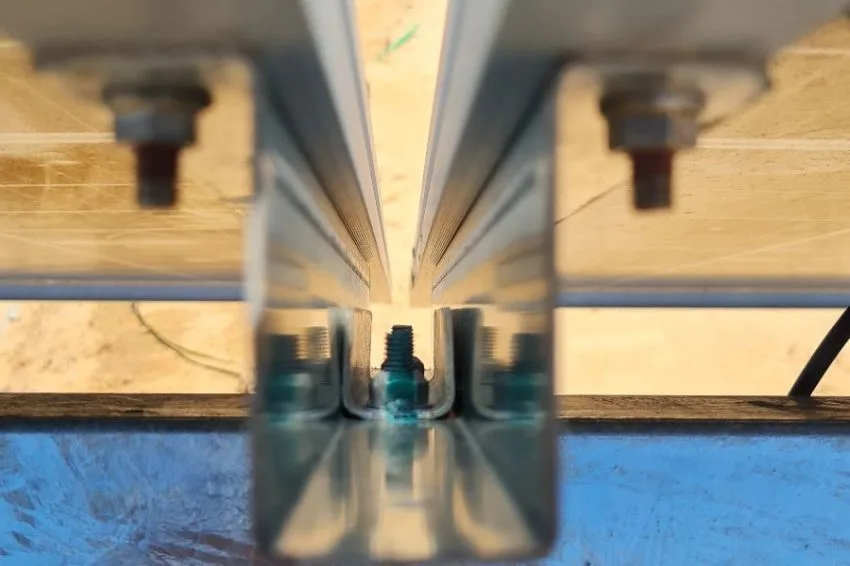
Article published in the 29st edition of the Magazine Canal Solar. Click here and download now for free!
Renewable energy sources are increasingly gaining ground in the global energy matrix, including solar photovoltaic plants (UFVs). Here we will address the use of tracker-type structures – solar tracking systems that optimize the positioning of photovoltaic modules throughout the day – emphasizing their operating principles, types, implementation precautions, performance gains, operational challenges and maintenance strategies.
With the gradual growth in demand for energy, the global energy matrix has been increasingly analyzed, highlighting the need for diversification and sustainability.
In this scenario, UFVs have gained significant prominence, proving to be effective alternatives both for expanding the energy supply and for mitigating environmental impacts.
In general, UFVs adopt different types of structures for installing photovoltaic modules, with direct installation on the ground being common. Within this modality, it is possible to use a fixed structure, with modules positioned at an ideal angle and orientation, or a mobile structure, such as the tracker system, which follows the movement of the sun throughout the day.
Operation principle
O tracker system, or solar tracker, has the main function of optimizing energy capture by photovoltaic modules, constantly adjusting their positioning to maintain the best angle of incidence of sunlight.
Motors connected to a central shaft (torque tube) move the modules from east to west, keeping them as perpendicular as possible to the solar radiation, thereby maximizing their efficiency.
The foundation of the system is an essential component, designed to withstand not only the weight of the structure, but also local weather conditions such as high winds. A well-designed foundation ensures the stability and durability of the tracker over time.
The material used in the structure must be weather-resistant, ensuring a long service life for the system. Materials such as steel and aluminum are generally used, as they offer high durability and corrosion resistance.
The operation is carried out by motors or actuators, which are responsible for the driving force that rotates the tracker's axis. These are high-precision devices, often powered by the direct current coming from the installed photovoltaic modules or from small, low-power photovoltaic modules between the strings. However, they can also be powered externally, such as by batteries or alternating current, depending on the design.
The actuators and sensors obey the control system, which directs the azimuth through commands based on predefined algorithms or sensors that detect the position of the sun. This combination allows precise adjustments in the positioning of the tracker, increasing its efficiency in capturing solar energy.
Click here and check out the full article!
The opinions and information expressed are the sole responsibility of the author and do not necessarily represent the official position of the author. Canal Solar.


Comments
Comments are moderated before publication.Comments should be respectful and contribute to a healthy debate. Offensive comments may be removed. The opinions expressed here are those of the authors and do not necessarily reflect the views of the author. Canal Solar.