
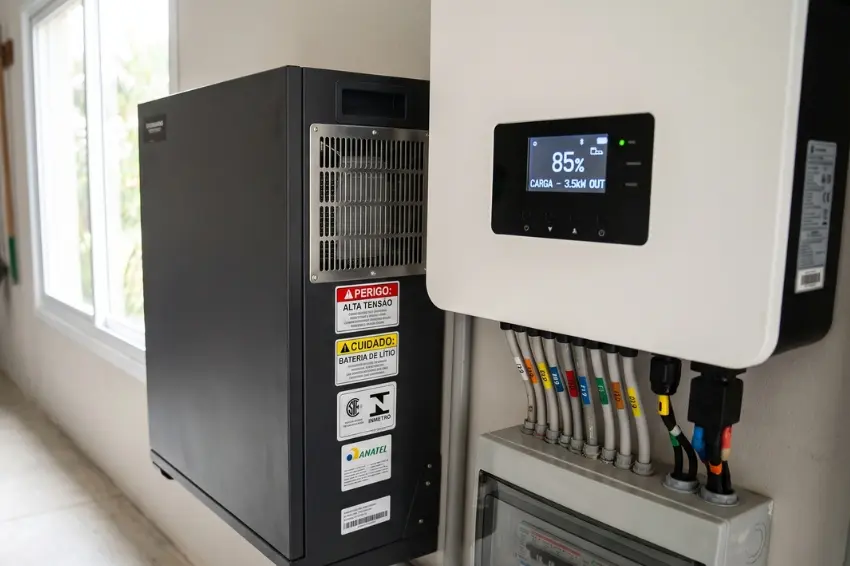
Battery energy storage systems (BESS) are no longer seen merely as backup equipment. Depending on the control strategy applied, they can reduce demand, shift consumption between time periods, increase the integration of renewable sources, and provide services to the electrical grid.
When connected to the distribution network, however, they become active resources capable of charging, discharging, and altering the power flow of the consumer unit.
The mere fact that they operate in parallel with the grid requires authorization from the distributor, since these systems can interact with the electrical system and, depending on the configuration and control strategy adopted, inject energy into the grid. Therefore, their connection needs to be technically evaluated by the distributor.
In Brazil, the current challenge is not the complete absence of regulatory references, but the lack of a standardized national procedure for the approval of behind-the-meter systems, especially those associated with micro and mini-distributed generation.
In the specific case of storage systems, this scenario is even more complex, as many distributors and concessionaires do not even include this equipment in their internal rules and procedures.
A still fragmented process
In practice, certification involves regulatory, technical, and administrative procedures designed to demonstrate that energy storage systems (smaller ones such as batteries and hybrid inverters or even BESS) can operate without compromising the safety of people, the protection of the installation, the quality of the energy, and the operation of the public grid.
The analysis typically combines Law No. 14.300/2022 and the Normative Resolution. ANEEL No. 1.000/2021, PRODIST, ABNT and IEC standards, manufacturer requirements and the distributor's own internal standards.
This combination creates asymmetry between concession areas. Some distributors have already published specific procedures or forms. Others mention hybrid inverters and storage in their records, and there are those that still conduct each request through individual analysis. Thus, technically similar solutions may receive different requirements depending on the connection location.
The classification of the application is also crucial. FTM (front of the meter) systems, connected directly to the electrical grid, follow a different regulatory logic than BTM (behind the meter) systems, installed after the metering point to serve consumers.
Within a BTM (Build-to-Mountain) installation, the expected behavior must be precisely described: will there be injection into the grid? Will the load be generated by photovoltaic generation, the grid, or both? Will the system operate in islanded mode? What are the rules for these operations? What will be the maximum power at the connection point? Without these answers, the distributor cannot adequately assess the impact of the project.
Download the full magazine and get free access to this article by clicking [here]. here.
The opinions and information expressed are the sole responsibility of the author and do not necessarily represent the official position of the author. Canal Solar.



Comments (3)
Comments are moderated before publication.Comments should be respectful and contribute to a healthy debate. Offensive comments may be removed. The opinions expressed here are those of the authors and do not necessarily reflect the views of the author. Canal Solar.
Off-grid systems shouldn't require any homologation; the equipment, project costs, and installation are all the customer's responsibility. Many customers don't even use the utility grid, and even if they did, just like on-grid systems, they shouldn't require homologation or inject energy into the grid, given the slow growth compared to other countries. They only aim to squeeze more energy through unnecessary and absurd taxes, like the solar tax – it's almost laughable if it weren't tragic. If the customer needs to use the utility grid, they'll be paying for it, which is only fair. While other countries do everything to encourage installation and provide incentives, here the government's ambition is shameful! Then they say the reservoirs are dry, that demand is high, and they invented colored flags just to squeeze more energy out of the system. What's the logic in all this?
It's a very frustrating situation for integrators.
The federal government should do its part, but it prefers not to. Improve/expand network infrastructure.
That's regrettable.
Good afternoon
In my opinion, anything that can bring cost savings to the consumer—energy is very expensive from suppliers—will be a good strategy. Batteries for storage and solar photovoltaics will be key.