

The installation completes the construction but inaugurates an asset with a long lifespan. The integrator, by monitoring performance, safety, documentation, and relationships, transforms irregular project revenue into a predictable and defensible portfolio.
The Brazilian photovoltaic market already has sufficient scale to support its own operation and maintenance industry. As of June 2026, the regulatory registry included approximately 4,53 million micro and mini-distributed generation projects, with approximately 50,2 GW of power.
In the first half of the year, approximately 413 new consumer units began receiving solar generation credits. The installed stock grows every month, and each system remains exposed to failures, dirt, shading, degradation, loss of communication, changes in consumption, billing errors, and electrical hazards.
For the integrator, this inventory changes the economic logic of the business. Sales and installation generate one-off, concentrated revenue that is subject to the credit and demand cycle.
An operation and maintenance contract generates monthly revenue, increases contact frequency, anticipates problems, and opens up new opportunities for expansion, storage, vehicle charging, electrical upgrades, and component replacement.
The safest approach is not to sell cleaning as a subscription service. It's to sell ongoing asset management, with an explicit scope, monitoring, performance analysis, preventive maintenance, corrective services, documentation, and reporting. Cleaning comes into play when measurement or on-site conditions demonstrate that the likely benefit outweighs the cost and risk of intervention.
Key Findings
- The installed base is the integrator's main commercial asset. It already contains known clients, technical history, project data, and established trust.
- Monitoring without process is not O&M. Alarms need classification, responsibility, deadline, diagnosis, and documented closure.
- The contract should separate preventive maintenance, corrective maintenance, cleaning, parts, travel, warranties, and additional services. A vague scope destroys margins and trust.
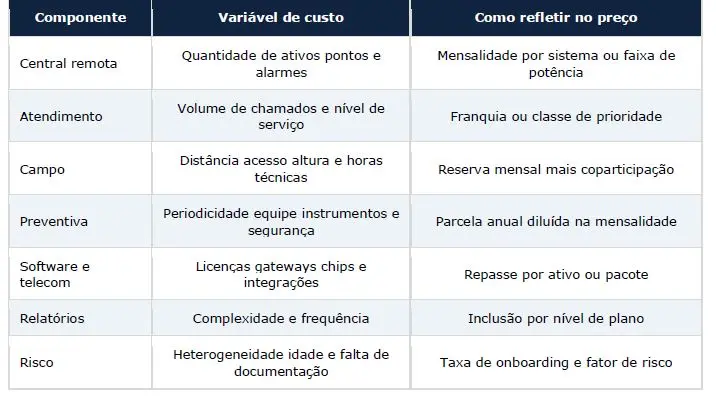
- Pricing should combine the cost of remote capacity, field reserve, criticality, power, geographic dispersion, and service level. A percentage of CAPEX, in isolation, is a weak benchmark for distributed portfolios.
- The best time to sell the plan is before commission payments, when the client is still deciding how to protect the promised return. For existing clients, the entry point is a technical and economic diagnosis.
- Recurrence improves when the customer receives simple evidence: availability, specific generation, deviations, occurrences, actions taken, and protected economic value.
How to read the numbers in this article
Market data is attributed to the cited sources. Price ranges and financial examples are management simulations, not official averages of the Brazilian market. They serve to test capacity, margin, and sensitivity. Each company should recalibrate the values according to its costs, taxes, territorial dispersion, risk profile, and service level.
The Brazilian market has already laid the groundwork for recurring revenue.
Micro and mini-distributed generation is no longer just a market for acquiring new projects. The country has entered the phase of managing millions of installed assets.
According to data from the panel of ANEEL (National Electric Energy Agency) reproduced in sector publications, there were 4.533.064 distributed generation (DG) projects in operation and approximately 50,2 GW of power in June 2026. Solar power dominates the registry in terms of quantity and power. [1] [2]
The number of consumer units benefiting is greater than the number of projects because one generator can allocate surplus energy to other units. Approximately 413 new consumer units started using solar credits between January and June 2026.
This distinction is important: generating system, consuming unit and contracting customer are not necessarily the same thing. The O&M company needs to model its base by assets, monitoring points, locations served and owners. [3]
The Energy Research Company reported that distributed generation accounted for 5,6% of all electricity generated in Brazil in 2024. This data, prior to the cut-off date of this article, shows that distributed generation already influences the national electricity balance and cannot be treated merely as a niche installation. [4]
The regulatory effect of 2026
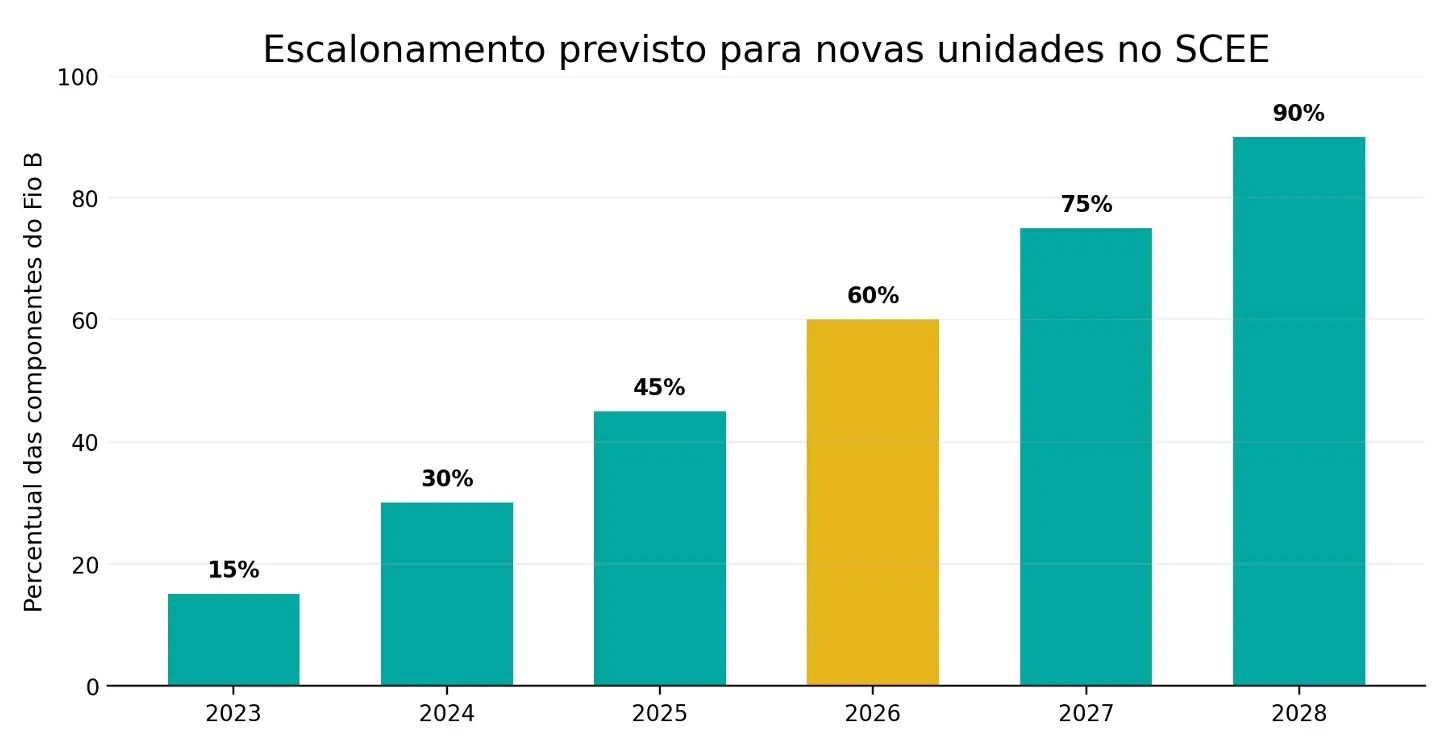
Law 14.300 of 2022 created a transition for units not covered by the compensation rule preserved until 2045. In 2026, the billing of these units considers 60% of the tariff components related to remuneration, depreciation and operation and maintenance of distribution assets on the compensated energy. The percentage rises to 75% in 2027 and 90% in 2028, before the rule scheduled for 2029. [5]
This doesn't eliminate the attractiveness of self-generation, but it makes the quality of modeling and monitoring more relevant. The customer then needs an integrated reading of generation, self-consumption, injection, credits, grid consumption, and billing. An O&M contract that ignores the energy bill only protects part of the economic outcome.
The opportunity lies not only in the new systems.
An installed portfolio contains different generations of equipment, monitoring platforms, documentation standards, and warranty conditions. The more heterogeneous the base, the greater the need for technical registration and segmentation.
Recurrence arises from organizing legacy data: recovering access records, validating single-line diagrams, registering serial numbers, identifying warranties, classifying criticality, and creating a performance baseline.
The technical value of a well-structured contract.
A photovoltaic system doesn't require daily intervention, but it does require vigilance. Professional O&M reduces the time between a problem arising and corrective action. This reduction in time protects energy, safety, warranty, and relationships.
The IEA PVPS and SolarPower Europe guidelines treat O&M as an organized set of operation, preventive maintenance, corrective maintenance, monitoring, documentation, safety and data management. [6] [7]
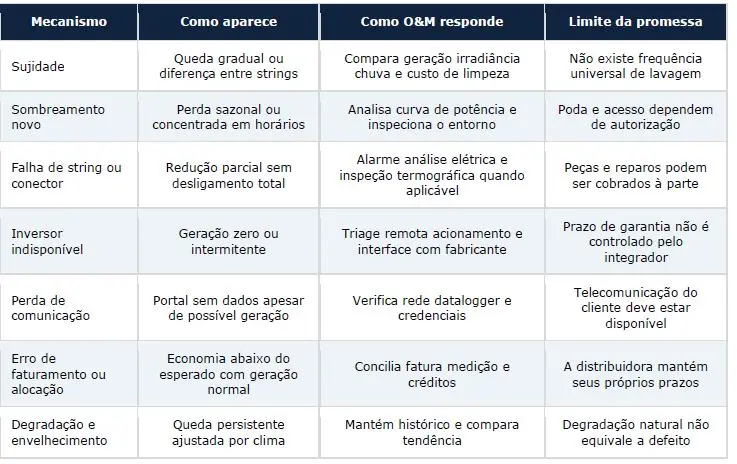
Dirt should be dealt with based on evidence.
Losses due to dirt depend on rain, dust, slope, agricultural activity, pollution, birds, and module design. Cleaning according to a schedule can waste water and labor without recovering sufficient energy. Never cleaning can allow for increasing losses or hot spots associated with localized deposits.
The decision should consider generation trends, comparisons between strings, rainfall history, accessibility, safety, and the expected value of recovered energy.
Degradation does not replace diagnosis.
Modules lose performance over time, but a benchmark annual rate should not justify any decline. NREL studies use values close to 0,5% per year as a typical assumption in various analyses, while actual results vary depending on technology, climate, quality, and failures.
Abrupt drops, asymmetries, and steps in the curve require investigation; a slow trend needs to be normalized by irradiance and temperature.
a, unavailability and changes in the surroundings. [8]
Example of the economic value of energy not produced.
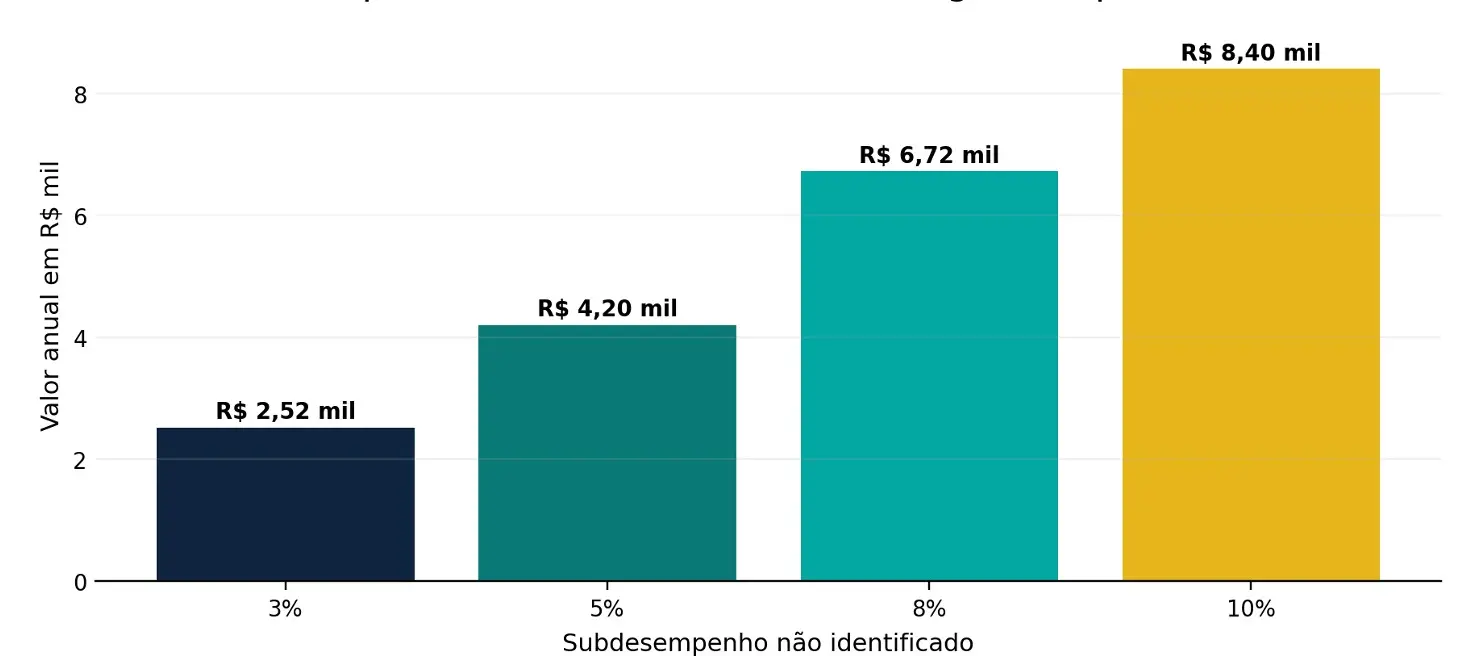
In the scenario above, a 5% underperformance represents R$ 4,2 per year in energy costs. This example doesn't prove that every contract pays for itself solely through generation recovery. It illustrates why commercial discussions should begin with the asset's value and the cost of energy, not just the number of visits.
The operation and maintenance product that the customer can understand.
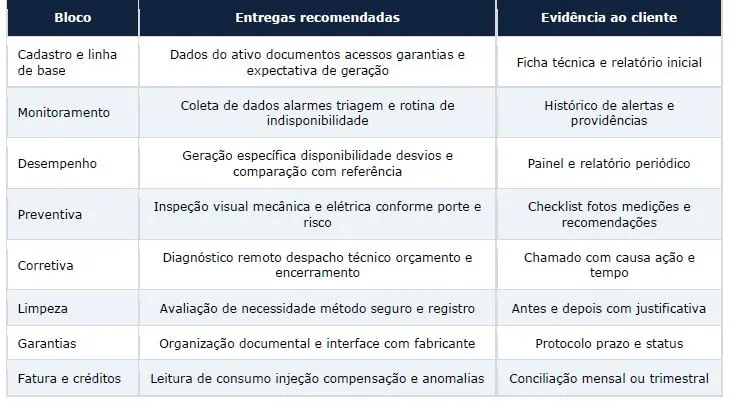
The client isn't buying a list of technical activities. They're buying predictable performance, security, and responsiveness. To deliver this without compromising margins, the integrator needs to convert tasks into a measurable service architecture.
Minimum recommended scope

Three levels of supply
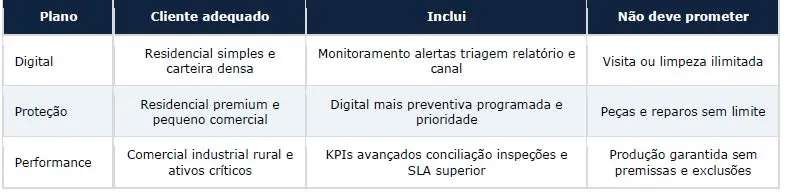
What should be excluded from the monthly fee?
- Parts, equipment, freight and services from manufacturers, except where a deductible has been defined.
- Adjustments resulting from design errors, hidden defects, civil works, water infiltration, or alterations made by third parties.
- Scaffolding, lifting platforms, lifelines, hoisting equipment, and special access equipment that were not previously planned for.
- Extraordinary cleaning due to construction work, soot, heavy organic matter, or an atypical environmental event.
- Credit reconfiguration, change of ownership, and lengthy regulatory processes, unless contracted otherwise.
- Guaranteed generation without a weather station, agreed baseline, and handling of external unavailability.
Documents that support the product
The commercial contract must be accompanied by operational annexes. The minimum set includes asset inventory, responsibility matrix, maintenance schedule, service levels, service channels, visit criteria, parts policy, access requirements, data handling, and report template. Without annexes, each service request reopens negotiations regarding what was or was not included.
How to draft a contract without creating an endless obligation.
Recurring revenue is only healthy when the contractual risk is commensurate with the price. The contract needs to specify what will be done, how often, with what evidence, and what depends on the client, the distributor, or the manufacturer.
Essential clauses
- The service's scope and limitations, identifying each system, power level, address, equipment, and platform.
- Contract term and renewal, with clear rules for readjustment and cancellation.
- Preventive scope and risk-based periodicity, without confusing inspection with repair.
- Corrective workflow, including screening, expense authorization, travel arrangements, parts, and third-party services.
- Separate service levels for confirmation, diagnosis, mobilization, and resolution. The resolution time should not include waiting for parts or manufacturers outside the provider's control.
- Client responsibilities regarding internet access, site security, communication of construction work, and preservation of credentials.
- Warranty rules, making it clear that the integrator can mediate the process without assuming the manufacturer's obligations.
- Performance criteria and exclusions based on weather, network, curtailment, extraordinary dirt, new shading, and customer unavailability.
- Data protection and authorization to access portals, invoices, meters, and personal information.
- Adjustment mechanism for inflation, change in scope, distance, or growth of the asset.
Examples of service levels
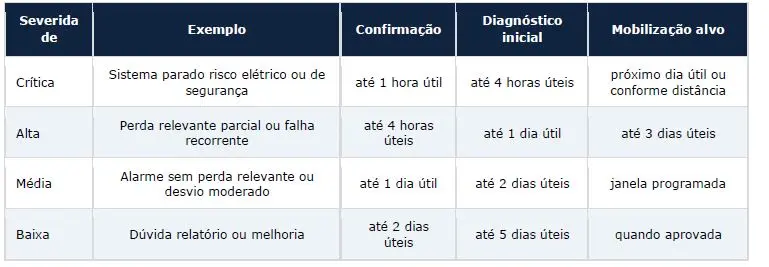
The deadlines above are a design reference. The company must validate them against service hours, coverage radius, parts inventory, outsourcing, and actual capacity. A sold SLA that is not met costs more than a well-managed, conservative deadline.
Availability and performance guarantee
Technical availability measures the system's ability to operate when solar resources and suitable external conditions are available. It is not the same as production. An available system may produce less due to dirt, shade, temperature, or grid limitations. If there is a bonus, discount, or guarantee, the contract must define the irradiance source, measurement period, granularity, exclusions, handling of missing data, and calculation formula.
Monitoring that leads to action.
The inverter portal is just one source. A scalable operation needs to transform data into prioritized exceptions. The process begins with connectivity, registration quality, and time synchronization. Then, it compares the asset's behavior with its own baseline, similar systems, and available environmental conditions.
Operational flow
- Capture data from inverter, meter, datalogger, weather station, and invoice as per the plan.
- Validate integrity, interval, timing, and consistency before interpreting the generation.
- Detect unavailability, deviation, asymmetry, communication breakdown, or anomalous behavior.
- Classify criticality considering power loss, risk, customer, and duration.
- Open a support ticket specifying the responsible party, deadline, evidence, and initial hypothesis.
- Resolve remotely when possible or dispatch a team with a defined scope and safety protocol.
- Record the root cause, action, components, estimated energy loss, and preventive recommendation.
- Communicate with the client using economic and technical language appropriate to the contract.
Indicators for the dashboard


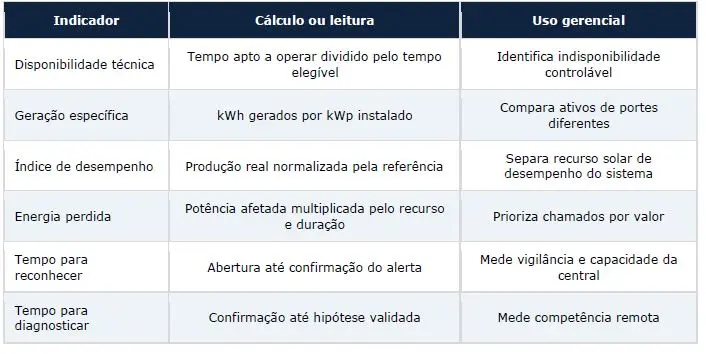

Report that the client reads
A monthly report should fit within a few pages. The first page provides information on generation, availability, benchmark comparison, estimated savings, and asset status. The second page lists occurrences and actions. The third page records recommendations, risks, and pending decisions. Technical appendices are available for those who need to audit them. A large volume of information does not replace clarity.
Data and digital security
The portfolio relies on inverter credentials, local networks, serial numbers, consumption data, and invoices. The company should use corporate accounts, multi-factor authentication when available, role-based access, user inventory, a shutdown process, and secure document backup.
Personal data and consumer information must comply with purpose, necessity, security and other principles of the General Data Protection Law. [9]
Pricing and economics of recurring revenue.
A price that's too low turns the contract into a liability. A price that's too high without evidence turns O&M into a cuttable item. Pricing needs to be based on the capacity required to service the portfolio and the value of the service level, not on a generic visit per year.
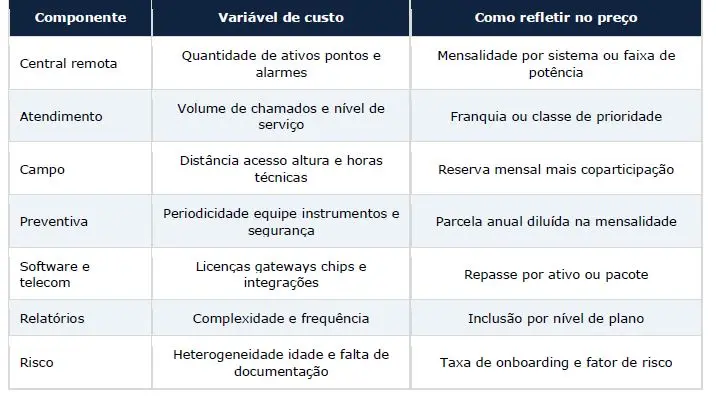
Commercial test tracks
Since there is no single publicly available price list for O&M products distributed in Brazil, the ranges below should be treated as a test hypothesis. They do not represent the market average.
The example of the two hundred systems
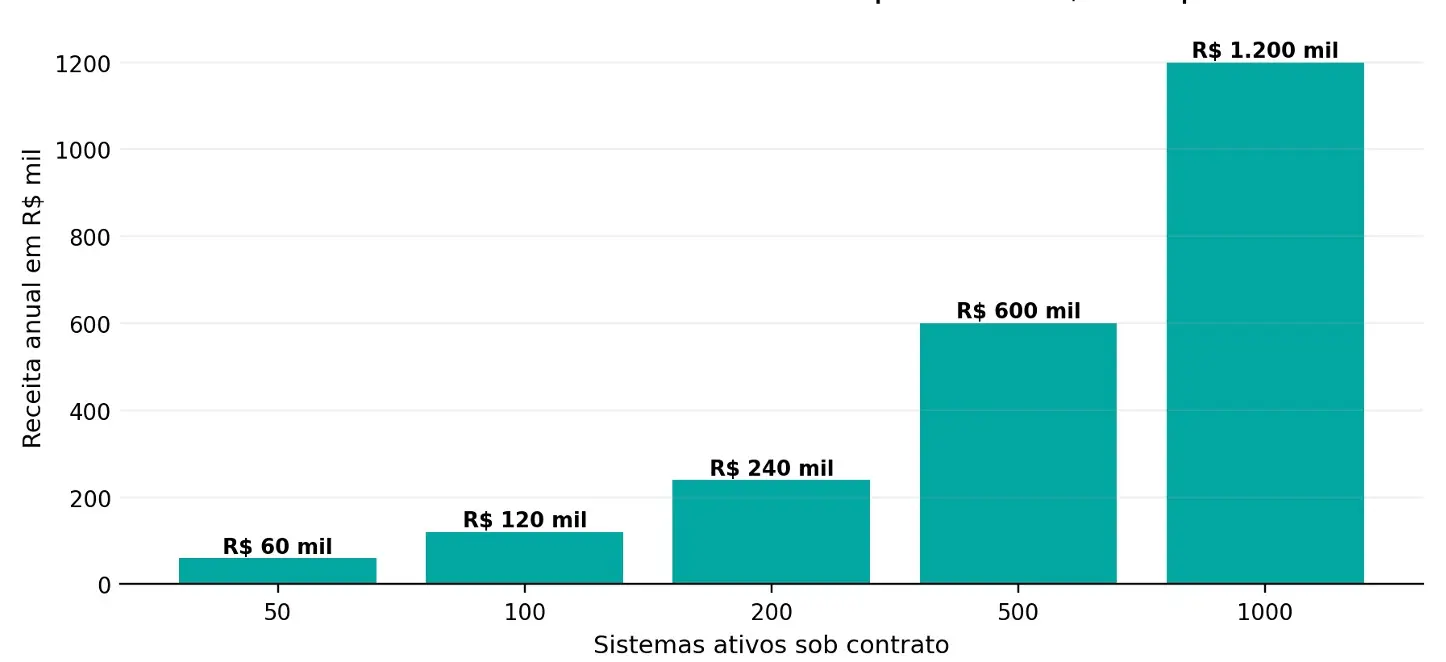
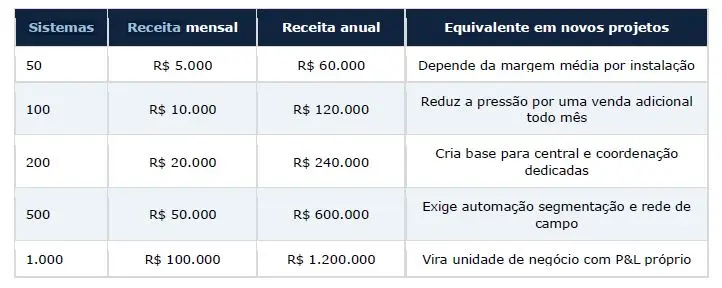
The image that originated this study proposes a portfolio of 200 systems with an average ticket price of R$100 per month. The calculation is correct: R$20 in recurring monthly revenue and R$240 per year, before taxes, defaults, service costs, visits, and fixed expenses.
Scaling recurring revenue with a monthly ticket of R$100.

Simulated gross revenue with a constant ticket of R$100 per system per month. Systems Revenue.

Contribution margin simulation
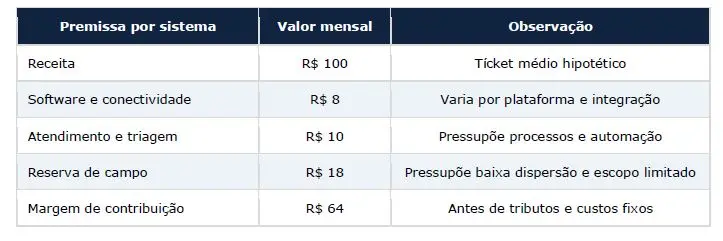
In an illustrative scenario of R$100 per system per month, consider R$8 for software and connectivity, R$10 for customer service and triage, and R$18 for field provision and preventative maintenance. The variable cost would be R$36, and the contribution margin before taxes and fixed expenses would be R$64 per system, or 64%.
In 200 systems, this represents R$ 12,8 per month to finance coordination, sales, tools, infrastructure, and profit. The validity of this scenario depends on geographic density and rigorous scope control.
How to sell operation and maintenance services without sounding like you're charging for fear of being a sales tactic
The sales message should begin with the agreed-upon result of the installation. The system was purchased to generate savings or revenue over many years. The plan exists to measure, protect, and explain that result. Alarmism about fire or total loss may attract attention, but it reduces trust and creates unrealistic expectations.
Offer moments
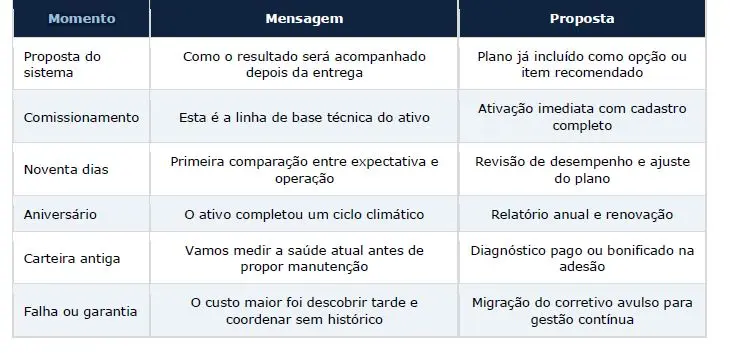
Offer within the project or months later
It's reasonable to expect higher uptake when the plan is presented alongside the project, but there's no publicly identified basis to support the claim that the rate is exactly three times higher. The company should measure its own conversion rate in a controlled test: same portfolio, equivalent offer, closing offer versus subsequent offer. The business decision should use this internal evidence.
Conversation guide
- Remember the economic purpose of the system and its intended use.
- Show which events can reduce the result without completely shutting down the asset.
- Explain how the plan detects, prioritizes, corrects, and documents these events.
- Describe what is included and what requires additional authorization.
- Compare the monthly bill with the annual cost of energy and with the cost of a fault noticed late.
- Offer different levels of coverage and let the customer choose the balance between price and protection.
Business indicators
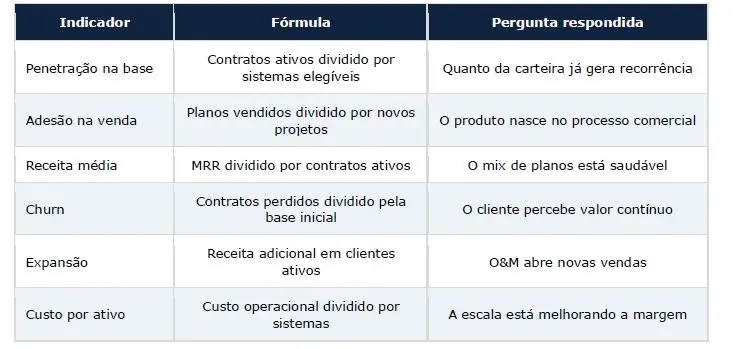
People and Governance Operations
O&M should not be an informal appendage of the installation team. The unit needs a designated person, a budget, a work queue, indicators, escalation rules, and periodic review. Initially, functions can be combined; responsibilities cannot be left implicit.
Minimum roles
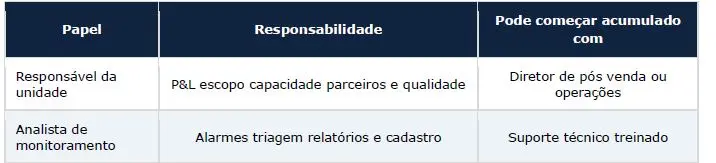
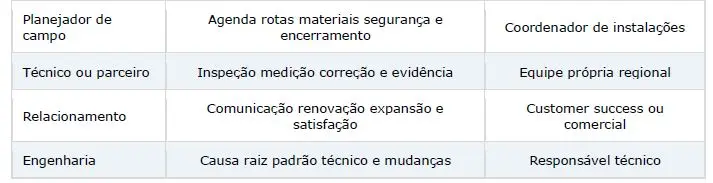
security and compliance
Interventions in photovoltaic systems involve a combination of direct current, voltage, work at height, roofing, and weather exposure. The operation must comply with applicable regulatory standards, especially NR 10 and NR 35, as well as technical standards relevant to the system and voltage level.
Among the usual references are ABNT NBR 16690 for photovoltaic electrical installations, ABNT NBR 16274 for documentation, commissioning, inspection and performance, ABNT NBR 5410 for low voltage and ABNT NBR 14039 for medium voltage when applicable. The current edition of each standard must be confirmed before execution. [10] [11]
The contract does not replace preliminary risk analysis, work procedures, documentation, training, protective equipment, and safe access conditions. If the location does not offer safe access, the service must be replanned and budgeted with appropriate resources.
90-day implementation plan
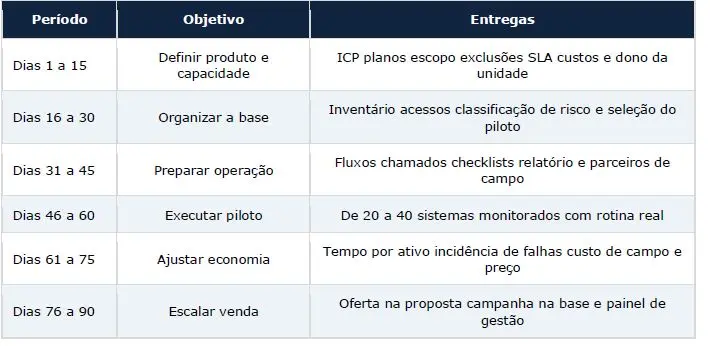
Gates for climbing
- At least 95% of the pilot's assets must have a defined registration, credentials, and responsible party.
- Critical alarms recognized within the SLA in at least 90% of pilot cases.
- Variable cost per asset measured over two billing cycles.
- Report template understood by the client without a mandatory technical meeting.
- Field partners contracted with standards of evidence, security, and price.
- Exception policy tested for parts, relocation, cleaning, and warranty.
Comparison between the transactional model and the recurring model.
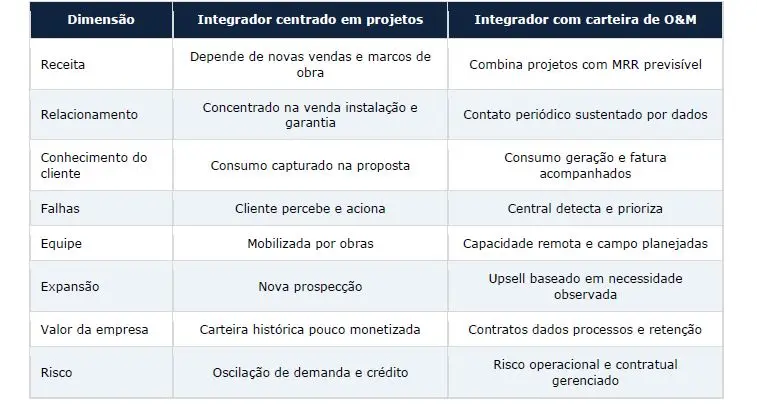
Operation and maintenance as a platform for new revenue streams.
The subscription creates data and presence. From it, the integrator identifies undersized assets, load growth, demand for backup, batteries, chargers, standard adjustments, power factor correction, energy efficiency, insurance, repowering, and inverter replacement. Expansion should stem from a demonstrated need, not from campaigns disconnected from asset behavior.
Decisions that leadership needs to make.
- Which segment will take priority: residential, commercial, rural, or third-party portfolio?
- What geographic radius allows for meeting the SLA with a margin?
- Which part of the service will be done in-house and which will be outsourced?
- What level of monitoring is possible with the existing inverter park?
- Which risk will be absorbed into the monthly fee and which will have co-participation?
- Which metric will determine the expansion of the pilot program to the entire base?
Conclusion
The contract ignored by the integrator is not a document; it's a business unit. Brazil has reached a scale where millions of systems need to remain secure, connected, and economically productive. Those who installed these assets have an advantage that new providers don't: relationships, history, and technical context.
This advantage disappears if the company waits for the customer to call. Recurring O&M requires product, contract, data, people, and financial discipline. Starting with two hundred systems at R$100 per month can produce R$240 per year in gross revenue, but the strategic value is greater: retention, predictability, intelligence about the customer base, and new sales driven by evidence.
The first step is simple and measurable. Select a pilot portfolio, retrieve the data, define the baseline, monitor for sixty days, and calculate the actual cost of service. Then, adjust scope and price. Sustainable recurring revenue arises when the integrator promises only what it can measure and delivers evidence of what it has protected.
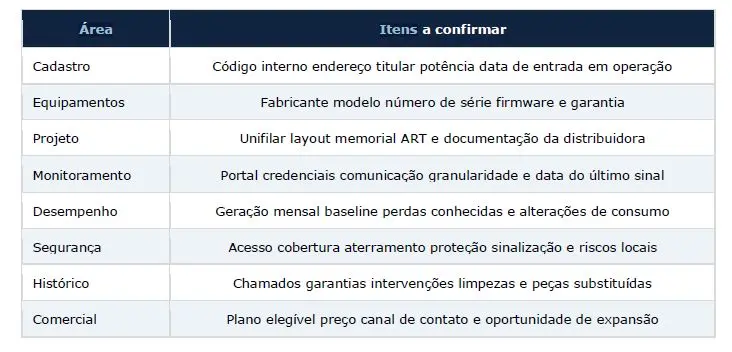
Appendix A – Portfolio Diagnostic Checklist Area Items
Appendix B – Structure of the monthly report
- Summary of the period with general status and necessary decision.
- Monthly generation, year-to-date total, and normalized comparison with the reference.
- Technical availability and downtime due to cause.
- Relevant alarms, calls, deadline, action, and status.
- Estimated energy lost and recovered, with explicit assumptions.
- Invoice and credit reconciliation when included in the plan.
- Recommendations prioritized by safety, production, and cost.
- Appendix of technical evidence and measurement history.
Appendix C – Simulation Assumptions
Sources and references
The selection prioritizes regulatory sources, public data, and recognized technical guidelines. Publications published after June 2026 were only used when they consolidate figures relating to the first half of the year.
[1] ANEELList of Mini and Micro Distributed Generation projects. Public database with reference data from 2026. https://dadosabertos.aneel.gov.br/dataset/relacao-de-empreendimentos-de-geracao-distribuida The system has undergone a system migration and may receive retroactive adjustments.
[2] Agency axes. Flow reversal when the distributor can deny the connection of distributed generation. 2026. https://eixos.com.br/solar/inversao-de-fluxo-quando-a-distribuidora-pode-negar-a-conexao-da-geracao-distribuida/ Reproduces the position of the panel of ANEEL on June 2026.
[3] Suno. Brazil surpasses 8 million consumer units benefiting from solar energy. 2026. https://www.suno.com.br/noticias/snel11-tem-alta-de-048-enquanto-brasil-supera-8-mi-de-consumidores-de-energia-solar/ It reports approximately 413 new Conservation Units in the first half of the year.
[4] Energy Research Company. Summary Report of the National Energy Balance 2025. 2025. https://www.epe.gov.br/pt/publicacoes-dados-abertos/publicacoes/balanco-energetico-nacional-2025 Data from the base year 2024.
[5] Presidency of the Republic. Law 14.300 of January 6, 2022. current text consulted in 2026. https://www.planalto.gov.br/ccivil_03/_ato2019-2022/2022/lei/l14300.htm Articles 26 and 27 deal with the transitional rules.
[6] IEA PVPS Task 13. Guidelines for Operation and Maintenance of Photovoltaic Power Plants in Different Climates. 2022. https://iea-pvps.org/key-topics/guidelines-for-operation-and-maintenance-of-photovoltaic-power-plants-in-different-climates/
[7] SolarPower Europe. Operation and Maintenance Best Practice Guidelines Version 6. 2025. https://www.solarpowereurope.org/press-releases/solar-power-europe-launches-new-operation-and-maintenance-best-practices-report-2
[8] National Renewable Energy Laboratory. Photovoltaic Degradation Rates an Analytical Review. 2012. https://www.nrel.gov/docs/fy12osti/51664.pdf Used only to provide context regarding order of magnitude; actual performance depends on the asset.
[9] Presidency of the Republic. Law 13.709 of August 14, 2018 General Data Protection Law. current text consulted in 2026. https://www.planalto.gov.br/ccivil_03/_ato2015-2018/2018/lei/l13709.htm
[10] Ministry of Labor and Employment. Regulatory Standard 10 Safety in Electrical Installations and Services. current text consulted in 2026. https://www.gov.br/trabalho-e-emprego/pt-br/acesso-a-informacao/participacao-social/conselhos-e-orgaos-colegiados/comissao-tripartite-partitaria-permanente/normas-regulamentadora/normas-regulamentadoras-vigentes/norma-regulamentadora-no-10-nr-10
[11] Ministry of Labor and Employment. Regulatory Standard 35 Work at Height. current text consulted in 2026. https://www.gov.br/trabalho-e-emprego/pt-br/acesso-a-informacao/participacao-social/conselhos-e-orgaos-colegiados/comissao-tripartite-partitaria-permanente/normas-regulamentadora/normas-regulamentadoras-vigentes/norma-regulamentadora-no-35-nr-35
methodological note
Financial values are in nominal Brazilian reais and are not adjusted for inflation. This study does not constitute legal, tax, regulatory, or engineering advice for a specific asset. Its application requires validation by a qualified professional and compliance with the contract, regulations, and local conditions.
The opinions and information expressed are the sole responsibility of the author and do not necessarily represent the official position of the author. Canal Solar.


Comments
Comments are moderated before publication.Comments should be respectful and contribute to a healthy debate. Offensive comments may be removed. The opinions expressed here are those of the authors and do not necessarily reflect the views of the author. Canal Solar.