
The 4th Brazilian Congress of Women in Energy took place this Monday (25), at the Santander Theater, in São Paulo (SP). One of the highlights of the event was the panel “COP30 and the Real Brazil: Just Transition, Green Infrastructure and Efficient Regulation”, which brought relevant discussions about the challenges and opportunities in the country's climate and energy agenda.
Elisa Bastos, Director of Corporate Affairs at ONS (National Electric System Operator), stated that Brazil has a variety of generation sources and that the efficient operation of this set is a differentiator.
“We have a very risky range of solutions in our country, and knowing how to use them intelligently is what sets Brazil apart,” he commented.
According to her, the system's foundation has historically been supported by hydroelectric and thermoelectric plants, which has allowed for the inclusion of solar and wind sources. She emphasized the importance of complementarity between these sources and increasing the system's flexibility.
Priscila Carazzatto, CEO of EGS (Energy Global Solution), highlighted the need for a stable legal and regulatory environment to attract investment.
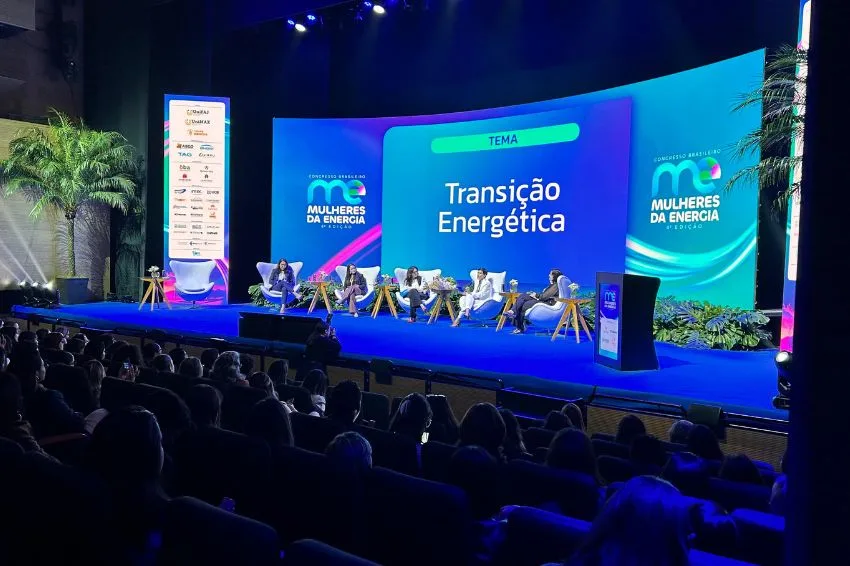
Alessandra Torres, executive president of ABRAPCH (Brazilian Association of Small Power Plants) and moderator of the panel, said that the sector is going through a period of change and advocated for the strengthening of regulatory agencies.
"We are at a turning point in the electricity sector. Regulations need to keep pace with this transformation. Therefore, strengthening regulatory agencies is essential to ensure stability and innovation," he emphasized.
Participants also discussed the expansion of transmission infrastructure as an essential factor for the advancement of renewable generation.
Marisa Barros, Undersecretary of Energy and Mining for the State of São Paulo, highlighted the importance of coordination between different levels of government to address the impacts of climate change.
Marina Meyer, president of the OAB-MG Energy Commission and legal director of INEL (National Institute of Clean Energy), stated that the energy transition must include the social dimension and consider the effects on communities.
"The transition path cannot be merely technical. It must consider the impact on people and communities," he stated.
At the opening, Lúcia Abadia, the event's creator, spoke about the role of women in the energy transition process and in the electricity sector.
“We are like the lotus flower: flowers that are born amidst challenges and blossom with strength, voice, and energy to illuminate the world,” he concluded.


Comments
Comments are moderated before publication.Comments should be respectful and contribute to a healthy debate. Offensive comments may be removed. The opinions expressed here are those of the authors and do not necessarily reflect the views of the author. Canal Solar.