
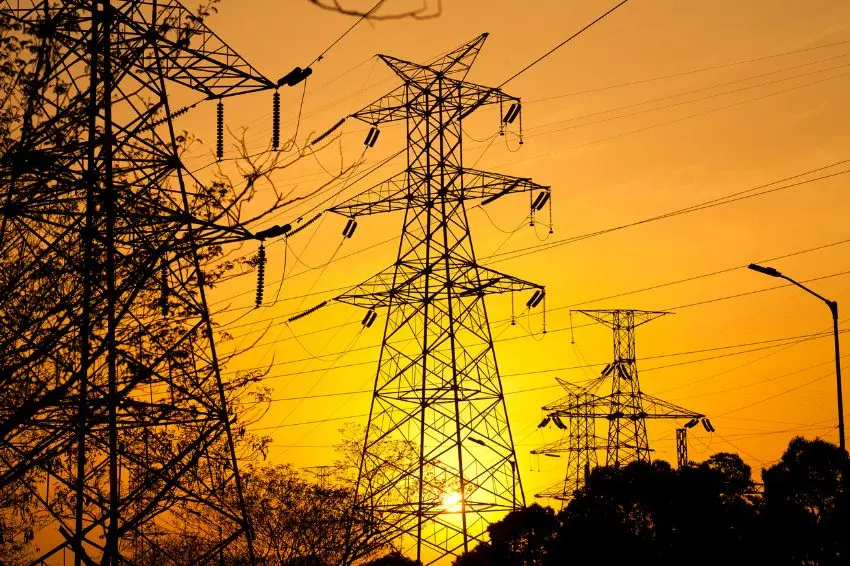
ONS (National Electric System Operator) decided not to activate the emergency generation reduction plan scheduled for this Sunday (9), on Father's Day, after reassessing the operating conditions of the SIN (National Interconnected System).
Distributors had been warned by the Operator about the possibility of adopting the measure given the expectation of low demand for energy. On Saturday (8), however, the ONS informed the agents that the procedure would no longer be necessary.
The decision came after measures were taken to balance supply and demand and a revision of projections, which now indicated a minimum load higher than initially expected for the period.
Cuts plan
The emergency mechanism is used in situations of excess generation, when the measures available to the ONS (National System Operator) to balance energy production and consumption are no longer sufficient.
The plan gained importance after Father's Day 2025, when the combination of low demand and high generation created difficulties for the operation of the electrical system.
Since then, the mechanism has only been activated once, during the Corpus Christi holiday in June of this year. According to the ONS (National System Operator), the measure is adopted as a last resort to control surplus energy.
Growth in distributed generation increases the challenge.
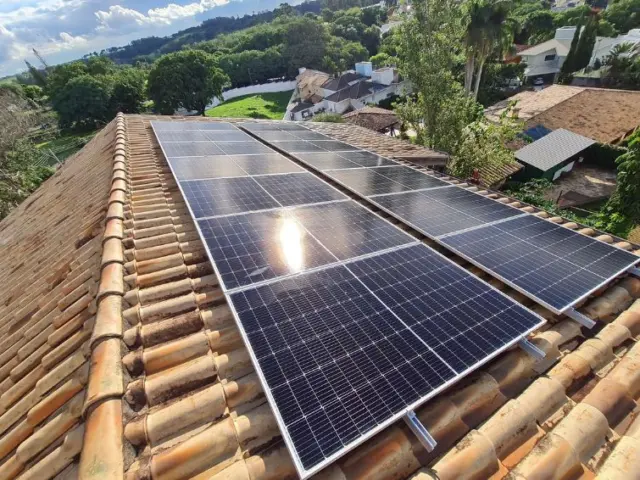
The scenario is also related to changes in the profile of the Brazilian electrical system. Distributed micro and mini-generation (MMGD), driven mainly by solar power, has been growing at a rate higher than projected by the government and in relation to the population's electricity consumption.
According to the most recent projections from ONS, EPE (Energy Research Company) and CCEE (Electric Energy Trading Chamber), MMGD (Distributed Generation Energy) is expected to grow by an average of 9,6% per year between 2026 and 2030, while energy load should increase by 4,5% per year.
This difference amplifies the challenge, especially on Sundays and holidays, when consumption decreases, but generation through distributed generation systems continues to produce energy during the day.
With lower demand on the grid and high energy production during the daytime, the ONS (National System Operator) needs to resort to different operational measures to maintain a balance between generation and consumption.
Data centers and batteries are gaining ground in the new landscape.
In parallel with the challenges posed by the growth of renewable energy sources, the electricity sector is experiencing changes that could alter the dynamics of the system in the coming years: the arrival of large energy consumers and the expansion of energy storage.
Among the new loads, data centers have gained relevance due to the high and relatively constant electricity consumption of these facilities. The installation of new projects has also begun to be considered in projections of Brazilian load growth for the coming years.
The expansion of this market, however, still depends on regulatory definitions. The National Congress is discussing Bill 278/2026, related to the creation of Redata (Special Tax Regime for Data Center Services), a regime intended to stimulate the installation of data processing and storage infrastructure in Brazil.
Another area gaining traction is energy storage in batteries, a technology capable of adding flexibility to the system by storing electricity and making it available later, according to operational needs.
Brazil will hold its first LRCAPs (Capacity Reserve Auctions) in December, specifically aimed at contracting storage systems. The auctions are scheduled for December 2nd and 4th, with supply beginning on August 1st, 2028, and contracts lasting 15 years.
In all, More than 6 projects were registered to participate in the auctions., signaling the high market interest in contracting storage systems.
The batteries will be able to store energy for certain periods and return it to the system when power is needed, offering the ONS (National System Operator) an additional tool to manage variations between generation and consumption.
all the content of Canal Solar is protected by copyright law, and partial or total reproduction of this site in any medium is expressly prohibited. If you are interested in collaborating or reusing part of our material, please contact us by email: redacao@canalsolar.com.br.


Comments
Comments are moderated before publication.Comments should be respectful and contribute to a healthy debate. Offensive comments may be removed. The opinions expressed here are those of the authors and do not necessarily reflect the views of the author. Canal Solar.