
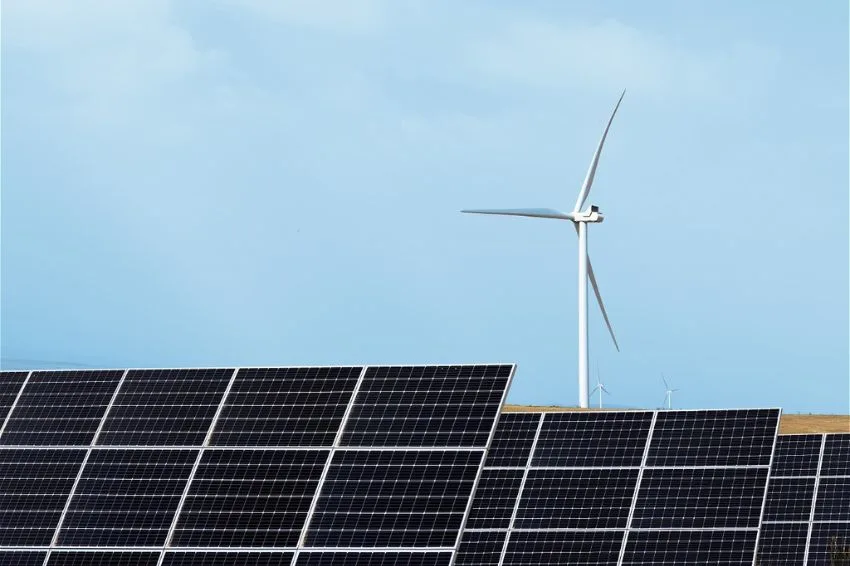
Renewable energy sources — such as solar and wind — have grown at more than double the global average electricity generation since 2012, according to the Renewable Energy Statistics 2025 report released by IRENA (International Renewable Energy Agency).
While the total volume of electricity produced in the world increased, on average, by 2,5% per year during this period — considering all sources, such as coal, natural gas, nuclear, hydroelectric, solar, wind, among others — renewable sources grew at an annual average of 5,9%.
The report also shows that, in 2024, the world's installed renewable capacity reached 4,4 TW, with 1,07 TW added since 2022. Most of this growth came from solar and wind sources, which jumped from just 1,1% of the global electricity mix in 2000 to 44% in 2023.
According to the study, solar energy stands out as the main technology responsible for the growth of renewables in recent years. In 2024, this source accounted for three-quarters of new installations—451,9 GW, with more than half deployed in China.
Goals to be achieved
However, despite the significant progress, IRENA emphasizes that the sector still faces challenges — the main one being meeting the target set at COP28 of tripling renewable capacity by 2030, something that is still far from happening.
In 2024, the annual growth rate was 15,1%, but an average annual growth rate of 16,1% would be needed to reach the proposed 6,73 TW. At the current rate, the world would fall 0,9 TW short of the target.
The IRENA study also highlights the uneven expansion of renewables: Asia dominates new additions, followed by Europe, North America, and South America. Africa, Oceania, and the Middle East, however, show more modest growth, with a low share of new installations.
Expectations for 2030
Among all technologies, solar energy is the only one currently on track to reach the investment levels required to meet climate targets by the end of the decade, according to projections made by IRENA in October 2024.
Even with geopolitical obstacles, economic pressures, and political uncertainty—especially in the United States—the data points to a solid upward trajectory for renewable energy on the global stage. The full IRENA study, with all this information, can be accessed at this link.
all the content of Canal Solar is protected by copyright law, and partial or total reproduction of this site in any medium is expressly prohibited. If you are interested in collaborating or reusing part of our material, please contact us by email: redacao@canalsolar.com.br.




Comments
Comments are moderated before publication.Comments should be respectful and contribute to a healthy debate. Offensive comments may be removed. The opinions expressed here are those of the authors and do not necessarily reflect the views of the author. Canal Solar.