
From REN 482 (Normative Resolution No. 482 of 2012) Of the ANEEL (National Electric Energy Agency), electricity consumers obtained the right to produce the energy they consume, not being allowed to sell it to third parties. This possibility led to the need for a term to define a new personality: whoever produces and consumes their own electrical energy.
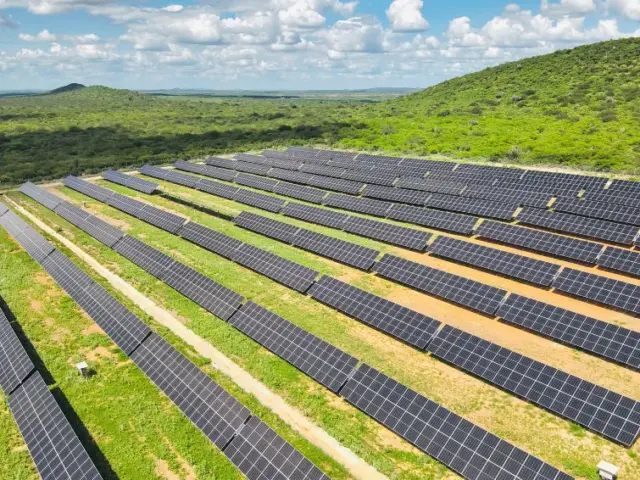
This gave rise to the term “prosumer”, a neologism adapted from its English counterpart prosumer, created by the American writer Alvin Toffler to indicate the new role of the consumer in post-modern society. Although DG (distributed generation), which uses generators at or near the consumption site, involves several energy sources, solar photovoltaic generation undeniably stood out among them, thus spreading grid-connected photovoltaic systems, also known as on-grid or grid-tie, in Brazil.
This reality was not due to chance, or destiny, being the result of the entrepreneurship of countless professionals, most of them from the electrical area, who realized in photovoltaic solar energy the possibility of:
- Increase the share of renewable sources in electricity generation in Brazil;
- Allow greater autonomy for consumers in relation to electricity distributors;
- Create a disruptive market, where the direct relationship between service providers and consumers consolidated an extremely dynamic and efficient supply chain.
Participation of photovoltaic systems in DG
Due to the still small number of installations – currently less than 1% of consumers generate their own energy – we do not know whether electricity prosumers are here to stay.
Contrary to what promoters and detractors of photovoltaic solar generation say, this is a game that is still being played, at the beginning of the first half, and the issue of the safety of photovoltaic systems will play a fundamental role in its outcome.
Every electrical installation has an associated risk, whether high, medium or low voltage. For this risk to be acceptable, the country has specific technical standards that determine the main characteristics of an electrical system and its components, thus ensuring minimum standards of safety and performance, so that its users, producers and consumers, can obtain the greatest benefit from it. possible.
As this is something relatively new – REN 482 is not yet ten years old – the specific technical standards for photovoltaic systems are still being created. In 2019, the ABNT NBR 16690: 2019 – Electrical installations of photovoltaic arrays – Project requirements, essential for establishing a solid regulatory basis for this segment.
What should be considered is who will be responsible for applying these standards and ensuring the safety of users of buildings where photovoltaic systems are installed. Who will be responsible for prosumers, since they will be producers?
It seems clear that prosumers will, in most cases, be people who are not experts in electricity and will continue to be so. In this case, the responsibility for the safety of photovoltaic systems will fall to the professionals in their supply chain, since they are the main stakeholders in ensuring that it prospers.
This is how a developed society should work. Assigning responsibilities and creating wealth. A prosumer is also a producer, but just as the owner of a hospital is not necessarily a doctor, the owner of a photovoltaic system does not need to be an electrical engineer.
It will undoubtedly be his responsibility to hire qualified people, something that professionals in the field of photovoltaic energy can contribute to by disseminating knowledge, to prosumers, but mainly among their colleagues.
References
- Silva, Olga Maria Tavares da. Prosumer: the new protagonist of communication. Center for Human Sciences, Letters and Arts, Federal University of Paraíba.
- ABSOLAR (Brazilian Photovoltaic Solar Energy Association)
- Martinho, Edson; Cruz, Michael; Santos, Sergio Roberto. Security in distributed generation

Comments (1)
Comments are moderated before publication.Comments should be respectful and contribute to a healthy debate. Offensive comments may be removed. The opinions expressed here are those of the authors and do not necessarily reflect the views of the author. Canal Solar.
Goodnight. Congratulations on your article, which was very comprehensive. However, I am nevertheless disappointed with a company I hired in my city for the purpose of generating my own energy. The aforementioned company installed all the equipment. However, two months have passed, and the concessionaire named CEMIG has not connected the equipment to the network.
The contracted company has already received full payment for the sale of the equipment, and is avoiding its responsibility as co-responsible party. What to do in this case as an injured consumer?