
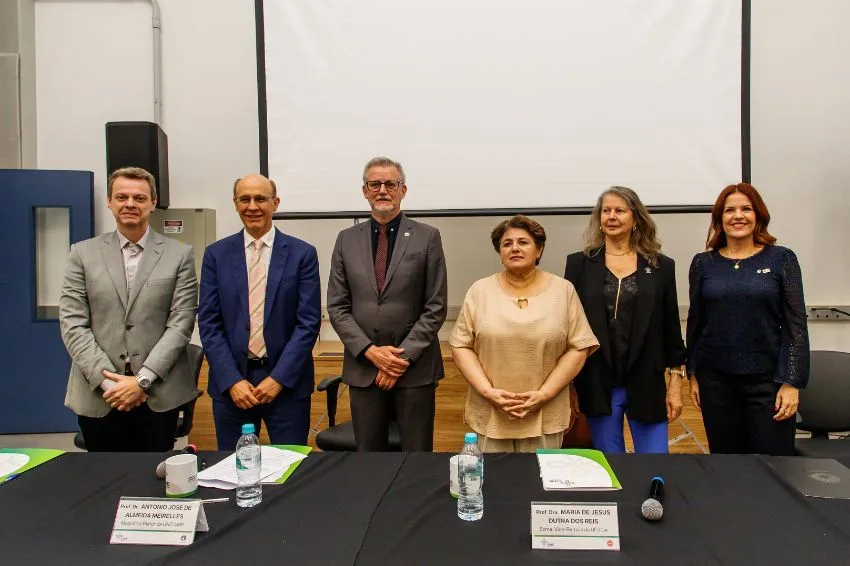
This Wednesday (13), Shell Brasil signed an agreement to facilitate the implementation of 15 new research and development projects in clean energy in CINEMATOGRAPHY (Center for Innovation in New Energies).
The agreement was signed with Fapesp (São Paulo State Research Support Foundation), Unicamp (State University of Campinas) and USP (University of São Paulo).
Over the next five years, the focus of studies will be to improve technologies to produce energy using renewable sources and low-energy processes. carbon footprint. The goal is to make these technologies increasingly efficient, economical and sustainable.
The new clean energy projects will be divided into four interconnected research programs. They are:
- Power generation;
- Advanced energy storage;
- Green hydrogen;
- Computational materials design.
Initially, the scientific team involved in the projects will be made up of researchers linked to 11 Brazilian teaching and research institutions.
In this stage, R$82,4 million will be invested, of which R$62,4 million will be financed by Shell and the remaining R$20 million by Fapesp.
According to Ana Flávia Nogueira, director of CINE and professor at the Chemistry Institute at Unicamp, the biggest challenge of the energy transition is to generate alternatives to the use of fossil fuels.
“It is impossible to talk about fuels of the future without thinking about developing renewable energies that gradually reduce the use of natural gas, oil and coal in the generation of heat and energy in industrial processes,” she said.
To ensure the continuity of this process, the director believes that it is “crucial to implement large-scale energy storage solutions that meet demand even during periods of intermittency in renewable sources,” she emphasizes.
Four areas of research
In energy generation, a solar energy project stands out that uses material based on perovskite crystals, a cheaper raw material with a smaller carbon footprint in its manufacture, when compared to the silicon crystal panel, widely used today.
The researchers intend to create prototypes to test in representative environments.
In turn, the advanced energy storage program will aim to improve energy storage technologies, with better performance and affordable cost.
The aim is to use these technologies to store energy when there is excess and supply it when there is demand, thus compensating for the intermittency of renewable energy sources.
The green hydrogen program will focus on identifying innovative materials that will help reduce the costs of key components of so-called electrolyzers, equipment responsible for generating green hydrogen by breaking down water molecules.
Researchers are also looking for opportunities to improve the efficiency of this equipment, through advanced studies on the subject.
Finally, the Computational Materials Design area will use CINE's computing and AI (artificial intelligence) tools to perform scenario feasibility analyses, assessing in advance the probability of success of some development paths for other programs, shortening the path to success for the technology under analysis.
About CINE
Founded by Shell Brasil and FAPESP in 2018, CINE is a Brazilian research and innovation center that has stood out, in Brazil and abroad, in the development of technologies that can accelerate the energy transition and help establish a low-carbon economy.
all the content of Canal Solar is protected by copyright law, and partial or total reproduction of this site in any medium is expressly prohibited. If you are interested in collaborating or reusing part of our material, please contact us by email: redacao@canalsolar.com.br.



Comments
Comments are moderated before publication.Comments should be respectful and contribute to a healthy debate. Offensive comments may be removed. The opinions expressed here are those of the authors and do not necessarily reflect the views of the author. Canal Solar.