
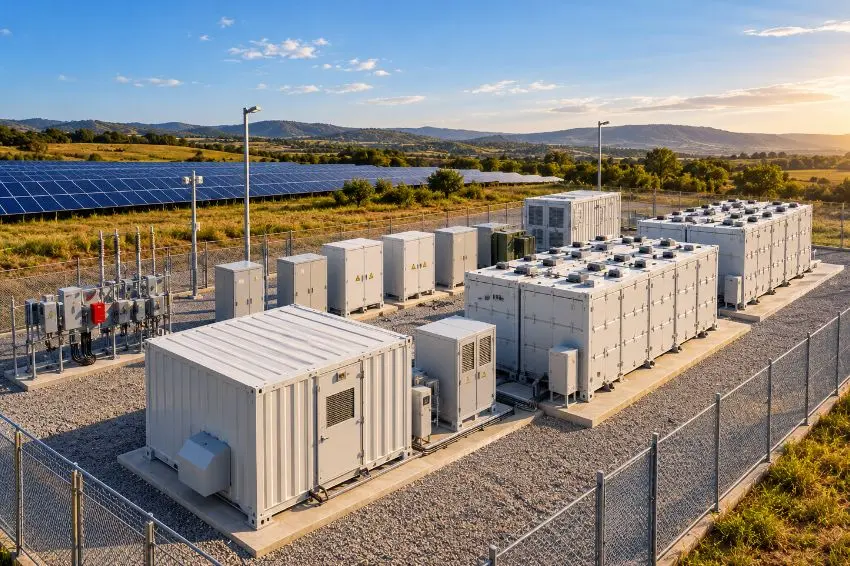
A new projection from IRENA (International Renewable Energy Agency) indicates that Brazil could achieve one of the lowest costs in the world for solar energy generation combined with battery storage by 2035.
According to the study, the estimated cost for the country is approximately US$41 per MWh, considering a 95% reliability level in electricity supply. This result places Brazil second among the markets analyzed, tied with Oman and behind only China, where the projected cost is around US$33/MWh.
Next in line are India, with US$47/MWh, Australia and South Africa, with approximately US$50/MWh each, and the United States, with US$59/MWh.
The values are part of the study. 24/7 Renewables: The Economics of Firm Solar and Wind, which analyzes the costs of projects capable of combining renewable generation and storage to offer electricity with greater predictability.
The projections consider locations with high availability of solar resources and do not represent the average generation costs of each country.
To make the comparison, IRENA used the concept of Firm LCOE (firm levelized cost of energy), an indicator that considers the costs of supplying electricity with a given level of availability, including renewable generation and storage.
Unlike conventional levelized cost, this metric incorporates the need to provide electricity even during periods of low or no solar generation.
Firm solar energy costs could fall by 37% in Brazil.
In addition to international comparisons, the study presents the trajectory of cost reduction for firm solar energy over the next decade.
In a location with high solar irradiance in Bahia, the estimated cost for 2025 is approximately US$ 65/MWh. The projection drops to US$ 44/MWh in 2030 and reaches about US$ 41/MWh in 2035, considering the references presented for Brazil. The difference between the 2025 and 2035 values represents a projected reduction of approximately 37%.
This trajectory follows the trend observed in other markets with conditions favorable to photovoltaic generation, driven mainly by the reduction in the costs of solar equipment and storage systems.
Advances in battery technology allow some of the electricity produced during the day to be stored and used later, increasing the predictability of supply and reducing dependence on other sources during certain periods.
Battery costs fell 93% between 2010 and 2024.
One of the main factors behind this transformation is the reduction in the costs of storage systems.
According to IRENA, the global cost of these technologies fell by 93% between 2010 and 2024, from US$2.634 per kWh to US$197/kWh.
The study also points out that firm renewable energy is already approaching the costs of conventional alternatives in different markets.
In China, for example, solar energy projects combined with storage already have lower costs than alternative generation methods using coal and natural gas, according to the agency.
In other countries, the expectation is that the reduction in the costs of renewable technologies and batteries will increase this competitiveness in the coming years.
ABSOLAR highlights opportunities for the Brazilian market
For ABSOLAR (Brazilian Photovoltaic Solar Energy Association), the results reinforce Brazil's potential to expand the use of storage systems associated with renewable generation.
The organization believes that reducing battery costs could contribute to increasing the flexibility of the electrical system, allowing electricity produced during periods of higher generation to be used during times of higher demand.
“The results show that Brazil has very favorable conditions to advance in the supply of firm and competitive renewable energy. The reduction in storage costs expands the capacity to use the sun more strategically, shifting generation to the times of greatest need for the system,” stated Rodrigo Sauaia, CEO of [Company Name]. ABSOLAR.
The association also identifies opportunities arising from the growth in new demands for electricity, especially in activities that require greater predictability in supply, such as data centers, green hydrogen production, and energy-intensive industrial facilities.
“Expanding storage capacity could help integrate new loads and increase the flexibility of the electrical system, transforming Brazil's abundance of renewable resources into an even greater advantage for the competitiveness of the economy,” added Bárbara Rubim, Chair of the Board of Directors of [Company Name]. ABSOLAR.
According to the organization, the advancement of these technologies could expand the role of renewable sources in meeting electricity demand, combining the competitiveness of generation with the ability to provide energy at the necessary times.
“For Brazil, this evolution opens the door to a new phase of renewable energy expansion, in which the capacity to produce clean energy is no longer evaluated solely by the cost of generation, but also incorporates its availability, predictability, and ability to meet demand,” Bárbara concluded.
all the content of Canal Solar is protected by copyright law, and partial or total reproduction of this site in any medium is expressly prohibited. If you are interested in collaborating or reusing part of our material, please contact us by email: redacao@canalsolar.com.br.


Comments
Comments are moderated before publication.Comments should be respectful and contribute to a healthy debate. Offensive comments may be removed. The opinions expressed here are those of the authors and do not necessarily reflect the views of the author. Canal Solar.