
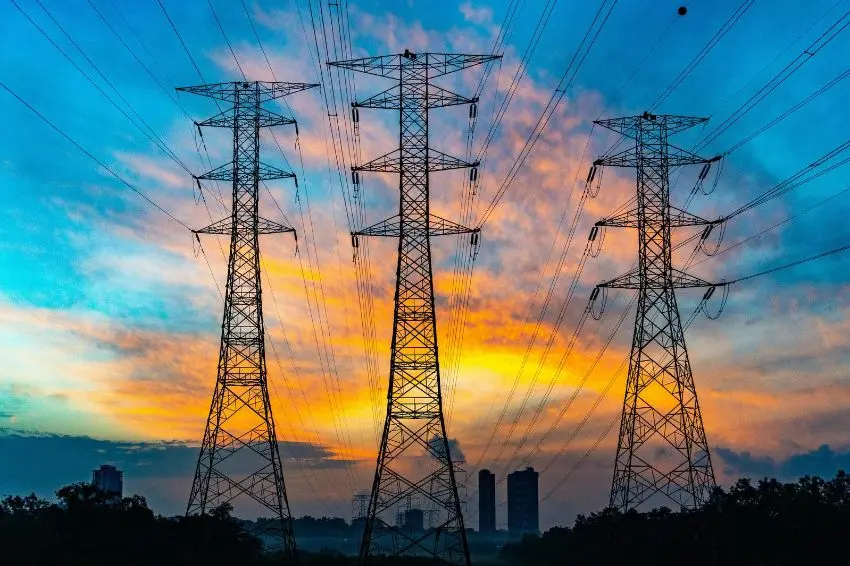
Present in Brazil since 1954, Hitachi Energy is strengthening its industrial structure to meet the demand for electrification equipment and solutions.
The company maintains factories in Guarulhos (SP), focused on the production of power transformers and high-voltage equipment, and Blumenau (SC), specializing in distribution transformers. It is also building a new unit in Pindamonhangaba (SP).
This Thursday (22), the company inaugurated the expansion of its factory in Guarulhos, whose production capacity increased by almost 50%.
The move is part of a R$1,8 billion investment program in Brazil, aimed at industrial expansion and meeting new demands in the electricity sector.
The Guarulhos unit is among the five largest power transformer factories in the group, which has a presence on six continents.
In an interview with Canal Solar, Fábio Nugnezi, Marketing and Sales Director of Hitachi Energy in Brazil, stated that the decisions reflect a favorable assessment for the coming years.
"We believe that the electricity sector will grow and be sustainable for several years to come, not only in Brazil but also worldwide," he said.
The new factory in Pindamonhangaba (SP) is part of this strategy to expand production capacity and nationalize components. The unit will be dedicated to the manufacture of high-voltage bushings and vacuum commutators.
Local production of these critical items aims to reduce delivery times and dependence on imports, important factors for projects with tight schedules.

Transmission and capacity reserve
Among the business opportunities, Nugnezi highlighted the transmission auction scheduled for October 30th and the auctions for reserve capacity for battery storage, scheduled for December.
According to him, transmission is playing an increasingly important role in the national electricity ecosystem, not only because it brings energy to points of consumption, but also because it enables the installation of new industries and data centers, which demand increasingly powerful grid connections.
The company has already identified businesses related to LRCAP (Auction for Reserved Capacity in the form of Power), held in March. Among the equipment under negotiation are transformers, generator circuit breakers, protection and control systems, and connection modules for substations.
The executive mentioned negotiations involving companies such as Auren, Engie, Copel, and Statkraft, without detailing values or contracts, as negotiations are still ongoing.
In hydroelectric plants that will expand their installed capacity, one of the challenges is incorporating new equipment into existing structures, often with limited space. In this scenario, Hitachi offers gas-insulated substations (GIS), with a compact design, as well as digital protection and control systems. "Our strength is developing a connection solution together with the client," explained Nugnezi.
The company's portfolio also includes PASS hybrid modules, which combine different switching and measurement functions, and FACTS systems, such as STATCOM, designed for voltage control and reactive power support.
These technologies can help connect additional generation without compromising the stability of the SIN (National Interconnected System).
Batteries, digitization and services
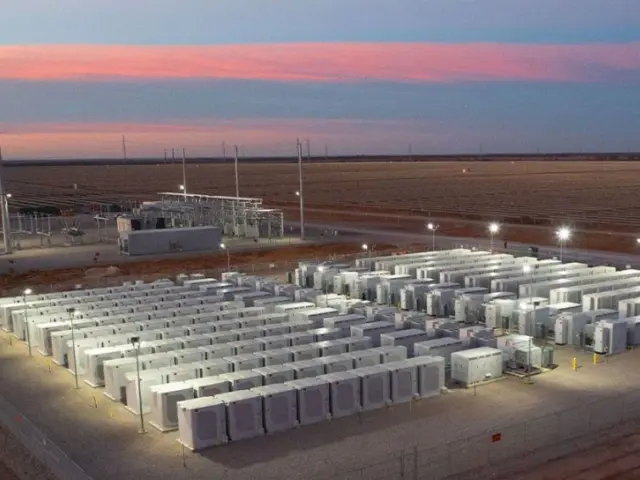
For storage auctions, Hitachi does not supply the batteries themselves, but offers equipment and systems necessary for integrating the projects into the grid.
These include power conversion and BESS control systems, as well as substations to increase voltage and allow connection to the electrical grid.
The company is also investing in digitalization and predictive maintenance. Solutions for monitoring transformers and other assets help to identify potential failures in advance and plan interventions, reducing the risk of downtime.
In the integration between old and new equipment, the company uses communication systems based on the IEC 61850 standard.
Another approach is the modernization of transformers directly at the operating site, eliminating the need to transport them to the factory. According to Nugnezi, this service can reduce intervention time and help meet project deadlines.
Demand in transformation
The executive believes that the sector's growth does not depend on a single segment. Although investments in wind and solar power have slowed compared to the period of more rapid expansion, other markets are advancing, including data centers, transport electrification, industry, and energy distribution.
Nugnezi noted that the electrical infrastructure will have to keep pace with the expansion of consumption and the energy transition.
In his assessment, Brazil has a predominantly renewable energy generation matrix, but still has a long way to go in electrifying consumption, including industrial processes and vehicle fleets.
With expertise in large-scale generation and transmission projects, as well as renewable energy equipment and electrical connection solutions for industrial installations, Hitachi aims to serve diverse sectors.
"The more complex, the more engineering is required, the better for Hitachi," the executive stated, highlighting the company's technical expertise as a key differentiator.
all the content of Canal Solar is protected by copyright law, and partial or total reproduction of this site in any medium is expressly prohibited. If you are interested in collaborating or reusing part of our material, please contact us by email: redacao@canalsolar.com.br.

Comments
Comments are moderated before publication.Comments should be respectful and contribute to a healthy debate. Offensive comments may be removed. The opinions expressed here are those of the authors and do not necessarily reflect the views of the author. Canal Solar.