
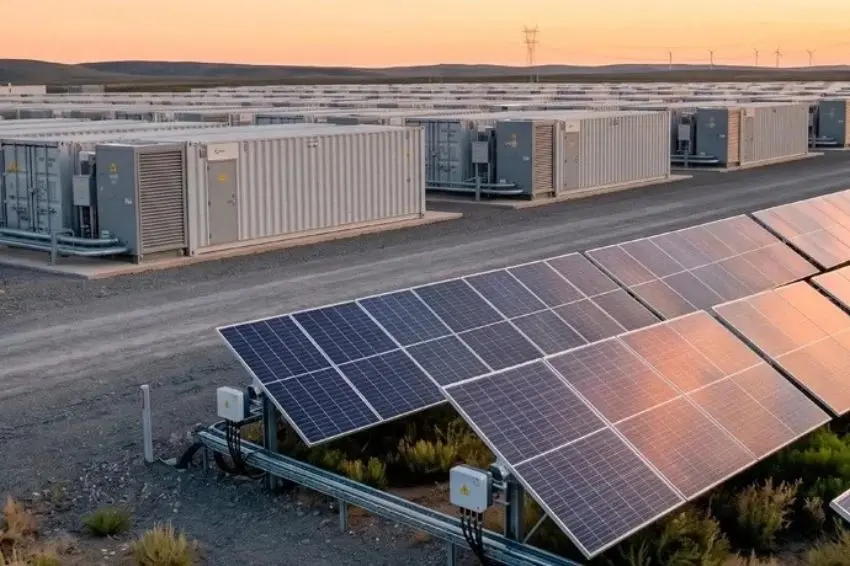
The cost of solar energy combined with battery energy storage systems (BESS) could fall by about 40% in Brazil over the next decade, increasing the technology's competitiveness in the country.
Projections of McKinsey & Company They indicate that the so-called Firm LCOE (Levelized Cost of Firm Energy) of solar generation coupled with batteries could fall from US$65/MWh in 2025 to approximately US$39/MWh in 2035.
The indicator goes beyond the cost of generating solar power. The calculation also incorporates the so-called "firmness premium," related to the additional cost required to increase the predictability and reliability of energy delivery through storage.
According to projections presented by the consulting firm, the reduction of this cost in Brazil should be favored by a combination of factors, including high solar irradiance, the expectation of falling prices for storage systems, and advances in battery sizing.
Therefore, the combination of photovoltaic generation and storage is likely to become more competitive over the next few years.
Brazil could fall behind only China.
The projection also places Brazil in a prominent position in international comparison. For 2035, the estimated Firm LCOE for the country is approximately US$ 39/MWh, surpassing only the projected value for China, of around US$ 33/MWh.
In the United States, for example, the estimate presented is approximately US$59/MWh over the same timeframe. This scenario indicates that Brazil may be among the markets with the lowest cost for firm solar generation supported by storage systems.
High tariffs expand storage capacity.
Another aspect highlighted by the presentation is the price of electricity paid by Brazilian consumers. The analysis considers a residential tariff of US$ 0,36/kWh in purchasing power parity and points out that the Brazilian value exceeds that observed in 77 countries.
The material also indicates that electricity bills will increase by 12% in 2025, compared to an inflation rate of 4,4% during the same period. This scenario could increase the economic attractiveness of batteries, especially in applications that allow for reduced dependence on the grid during peak periods and more efficient use of energy produced by photovoltaic systems.
In this context, energy storage takes on a function that goes beyond supplying energy during periods without solar generation; it can also be used to shift consumption away from the grid and increase the utilization of self-generation.
Lower costs can increase competitiveness.
The figures were presented this Friday (11), in São Paulo, during an event promoted by CELA (Clean Energy Latin America) and IFC (International Finance Corporation), the private sector arm of the World Bank Group. The presentation was given by Mikael Djanian, partner at McKinsey & Company in Brazil.
"Compared to other countries, Brazil is second only to China in terms of firm LCOE. We're not talking about tariffs and other charges here; we're talking about the pure cost of energy. Brazil is one of the most competitive in the world," said the executive.
all the content of Canal Solar is protected by copyright law, and partial or total reproduction of this site in any medium is expressly prohibited. If you are interested in collaborating or reusing part of our material, please contact us by email: redacao@canalsolar.com.br.


Comments
Comments are moderated before publication.Comments should be respectful and contribute to a healthy debate. Offensive comments may be removed. The opinions expressed here are those of the authors and do not necessarily reflect the views of the author. Canal Solar.