
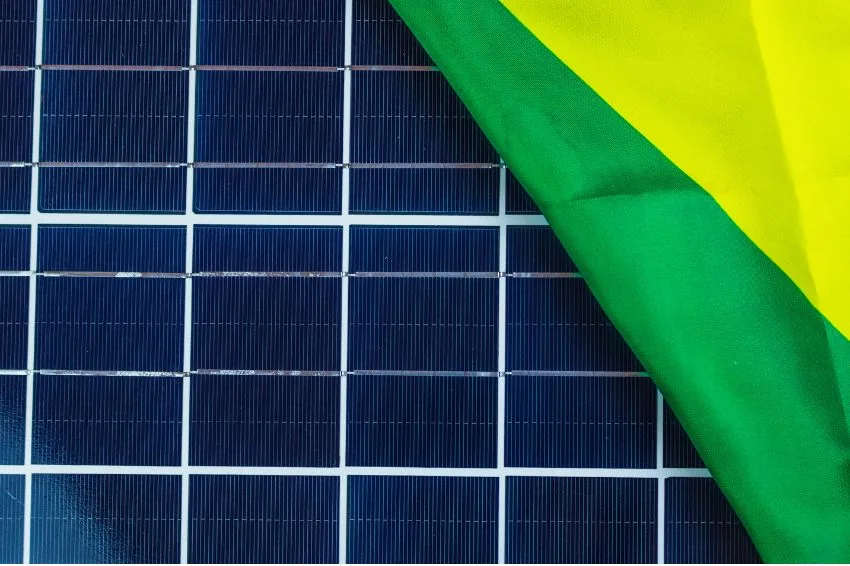
On September 7th, Brazil celebrates 203 years of independence, when Dom Pedro I proclaimed the break with Portugal on the banks of the Ipiranga River. This historic act solidified the country as a sovereign nation, capable of forging its own political and economic path.
More than two centuries later, Brazil is experiencing a new independence movement—this time in the energy sector. While the cry was once for political freedom, the challenge now is to achieve autonomy in the face of high electricity costs.
Its accelerated expansion has not only helped reduce Brazilians' electricity bills, but has also created jobs, attracted investment, and placed the country among the global leaders in installed capacity.
The source, which was considered an alternative energy source just over a decade ago, now occupies a strategic place in the national electricity grid. More than an economic solution, it also represents environmental and technological independence.
In celebration of the September 7th holiday, the Canal Solar Below is a list of 7 facts that show why solar energy can now be considered a symbol of the country's independence.
1. Accelerated growth
There are already more than 60 GW of installed solar energy capacity in Brazil – with almost 43 GW added through in-house generation and another 18 GW from large plants.
This year alone, more than 7 GW were added, even with the losses caused by curtailment (generation cuts) and flow inversion.
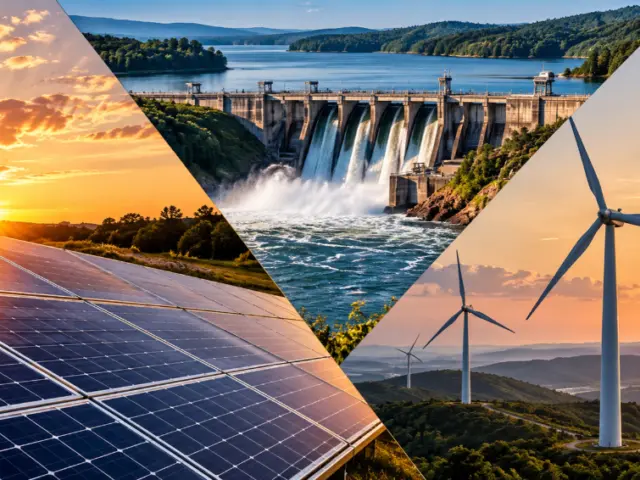
Currently, the source is the second most important in the electricity matrix, with a 23% share – second only to hydroelectric generation, which holds more than 43% of the total volume.
2. Increasing access for more consumers
Since 2010, the average cost of installing solar plants in Brazil has fallen by 71%, according to a survey released by IRENA (International Renewable Energy Agency).
The drop in module and inverter prices was the main factor, representing 60% of the cost reduction for new projects during the period.
Among the world's four largest markets, Brazil saw the largest reduction. Over the same period, India, the United States, and China saw reductions of 66%, 65%, and 64%, respectively.
3. Generating green jobs and billion-dollar investments
Since 2012, more than 1,7 million direct and indirect jobs have been created in Brazil by the solar energy sector, which has already attracted more than R$266 billion in private investment, according to data from ABSOLAR (Brazilian Photovoltaic Solar Energy Association).
The source also raised R$83,1 billion in taxes for public coffers and prevented the emission of 88,1 million tons of CO₂, contributing to the energy transition and the achievement of environmental goals.
4. Reducing dependence on hydroelectric power and fossil fuels
The advancement of solar energy—along with the growth of energy storage—also reduces the country's dependence on water resources and, consequently, the use of thermal power plants, reducing costs and emissions. As a result, the Brazilian electricity system becomes more decentralized, resilient, and less prone to blackouts.
5. Support from the population
Surveys such as those by Ibope Inteligência and Descarbonize show that most Brazilians want to generate their own renewable energy. In addition to saving on electricity bills, solar energy protects consumers against energy inflation, as the average tariff has risen above official inflation every year.
6. Growth of research and academic studies
Known worldwide for being a reference country in research, Brazil has been notable for carrying out numerous laboratory tests in photovoltaic technologies. among the main ones, the work carried out by universities such as Unicamp (State University of Campinas), USP (University of São Paulo), PUC-RIO (Pontifical Catholic University of Rio de Janeiro), as well as institutes such as IPEN (Institute of Energy and Nuclear Research) stands out.
7. Global leadership in renewables
Brazil is already among the fastest-growing countries in the world for solar energy, occupying prominent positions in international rankings of installed capacity. This leadership projects the country as a benchmark for sustainability and innovation, reinforcing its independence in the global energy landscape.
In 2024, Brazil added a record 18,9 GW of photovoltaic power, positioning itself as the fourth-largest solar energy market in the world, behind only China, the United States, and India. This record surpassed the 15,6 GW added in 2023 and represented about 3% of all global solar expansion last year.
all the content of Canal Solar is protected by copyright law, and partial or total reproduction of this site in any medium is expressly prohibited. If you are interested in collaborating or reusing part of our material, please contact us by email: redacao@canalsolar.com.br.



Comments
Comments are moderated before publication.Comments should be respectful and contribute to a healthy debate. Offensive comments may be removed. The opinions expressed here are those of the authors and do not necessarily reflect the views of the author. Canal Solar.