
With commercial and rural consumers already accounting for more than 40% of Brazil's distributed generation (DG) capacity, rising energy costs, concerns about security of supply, and increased operational complexity are transforming companies' expectations regarding solar energy.
The Brazilian solar market has already advanced far beyond the initial adoption phase. By the end of 2025, the country had approximately 65 GW of installed solar capacity, of which roughly 45 GW corresponded to distributed generation.
At the same time, electricity remains one of the main inputs for the productive economy: in 2025, industry consumed 199,3 TWh, while the commercial sector recorded consumption of another 104 TWh. For companies, the issue is not only the amount of electricity consumed, but also the predictability of its costs and availability.
Between May and December 2025, commercial consumers faced more onerous tariff flags, while the rapid migration of high-voltage consumers to the free energy market demonstrates how much companies are seeking greater control over their energy strategy. In the first quarter of 2026, the free market already represented 44,1% of national electricity consumption.
Energy security has also gained prominence on the agenda. In July 2026, Brazil approved 1,8 GW of additional reserve capacity to reinforce the electrical system in the face of the high probability of a more intense El Niño and the geopolitical uncertainties that could affect fuel prices.
For agricultural operations, this exposure is particularly significant: irrigation, pumping, cooling, ventilation, storage, and processing can all depend on a continuous supply of electricity.
Furthermore, new federal funding programs have begun to explicitly support renewable energy generation and storage as tools to reduce operating costs and strengthen the energy resilience of rural properties.
In this scenario, solar energy ceases to be merely a lower-cost electricity investment. For commercial, industrial, and agricultural installations, it becomes part of a broader strategy to reduce exposure to energy price volatility, increase operational resilience, and gain greater control over long-term energy costs. As projects grow, so do the demands on the architecture of the system that supports them.
From power to system design
In C&I projects, the choice of inverter begins with the operational profile of the installation. A factory with concentrated loads during the day, a commercial facility with air conditioning and refrigeration systems, or a rural property with irrigation pumps and climate control systems present very different demands for a photovoltaic installation.
The roof geometry, available ground space, string configuration, module current, network conditions, and future expansion plans can also influence the most suitable architecture.
In this context, flexibility becomes increasingly important. The question is not just how many kilowatts an inverter can handle, but whether the system can be configured to suit how the company actually operates—without adding unnecessary complexity to the design, installation, or future expansions.
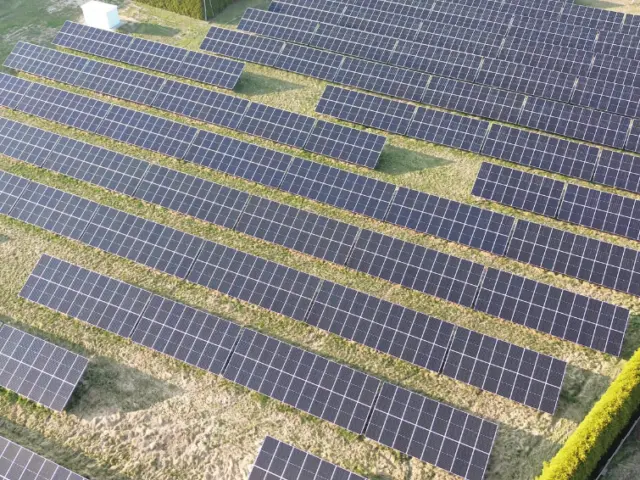
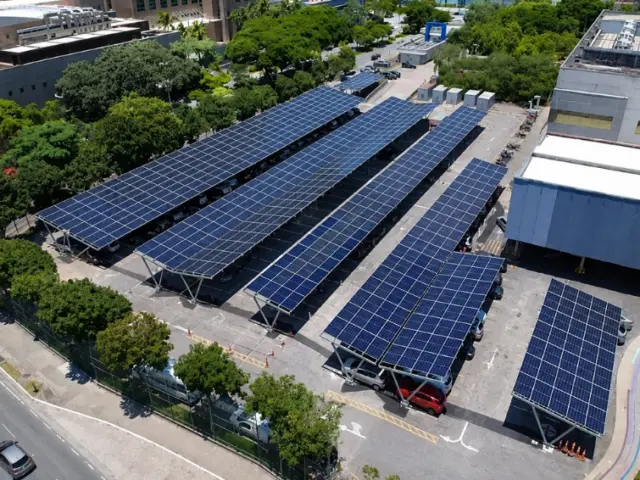
For the Brazilian market, Solplanet's C&I inverter line covers power outputs from 75 kW to 350 kW, including the ASW 75-110K LT series, 125 kW and 150 kW solutions, and the higher-power ASW HT series. This range offers integrators different options for projects on commercial rooftops, industrial facilities, agricultural properties, and larger ground-mounted generation projects.
Across the entire portfolio, multiple independent MPPTs, compatibility with high-current modules, and oversizing capabilities allow for meeting different module array configurations and technologies.
Depending on the model, features such as ShadeSol, AFCI arc fault detection, surge protection on both DC and AC sides, and temperature monitoring expand the possibilities for design and protection.
The value of these features becomes even more evident as projects increase in scale: greater flexibility allows installers to adapt the system to the actual site conditions, while protection and monitoring features gain importance when more equipment, strings, and power levels need to be managed as a single asset.
The inverter's role continues after commissioning.
For a company, the profitability of a solar system is determined over years, not at the moment the plant is put into operation. Unidentified underperformance, avoidable technical visits, or lengthy diagnostic periods can reduce the savings the installation was designed to deliver.
In locations with high energy consumption processes or that depend on operational continuity, visibility into the plant's operation therefore becomes part of the business model itself.
This is where monitoring and diagnostics cease to be merely convenient features and begin to act as operational tools. Depending on the product line, Solplanet's C&I solutions include string-level management, intelligent IV curve diagnostics, remote firmware updates, reactive power control, Anti-PID functionality, and digital tools for commissioning and monitoring.
The higher-power ASW HT series achieves peak efficiencies exceeding 99% and supports the higher currents associated with the current generation of photovoltaic modules, allowing integrators to combine the latest module technologies with larger-scale system architectures.
Long-term support is also important for the same reason. In Brazil, Solplanet offers a 10-year warranty, with extension options that vary depending on the product and applicable conditions.
Together, these capabilities expand the inverter's role beyond DC to AC conversion. It becomes part of the asset's protection, monitoring, and maintenance, and consequently, its ability to reliably deliver the expected energy and financial performance throughout the project's lifespan.
From solar power generation to energy management.
The next step in this evolution can already be observed in Brazil: energy storage is rapidly advancing on the energy agenda. The 2026 capacity reserve auction process attracted 6.091 battery storage projects, totaling almost 297 GW of proposed capacity — a strong indication of the speed at which the market is preparing for a more flexible electricity system.
This transformation is also reaching the agricultural sector. In Minas Gerais, a R$ 50 million program launched in 2026 is supporting solar energy systems combined with batteries for rural properties, with the explicit goal of improving energy security, reducing operating costs, and increasing autonomy. At the federal level, the 2026/2027 Harvest Plan also expanded support for renewable energy generation and storage.
For C&I consumers, storage expands the possibilities of an on-site energy system. Depending on the application and design, batteries can increase the utilization of locally generated solar energy, contribute to peak demand management, provide greater flexibility over electricity consumption timing, and add resilience to loads where continuity of supply is critical.
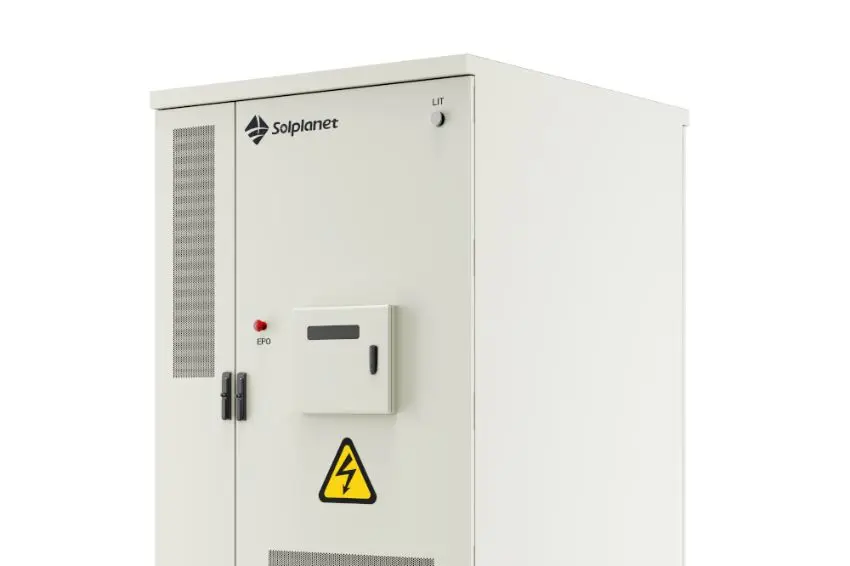
Solplanet complements its line of on-grid inverters with hybrid solutions, high-voltage batteries, and a C&I BESS All-in-One system with 125 kW of power and 261 kWh of storage capacity.
Therefore, generation and storage can be considered parts of the same energy architecture when the project characteristics so require. This does not mean that every commercial or agricultural project needs storage.
This means that technological decisions need to increasingly stem from the customer's actual situation: energy prices, load profile, grid conditions, critical processes, expansion plans, and the value of greater operational autonomy.
For agricultural companies and operations, the best-structured R&D projects will therefore be those developed based on the economic reality and risks of each installation—and not just the inverter's power output.
The question is no longer simply "How many kilowatts do we need?", but rather "Which energy architecture offers this operation the best combination of cost control, reliability, flexibility, and long-term value?".
The opinions and information expressed are the sole responsibility of the author and do not necessarily represent the official position of the author. Canal Solar.


Comments
Comments are moderated before publication.Comments should be respectful and contribute to a healthy debate. Offensive comments may be removed. The opinions expressed here are those of the authors and do not necessarily reflect the views of the author. Canal Solar.