
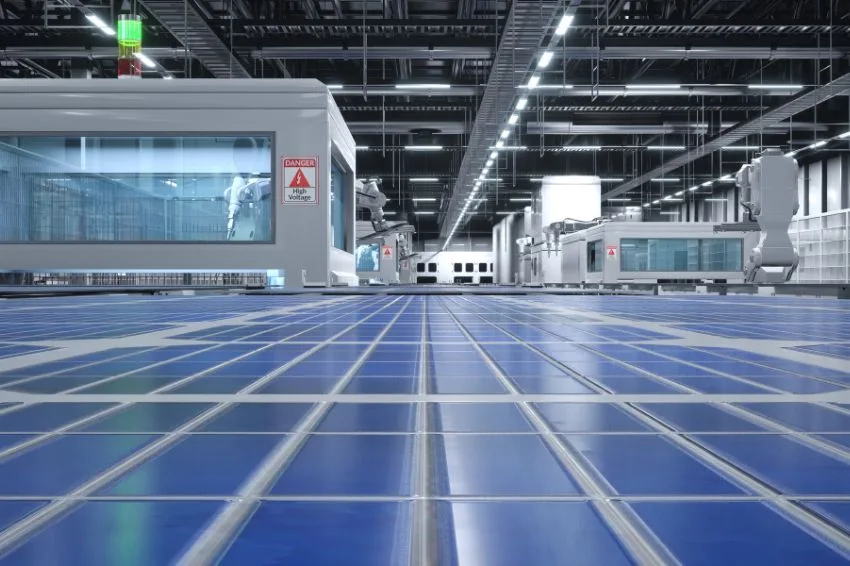
TÜV Rheinland – a company specializing in testing, inspection and certification services – found that most solar panels tested in 2024 had lower power than that declared by manufacturers. The data is the result of analyses conducted on equipment with different technologies, tested in laboratories in Asia and Europe.
The tests were performed with solar panels that use the following technologies: PERC; TOPCon and BC – considered more recent and generally more expensive. According to the results, only 34,3% of the solar panels tested delivered performance equal to or higher than that specified by the manufacturers. The remaining 65,7% were below the declared level. Despite this, most of the results are still within the laboratory uncertainty margin of 1,5%.
Interestingly, the result obtained in 2024 is the opposite of what was found by TÜV Rheinland in tests carried out in 2015 and 2016. On that occasion, 71,7% of the photovoltaic panels tested showed a performance higher than that declared by the manufacturer and only 28,3% did not reach the nominal power.
Vinícius Gibrail, director of the Solar and Commercial Products Division of TUV Rheinland in South America, says that although the differences identified are mostly within the acceptable range, they can impact consumer confidence. “Therefore, it is essential to carry out tests with independent laboratories while still in the initial stages of production, allowing for adjustments without compromising the launch schedule,” he said.

Solar panels degrade differently
In addition to initial performance tests, TÜV Rheinland evaluated the behavior of the different module types under extreme conditions such as heat, humidity, voltage spikes, intense sunlight and UV radiation. panels with BC technology had, on average, the best overall performance in the accelerated aging tests, followed by TOPCon modules and PERC.
The exception was in heat resistance, where TOPCon panels outperformed the others. “It is important to note that the results represent averages. Some specific modules, regardless of technology, performed above or below average,” said Gibrail.
The study also warns that different initial costs between technologies make generalized recommendations difficult. “Solar projects require high investments. The results show that there can be quality variations not only between technologies, but also between manufacturers. Carrying out a prior inspection of the modules helps to ensure safer planning and avoids losses,” concludes the director of TÜV Rheinland.
About TÜV Rheinland
A TUV Rheinland is one of the world's leading providers of testing and inspection services, with annual revenues exceeding €2,7 billion and around 26 employees in more than 50 countries. Since 2006, the company has been a signatory to the UN Global Compact, with recognized expertise in areas such as mobility, energy supply and infrastructure.
Read also
Solar module manufacturers face record failure rates in laboratory tests
all the content of Canal Solar is protected by copyright law, and partial or total reproduction of this site in any medium is expressly prohibited. If you are interested in collaborating or reusing part of our material, please contact us by email: redacao@canalsolar.com.br.



Comments (2)
Comments are moderated before publication.Comments should be respectful and contribute to a healthy debate. Offensive comments may be removed. The opinions expressed here are those of the authors and do not necessarily reflect the views of the author. Canal Solar.
Dear sirs,
Although most of them may be within acceptable standard deviations, it is worrying news that only 34% meet the specifications stated in manufacturing test data. The accumulated amount represents a considerable loss of energy. We live in a time when projects must seek maximum energy efficiency. Environmental sustainability is a requirement for yesterday, although there are deniers on duty, such as the protagonist, Mr. Trump, president of the largest economy in the world and the one with the second largest ecological footprint.
Only the list of approved and failed test panels and brands is missing