
Report published in Magazine Canal Solar – Vol. 1, No. 1, December/2020
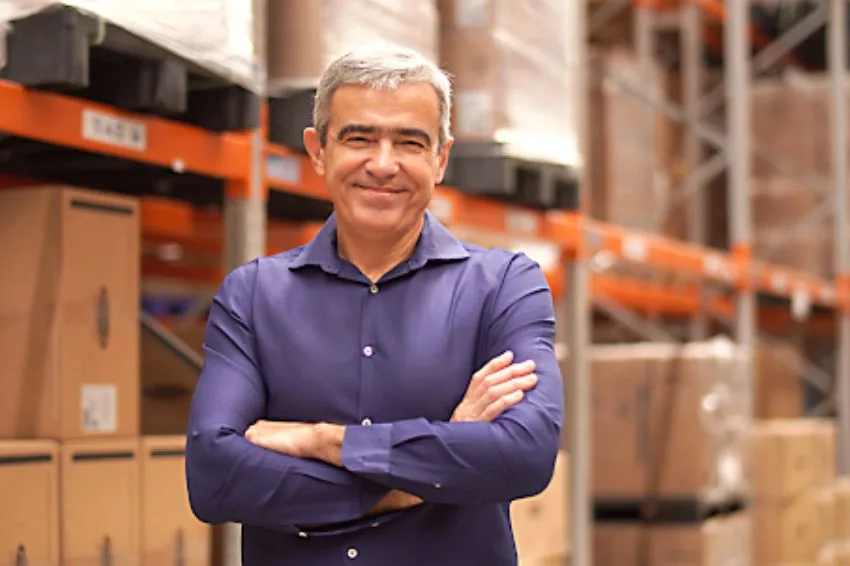
O Canal Solar interviewed businessman Aldo Teixeira, president of the distributor Aldo Solar. He shared about how he began his professional career, and spoke He described what it was like to receive the award for best company in the Wholesale and Foreign Trade sector and also commented on the challenges and future of the photovoltaic energy market.
Who is Aldo Teixeira?
Aldo Teixeira is a determined person who always takes steps in a single direction. Ever since I became a young man, I've had this reason for being. Everything I've ever done has been driven towards making this a reality. I'm a person like everyone else, striving to fulfill my dreams.
Today you work in the photovoltaic market, but you started in the electronics sector. What was the history of your company?
It's great to remember the past, because it's our roots. In fact, here at Aldo's, everything has a Kombi van theme. We have the Kombi engine, which is our Data C, we have the Kombi luggage rack, which is our stock. We make a point of honoring our roots. Aldo, when he arrived in Maringá, around 1979, came to get married. To marry Ruth, who was also arriving in Maringá. She came from Campo Mourão and I came from Ivaiporã.
I was born in Cornélio Procópio, in northern Paraná, and spent my youth in Ivaiporã, which is very close to Maringá. When I arrived in Maringá, I already had the decision to start a family. But, honestly, I didn't even have money for a coffee. So, I started working as a handyman, loading and unloading trucks, and I went to sell electronic components at my father's store. There, I had an opportunity. After a while, they noticed my knowledge of electronics, of repairing televisions, radios, record players, and, knowing all about electronic components and electronics in general, I was blessed to be able to buy a Kombi van, because it was financed through a consortium.
So, Mr. Manuel, who owned the company at the time, said: 'Buy this Kombi van, I'll give you some merchandise, and you'll travel all over Paraná delivering goods, from store to store, and you'll earn your commission.' That's how we started. For practically a year, I sold door-to-door as a sales representative, and a year later, in 1982, I was already founding Aldo itself. But why Aldo? People knew me as 'Aldo of the Kombi van,' and that's how the company name became Aldo as well.
I'd even like to point out that when I came to Maringá to get married, I ended up getting married twice. How did that happen? It was with the same woman. The first time I got married it was in Paraguay, because I was still a minor and needed to be emancipated, so I got married in Paraguay and then, when I turned 21, in 1981, I ended up getting married here in Brazil.
So, continuing on, technology also evolved and electronics became digitalized. Then came cell phones, then satellite dishes, and from 1994 to 1998, Aldo was already selling photovoltaic systems, selling panels from Cineis, Shell, obviously, it was all off-grid. We had a low and medium voltage electrical division. We sold all kinds of electrical material, we had the uninterruptible power supply (UPS) part and also off-grid energy.
Then, there was a major change at Aldo. Tax issues forced us to change our line of business, and we went into IT. So, in the year 2000, Aldo became 100% an IT (Information Technology) company. This brought in major global technology players like Intel, Microsoft, HP, Seagate, and many other giants that Aldo secured with an official distribution contract in the national territory. We lasted for another 15 years. Growing exponentially, we also became a computer and server manufacturer, and things kept going. When energy regulations, particularly for distributed solar energy generation, came into effect, it was practically inevitable. In 2015, Aldo began taking its first steps in photovoltaic energy, and that's how we arrived where we are today, in 2020.
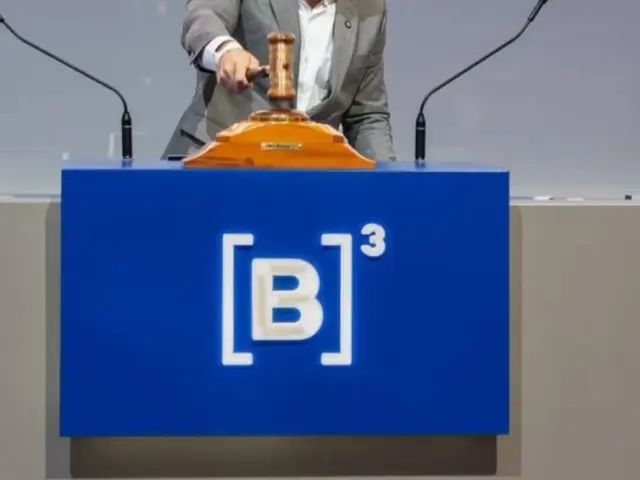
Aldo was awarded best company in the sector of Wholesale and Foreign Trade During the last edition of the 'Valor Mil' award. How did you receive this news?
It was really great. Aldo has been appearing in yearbooks listing the thousand largest Brazilian companies for the past few years, and we always have some highlights based on revenue. But this year, we were surprised by Valor Econômico and ranked 504th out of the thousand largest companies in Brazil. We're in the middle of the 'buzz,' but winning an award for sectoral excellence, like the one the magazine gave us, as a wholesaler and foreign trade company, as a sector champion, makes us very proud, especially because in this sector the criteria aren't just value or revenue; they're evaluating other company values, such as liquidity, profitability, return to society, employee relations, and debt. There are several criteria that the magazine, along with the Getúlio Vargas Foundation and Serasa itself, use to gather these values among the thousand companies and select the champions for each sector in which these companies operate.
So, it caught us by surprise, we're euphoric. And not only Aldo, but the employees, and especially the clients are celebrating. We've received a huge number of messages in the last 24 hours, and I want to congratulate everyone, congratulate all the suppliers and clients who trust us, who believe in us, who make all this happen, because we are here for them.
What were the main challenges the company faced during this pandemic period?
The challenges are numerous. Things were completely unpredictable, totally surprising. Every day was a great cry, a great internal despair. We had to join forces and find a way out. I could talk about 100 different things that happened this year due to social isolation, due to the pandemic, because we had been systematically growing at an average of 15% per month for at least 40 consecutive months, and from one moment to the next, from one week to the next, we had to dismantle an entire machine, support the train that was arriving at incredible speed, with a gigantic weight, and have to deal with all of that, reorganize and relocate all that cargo that was coming. And it's no small thing, we're talking about 1.500 containers that were on their way on that day, March 20th, and there was no way to turn back.
So, you can imagine: how did they allocate distribution centers and warehouses to store the cargo? In other words, it caused a whole lot of disruption. Sales in April fell by 70%. However, in a few weeks, we saw that this strength was renewed. In May, for example, it improved a little, about 15-20% better than in April, and then it was a sequence. So much so that, in July, 95% of the volume was already equal to March. In August, September, and October, we saw it return to last year's levels. It's a surprising drop in its pace, and suddenly things accelerate again, like never before. It's incredible, all this happened in just eight months.
I would like you to comment on the resilience of the photovoltaic market.
The Brazilian photovoltaic market is still in its early stages of its mission this decade. It's a very mature and consolidated sector. 2020 was expected to see triple-digit growth, and this trend is expected to continue in subsequent years. However, due to the pandemic, this triple-digit growth didn't materialize and won't happen. Nevertheless, a very exponential increase compared to 2019 is real. We should grow by 50-60% compared to last year. But this growth, amidst the pandemic, clearly demonstrates that the Brazilian photovoltaic sector is not part of the problem, it's part of the solution. We guarantee job creation, income generation, sustainability, and savings for families and businesses. Talking about photovoltaics is talking about caring for the air, caring for CO². We all need to be united and committed to our mission of bringing solar energy to all Brazilians.
As a distributor, what are the main requests and speculations from those operating in the photovoltaic sector regarding the availability of products in the Brazilian market?
The pandemic made people rush more. All the big companies in Asia and other parts of the world improved and developed new products and new technologies. Here at Aldo, during that time, we launched more than four thousand new generators. So, we were already creating plans A, B, C, D, and E. Photovoltaics isn't just a grid on the roof or a ground-mounted installation; photovoltaics is much bigger than that. Therefore, Aldo was able to show the market that you can offer the same client four or five solar power generation systems for different applications.
The panels, for example, will start arriving in Brazil in a few weeks, and I'm not talking about 550W and 600W modules, because those are more geared towards utility, centralized systems, or large power plants for remote consumption. I'm talking about new, high-efficiency panels for our Brazilian rooftops, aimed at distributed generation. This will begin at the very end of this year, beginning of next year. A wave of new panels is coming, and the market will realize that the sector is going to undergo a significant upgrade.
What challenges does Aldo expect as a company for 2021?
For 2021, the challenges remain quite significant. Some indicators show that the problem of shipping routes from Asia to Brazil will continue to be very delicate. Things can be unpredictable. Today, we are receiving a large shipment of panels that should have been at Aldo 30 days ago. And it wasn't Aldo's fault, nor the manufacturer's, nor the exporter's; everyone planned accordingly, but simply, the shipping companies and owners of these vessels were skipping ports, not collecting, or didn't have equipment and containers available. When the market suddenly heats up, it will take time for things to get organized again, but that time won't come in the next three months. So, the biggest challenge for the beginning of 2021 continues to be international logistics to guarantee space and have the goods available here in a timely manner.
The manufacturer abroad is ready to meet our needs, and Aldo is also ready to start a wonderful, spectacular 2021, because we have no doubt that, in addition to pent-up sales that didn't materialize in 2020, there will also be the natural growth that was planned for next year. Therefore, growing by at least another 100-120%, I would say today is very comfortable for next year.
How does Aldo interact with his partners? How do you nurture that relationship?
When it comes to suppliers, Aldo is very selective and rewards market leaders. The company rewards technology developers, those who produce their own products, and especially manufacturers and partners who effectively utilize a pure distribution channel, such as for their own goods. These are fundamental points. An absolute criterion that Aldo upholds is that all of them must have a subsidiary here in Brazil, with technicians, engineers, marketing, after-sales service, and support to handle the entire volume and the entire process from project design to installation, commissioning, and warranty period. So, this is a selective approach. Those who can do all of this are part of Aldo, and it's the same for resellers.
Aldo is a distributor that supports the entire supply chain; it's an official channel for these manufacturers and is positioned as a major hub capable of handling all international logistics and nationalizing all this merchandise, providing real-time delivery scheduling at the construction site. And by preserving the supply chain, Aldo is preserving their business because we have never sold and will never directly sell any type or size of project; this has never happened with any of our business lines, and it certainly won't happen now with photovoltaics. Aldo is here, strong and committed, as a provider for the coming years.
I would like you to comment on an experience you had in the photovoltaic sector, which, based on that experience, gave you a different perspective on the market.
There are several, many cases. They are very strong experiences, of situations that we foresee in the medium and long term, which put us on a different track. At Intersolar 2018, for example, Aldo had to make an unprecedented decision, in partnership with a panel manufacturer that already had 90% of its services. share Here in the local market. In August of that year, at the table of our first fair, we had to raise our heads and say: 'So, we're ending the partnership. Aldo will look for other suppliers and we'll move on with our lives.' These are very relevant situations and today, I'm sure, and I believe the market is also with us, that this decision was the right one and we are here celebrating as the best company in the wholesale sector, one of the largest in Brazil, and which is on an amazing growth trajectory. This is really great, I just won't mention names, out of respect, but this happened in August 2018.
What message would you leave for those thinking about investing in the solar sector?
The Brazilian photovoltaic sector continues to grow. Few businesses in the world have what we have here today. So, believe in us, remain faithful to this purpose, because our business is here for many decades to come. Our mission is to bring solar energy to all Brazilians, our mission is to protect the finances of families and businesses, to provide energy around the clock, and to be able to say that we are faithfully contributing to our planet, caring for the environment and preserving our water resources in our power plants.
Comments
Comments are moderated before publication.Comments should be respectful and contribute to a healthy debate. Offensive comments may be removed. The opinions expressed here are those of the authors and do not necessarily reflect the views of the author. Canal Solar.