
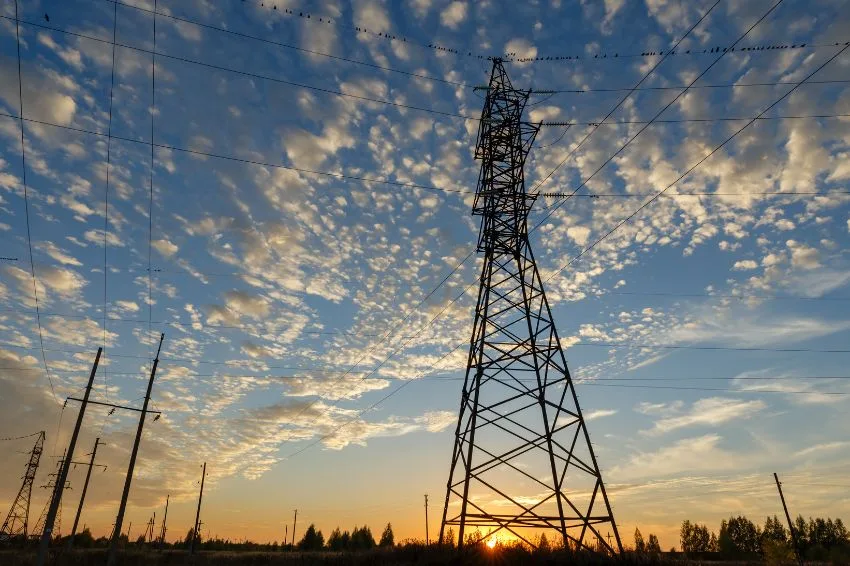
There many factors that affect the stability of an electrical grid at a given moment. The most common challenge, according to Hoymiles, is to match supply with demand.
A amount of energy that consumers need varies depending on time of day and weather conditions or even a national holiday or major event.
Our United States, for example, many people install festive lights for the holiday season, linking them from just after Thanksgiving until New Year's. According to the company, this creates an estimated 3,5 billion kWh of extra energy demand across the country in the month of December.
“Meanwhile, supply can also vary for many reasons. Maybe there is a natural disaster or just a storm that takes down a transmission line. Perhaps there is a technical failure in a power plant or it has to undergo scheduled maintenance, running the risk of taking part of the power generation capacity offline,” they reported.
Even one relatively small imbalance between the electricity supply and demand may cause problems. It could mean voltage fluctuations, frequency deviations or a complete loss of power.
To ensure network stability, the Hoymiles states that it is vital to have excellent mechanisms and technologies to manage and monitor its operations. But, increasingly, it is possible to see how the diversification of electrical energy sources that feed the grid also has a major impact.
How does source distribution reduce the risk of a power outage?
Most of the time, grid electricity comes from power plants and is distributed using transmission lines. “If you have a failure or outage somewhere in that infrastructure, you are really in trouble – there is no other source to fill the gap.”
“Diversifying energy sources is a great way to mitigate these vulnerabilities. The more decentralized your energy sources, the greater the risk. If there is a failure somewhere in your infrastructure, it does not eliminate your entire energy supply — just part of it,” they explained.
According to the company, solar energy is truly the epitome of decentralized energy production. If every home or business had its own small-scale solar PV installation, that would mean millions of diverse sources to feed into the grid and make up the shortfall if one primary source went down.
Why is solar energy a great option?
Solar energy is a particularly attractive choice for this because it is very low risk. According to the company, unlike most other renewable sources, harnessing solar energy is easy. You can install a small system in any residential or commercial building that has outdoor space and access to sunlight, adapting it to fit the shape of the building.
“Nowadays, we can even install systems on balconies or place them in a lake. And it's not like we're going to run out of sunlight anytime soon. The photovoltaic source is an infinite resource that is free to access and does not depend on complex supply chains. It’s no wonder that powering the grid with solar energy is an attractive prospect for any operator looking to make their grid more resilient,” highlighted the manufacturer.
Addressing the Challenges of Solar Energy Intermittency
According to Hoymiles, until recently, solar was not seen as a reliable energy source. This is mainly because it depends on sunlight. “In the past, you would have little hope of using solar energy if you lived in a country with unpredictable weather, or in winter when sunlight is limited.”
“This lack of predictability and consistency is not good for network stability. But major developments in inverter and energy storage technology have helped reduce the impact of some of these problems,” they pointed out.

Microinverters and hybrid inverters
Two types of next-generation inverters are proving revolutionary for grid stability. The first innovation, according to Hoymiles, is the microinverter, which plays the role of converting DC energy (direct current) generated by solar panels into AC energy (alternating current), used to power devices and buildings.
“Microinverters are efficiency boosters, maximizing uptime and energy production. A traditional string inverter connects an entire line of solar panels in series, converting all the energy from all of these modules at once,” they pointed out.
“But that’s not great for reliability or consistency. If one of these panels fails or is shaded, it doesn't matter if your other modules are still absorbing plenty of sunlight. The energy production of this entire line of panels will fall”, emphasized the company.
Crucially, a microinverter converts power from each solar panel individually. This means that if one panel fails or doesn't receive enough sunlight, the others will continue working at full capacity. The consumer, therefore, can generate much more energy – and do so much more consistently.
“And then there are hybrid inverters. They convert DC electricity to AC too – but they can convert AC back to DC, so you can store that in batteries,” they stressed.
State-of-the-art battery storage
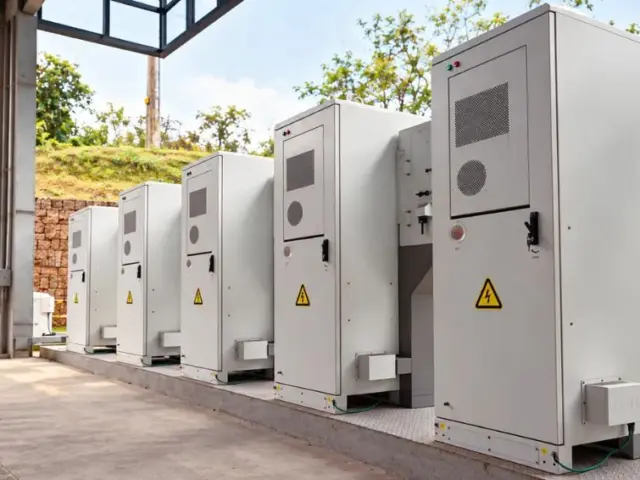
Hoymiles further commented that there was a major concern about the reliability of solar energy: there is no way to generate solar energy at night. Because of this, recent improvements in battery storage technology have helped solve this problem.
“We have finally reached a point where you can reliably incorporate high-power batteries into a solar PV installation. During peak times, you can use solar energy to charge the batteries (thanks to its hybrid inverter) and then release the energy back when you need it. This gives you uninterrupted and reliable electricity from the system, even when there is no sunlight,” they concluded.
Hoymiles portfolio
Among the hybrid inverters that Hoymiles offers to the market are, for example, the HYS-8.0LV-EUG2, HYS-10.0LV-EUG2 and HYS-12.0LV-EUG2 models – with powers ranging from 8 kW to 12 kW.
According to the manufacturer, the intelligent EMS function supports self-consumption, economical and backup modes for various applications. Additionally, monitoring management through Hoymiles Cloud allows users to remotely diagnose and track system performance over time, maximizing total solar energy production and battery utilization.
These products also have 2 MPPTs, maximum input current of 32 A, maximum efficiency of 97,6%, degree of protection IP65, DC/AC ratio of up to 130% and weigh 41 kg.
Check it out, website, more information about hybrid inverters, already available on the market and which will be on display at Intersolar South America, which takes place between the 27th and 29th of August, at Expo Center Norte, in São Paulo (SP).

all the content of Canal Solar is protected by copyright law, and partial or total reproduction of this site in any medium is expressly prohibited. If you are interested in collaborating or reusing part of our material, please contact us by email: redacao@canalsolar.com.br.

Comments
Comments are moderated before publication.Comments should be respectful and contribute to a healthy debate. Offensive comments may be removed. The opinions expressed here are those of the authors and do not necessarily reflect the views of the author. Canal Solar.