
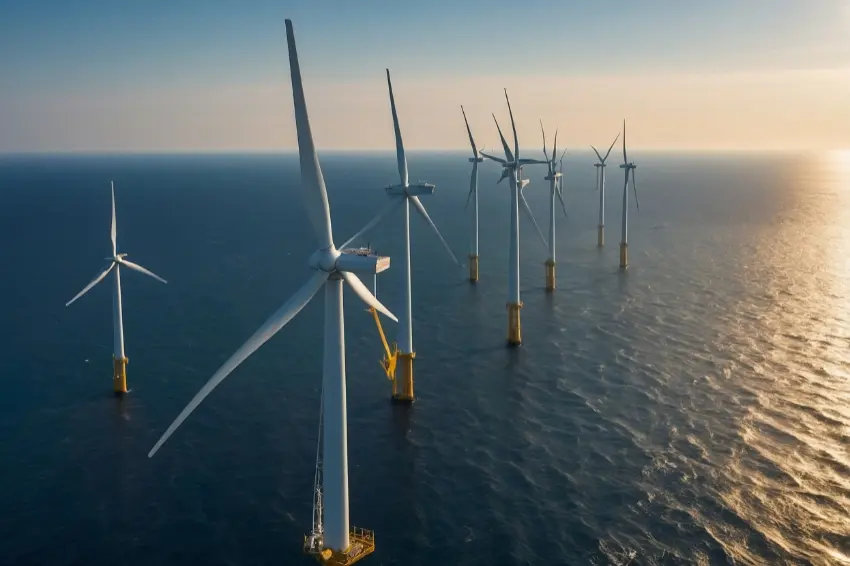
The MME (Ministry of Mines and Energy) published last Tuesday (28) the methodology that will guide the selection of areas for future offshore wind power generation projects in Brazil.
The document, prepared by EPE (Energy Research Company) under the coordination of the ministry, establishes a standardized procedure for identifying regions with potential for offshore projects, in accordance with Law No. 15.097/2025 and CNPE Resolution No. 1/2026.
According to the Ministry of Mines and Energy (MME), the methodology seeks to reconcile the development of offshore wind power generation with other uses of marine space, considering legal, environmental, technical, economic, and social criteria.
how will it work
The process is divided into three stages. The first consists of identifying potential regions, applying legal exclusions and technological limitations to select areas with less potential for conflict and greater viability for project implementation.
In the second phase, the so-called Areas of Interest are defined. At this stage, the analysis considers factors such as socio-environmental sensitivities and compatibility with other activities carried out in the marine environment.
The third stage prioritizes the areas through a multi-criteria analysis, which takes into account technical, economic, logistical, and socio-environmental aspects to classify and rank the regions.
In a published statement, the Ministry of Mines and Energy (MME) informed that the methodology does not determine which areas will actually be offered in future rounds and that this decision will continue to be the responsibility of the granting authority, which must consider current public policies, the objectives of each offer, and the stage of development of the Brazilian offshore wind market.
Still according to published documentThe definition of the sectors to be made available in the future should be aligned with the planning of the infrastructure necessary to enable the projects, including ports, transmission systems and other support structures, in coordination between the government and the productive sector.
all the content of Canal Solar is protected by copyright law, and partial or total reproduction of this site in any medium is expressly prohibited. If you are interested in collaborating or reusing part of our material, please contact us by email: redacao@canalsolar.com.br.

Comments
Comments are moderated before publication.Comments should be respectful and contribute to a healthy debate. Offensive comments may be removed. The opinions expressed here are those of the authors and do not necessarily reflect the views of the author. Canal Solar.