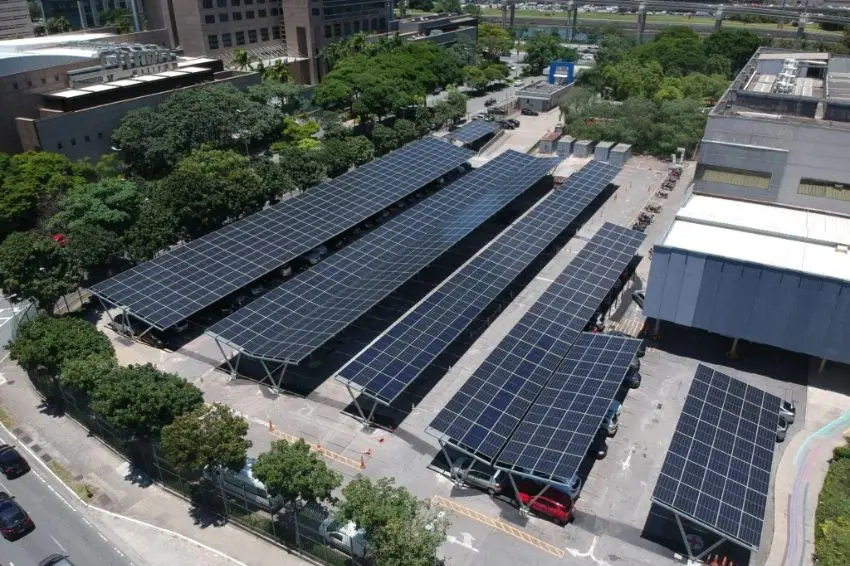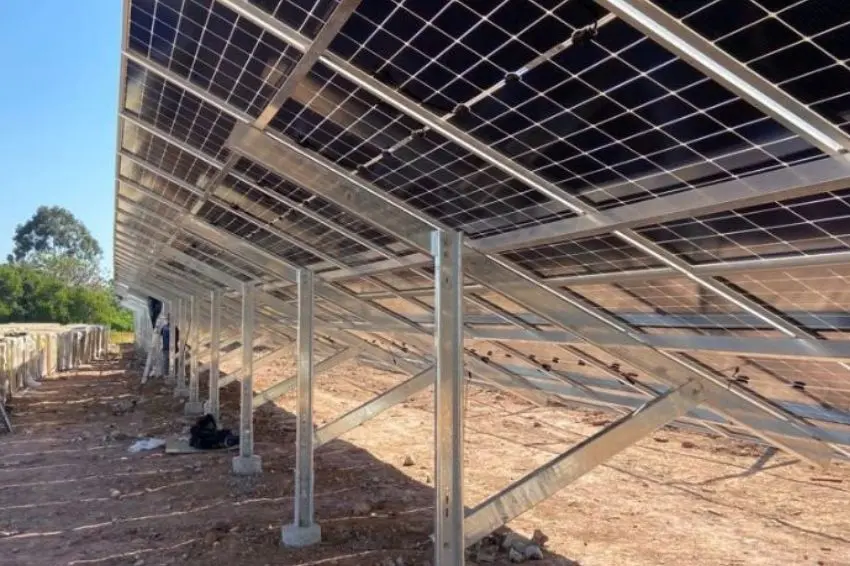

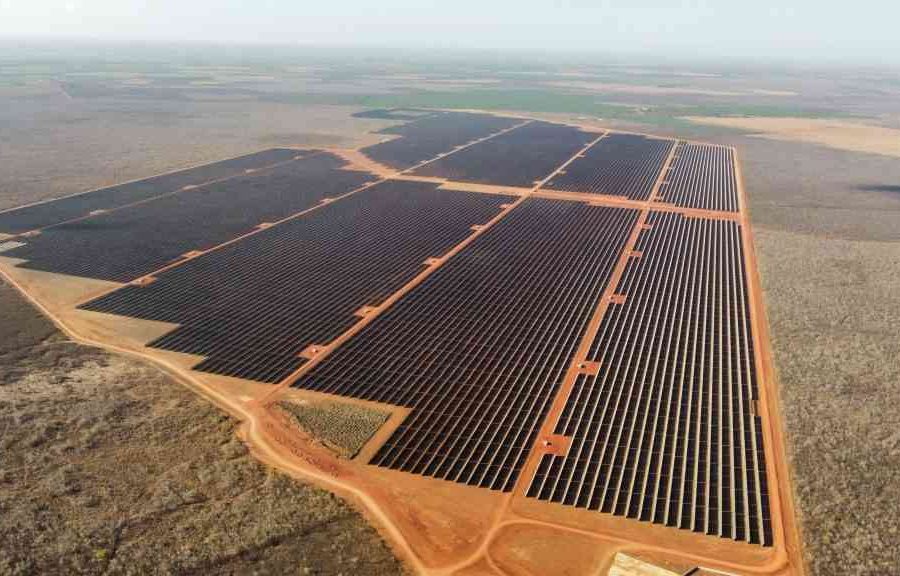
The Alex Solar Complex, located between the municipalities of Limoeiro do Norte and Tabuleiro do Norte, approximately 230 km from Fortaleza, occupies 830 hectares, an area equivalent to more than 800 football fields, and has 360 MW of power.
The project, from Elera Renewables, faced a challenge on the same scale as its area, ensuring the safety of the plant. “With a perimeter of 13 kilometers to cover, this would mean installing around 273 cameras. The cost of installing so much equipment, in addition to managing the volume of images and alerts generated, would be exorbitant.”
“In a traditional security solution with fixed cameras and video analytics, we would need to map the perimeter of the field and install predefined cameras every 50 meters,” explained Bernardo Falcon, executive director of Aeon Security.
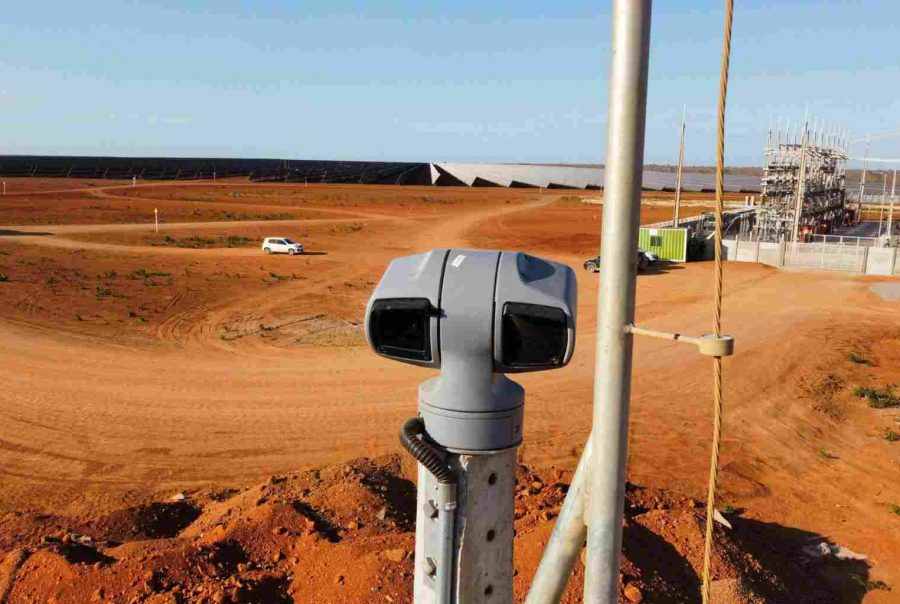
Faced with this scenario, Elera is betting on innovative technology: it installed optical fiber from Future Fiber Technologies and integrated georeferencing cameras from Axis Communications to protect the property.
How does the system work?
The project, presented by Aeon Security to Elera, was aimed at promoting a more economical solution. In practice, the company buried the highly sensitive cable all around the complex so that it was possible to detect intrusions instantly and send the coordinates to the Axis cameras.
They use geolocation data to automatically change the field of view and provide visual verification of the incident to the security team that monitors the complex remotely.
The security system, operated with Digifort software, integrates network speakers that can broadcast pre-recorded or live warnings.
In short, instead of operating in pre-defined fixed positions, cameras can be directed precisely and in real time to the point of invasion, without operator intervention.
According to the company, this ability to change the focus point automatically on demand allows you to monitor the entire solar complex efficiently with just 16 video cameras.
“The presence of Axis horn speakers as part of the solution adds another level of security. Even the team at the Elera operations center in Rio de Janeiro can transmit messages in real time to the UFV Alex complex, if necessary,” said Falcon.
Test Drive and results
For him, it was important to carry out real tests with the equipment to demonstrate that Axis would be able to operate with FFT technology and Digifort's video management platform.
In addition to long-range surveillance during the day, he said it is essential to have good night vision, as the solar park has no lighting at night. It was also essential to ensure that the cameras could capture clear images from up to 400 meters away.
“Thanks to the built-in long-range IR illuminators, the Axis cameras were able to exceed this distance, showing that they could capture sharp images of night scenes from over 500 meters,” they emphasized.
This technology also provided Elera with reliable, uninterrupted perimeter monitoring, even in extreme weather conditions and high winds, with few false alarms.
When testing the geotagging interface between the cameras and the fiber optic intrusion detection system, Axis cameras consistently indicated the target location within a 3 meter radius.
-

UFV Alex, located approximately 230 km from Fortaleza, occupies 830 hectares. Photo: Reproduction
Return on investment
According to Falcon, as solar projects have a lifespan of 20 to 25 years, the longevity and reliability of Axis cameras meant they were attractive value for money.
Furthermore, he highlighted that energy efficiency was another gain, the low energy consumption of the equipment makes them ideal for a photovoltaic complex environment, where the energy available at night is limited and expensive.
“Installing a camera with a useful life of more than 10 years offers a long equipment replacement cycle, which optimizes Elera’s return”, he detailed.
“The cost of replacing a camera in the UFV Alex complex would be very high: the area is far from any central area. Soon, repair teams would have to travel a long distance. In practice, it's not worth it. Additionally, relocating a camera near a power line would require disrupting operations, costing the company valuable production time. This is another reason why it is important to have equipment that is reliable and does not fail,” he commented.
“Still, being able to reduce the number of cameras at the plant meant a considerable reduction in the use of cables and infrastructure. These are benefits that no one considers when developing the project, but the final savings are great. We estimate that our optimized solution saved Elera more than 3,5 tons of copper cables and almost 1,8 tons of PVC pipes”, he pointed out.
pioneer project
Alexander Fernandes, network and infrastructure specialist at Elera Renováveis, highlighted that UFV Alex is the first solar project in the world to integrate detection with buried optical fiber and cameras that have georeferencing capabilities.
“When we add the incredible zoom range, infrared and long life of Axis cameras, we have a system that meets our current needs efficiently and will continue to do so for many years to come.”