
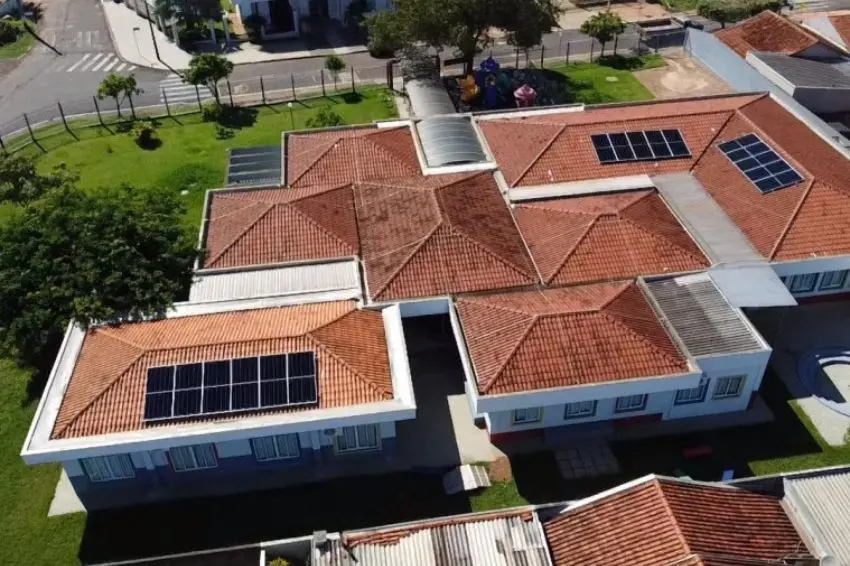
A group of 200 public schools in Paraná will now have solar power generation systems installed and energy efficiency improvements, in a project totaling R$ 23 million in investments and scheduled for completion by 2027.
The initiative involves institutions from the state and municipal networks, with interventions ranging from the installation of photovoltaic plants to the replacement of old equipment with more efficient models.
In total, 155 schools will receive their own solar power generation systems, while another 45 will undergo exclusively electrical infrastructure modernization due to structural limitations.
In addition to the installation of 6.467 photovoltaic panels, the project includes the replacement of 10.540 light bulbs, 246 refrigerators, and 196 air conditioning units, contributing to reduced energy consumption and improved living conditions in educational facilities.
direct impacts
The benefits go beyond savings on electricity bills. Modernizing the electrical infrastructure should provide more comfortable environments for students and teachers, while also freeing up financial resources that can be redirected to educational activities.
In some schools, the effects are already beginning to be noticed. Schools in the Northwest region of the state are among the first to receive the systems, in an initial phase that includes eight educational institutions distributed across different municipalities.
The presence of solar power generation in the school environment also reinforces the educational dimension of the project, by bringing students closer to concepts related to sustainability and the conscious use of natural resources.
Project
This action is part of Copel's Energy Efficiency Program, which directs resources to initiatives aimed at reducing consumption and promoting a more rational use of electricity.
The selection of schools considered criteria such as socioeconomic and educational indicators, including the HDI (Human Development Index) of the municipalities and the IDEB (Basic Education Development Index).
Factors such as the energy consumption level of the units and the ratio between the local population and the number of students served were also taken into account.
You may also be interested
Solar energy gains space in public schools across the country
all the content of Canal Solar is protected by copyright law, and partial or total reproduction of this site in any medium is expressly prohibited. If you are interested in collaborating or reusing part of our material, please contact us by email: redacao@canalsolar.com.br.

Comments
Comments are moderated before publication.Comments should be respectful and contribute to a healthy debate. Offensive comments may be removed. The opinions expressed here are those of the authors and do not necessarily reflect the views of the author. Canal Solar.