

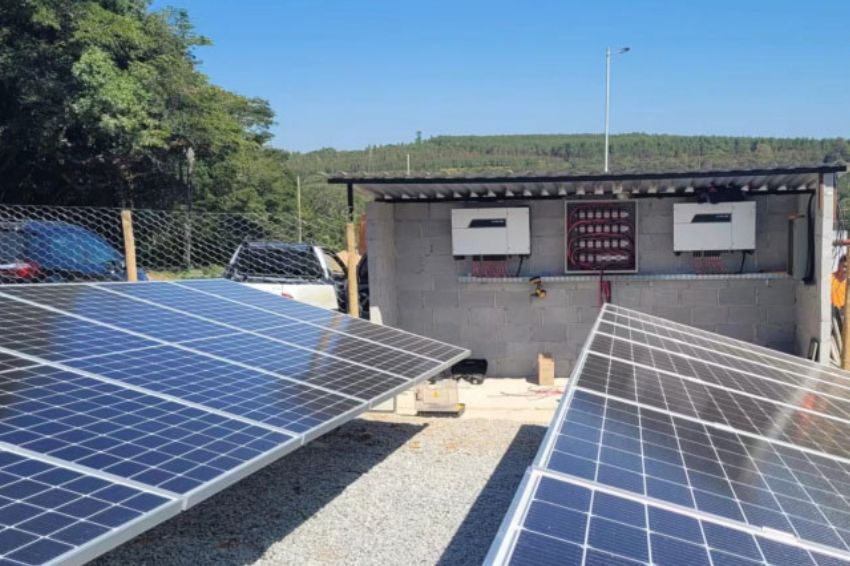
While the Solar energy is becoming more affordable and popular in Brazil, the sector still faces problems related to the negligence of technical and safety standards.
Especially in residential and small commercial systems, where it becomes evident that the lack of technical knowledge in relation to electrical safety standards is a serious problem.
Mainly, when analyzing the aggressive market discourse of many integrators, where competition for customers leads to the search for savings at any cost, even at the expense of regulatory compliance.
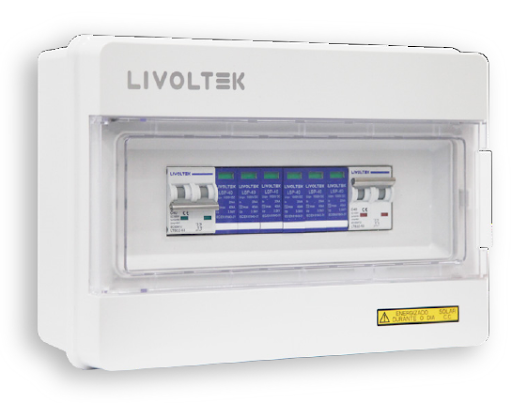
One of these technical points mentioned above concerns the use of string boxes, also known as junction boxes (Figure 1). This product aims to provide robust protection against electrical surges for the photovoltaic system, mainly for the inverter, and its use is hotly debated in the market.
However, in disagreement with the normative and technical recommendations in the area, the use of the string box is neglected in some cases, which is worrying because many of these cases are not a decision taking the standard as a reference. But after all, why discourage the use of a system protection device?
Initially making a normative analysis, one can first make a valid criticism. Standards often fail to recommend (and not require) the use of protective devices in electrical systems.
This finding takes into account several areas of the electrical sector, not just photovoltaic systems, whose main standard is the ABNT NBR 16690 – Electrical installations of photovoltaic arrays — Project requirements.
This criticism of standards goes back to a problem found in areas of great competition, where the search for savings in the final product can take advantage of this normative 'weak point' and remove vital components from the system under the argument that they are not technically necessary, when in fact they are It's just about saving money at any cost, just aiming to increase sales and profit margin, or even in some cases survival in such a competitive market.
That said, the NBR 16.690 tells us the following about string boxes. Two different sections mention the need to use DPS. Firstly in “5.4.2 – Protection against Transient Overvoltage” it is said that:
“To protect the direct current system as a whole, surge protection devices can be mounted between active conductors and between the active conductors and ground in the photovoltaic array cable and at the input of the CPU (…) The calculation memorial of the power analysis risk, in accordance with ABNT NBR 5419-2, must be part of the project documentation.”
And then we have yet another excerpt in “6.3.5 – Surge Protection Devices (DPS)” where the following is mentioned:”
SPDs are incorporated into electrical installations to limit transient overvoltages of atmospheric origin (transmitted by power systems, whether alternating current, direct current or both), and surges resulting from maneuvers. Certain CPUs have some form of built-in DPS, however, external devices may also be required. In these cases, coordination between the two DPS must be verified with the equipment supplier.”
These normative excerpts highlight the need for surge protection devices to safeguard the photovoltaic system as a whole. However, the use of the term “may” twice, as highlighted in the text, means that the excerpts leave the option of use open.
Therefore, the most appropriate option is to opt for the guaranteed installation of the string box with DPS, which are already designed taking into account other necessary standards, such as NBR 16690 itself, such as NBR 5410, NBR 5419 and IEC 61643-32.
Regarding the interruption and sectioning element, the standard states that it must be possible to isolate the inverter in cases of maintenance, which shows the need for an element external to the inverter for this, in “6.3.7.3 – Switch-Disconnector Device of the UCP” is said to be:
“it must be possible to isolate the CPU from all poles of the photovoltaic array, so that maintenance of the CPU is possible without risk of electric shocks.”
This leads to the conclusion that the external switch or DC circuit breaker can offer such a guarantee of isolation, but soon after the following is said:
“To replace complete CPUs, one of the following switching means must be used: a) an adjacent and physically separate switch-disconnector device; or b) a switch-disconnector device that is mechanically connected to the CPU and that allows the CPU to be removed without electrical risks; or c) a switch-disconnector device located within the CPU, if the CPU includes an isolation means that operates only when the switch-disconnector device is in the open position; that is, when undergoing maintenance, the CPU can only be opened or removed if the switch-disconnector device is in the open position; or d) a switch-disconnector device located within the CPU, if the CPU includes an isolating means that can only be operated with a tool and is marked with an easily visible warning sign or text indicating 'Do not shut down under load'.”
The letters 'C' and 'D' in the passage above mean that the inverter's isolating switch, if present, is sufficient. With this we have a dangerous ambiguity in the standard which, at the same time as it indicates the need for total isolation of the inverter, later states that a switch located in the inverter itself can be used for this, which clearly conflicts, since the internal switch of the inverter does not isolate the voltage coming from the solar modules.
It cannot be denied that only with a disconnector switch or external DC circuit breaker can the inverter be isolated from the poles of the photovoltaic array during possible maintenance. With the above analysis, the well-founded regulatory recommendation for the use of string boxes and their protection devices becomes clear.
However, the lack of a more cohesive positioning of the standard, not requiring its use, means that, even without criteria, the market and professionals can evaluate its use or not. And as previously stated, driven by a competitive market, the need to lower operational costs means that professionals end up opting not to use string boxes.
Added to this is the discourse adopted by some manufacturers and distributors regarding the internal protections of the inverters being sufficient to guarantee the protection of the system, supporting the non-use of the string box.
In fact, as with most electrical and electronic equipment, inverters have internal protection, but relying solely on this protection is a risk that is not justified in photovoltaic systems.
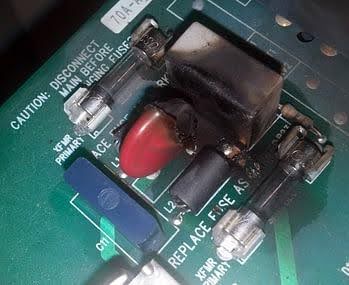
As can be seen in the image in figure 2, in the process of conducting an electrical surge, the varistor (main component used for protection against surges) can burn and damage components that are in its proximity on the electronic board, which in the worst cases can leading to the total loss of the inverter's electronic board.
Therefore, three points can defend the use of string boxes:
- Buying a photovoltaic system demands a high investment of an asset that will continuously generate income for the customer. Cheap protection such as string boxes in relation to the total investment is easily justified, and guarantees the payback of the investment;
- If the internal protection eventually burns out, even if it is still under warranty, the inverter will have to be replaced or will need to be maintained. This means that the system will not generate energy for weeks or months. Which obviously creates a burden on the end customer. The string box's DPS, in addition to being more robust than the inverters' internal protections, provides the possibility of checking the protection status, and is easier if replacement is necessary;
- With disconnector switches or DC circuit breakers, future maintenance becomes much simpler and safer.
Finally, it should be noted that the answer to the question posed in the title of this article is really not trivial. Your response is closely linked to standards that bring extremely relevant points, but still lack greater cohesion for your requests to be actually implemented in practice.
Leaving no loopholes that can be used for the sole purpose of simplifying and making systems cheaper. In this context, it becomes the commitment of the main companies operating in the sector, whether manufacturers or distributors, to foster this technical knowledge, helping the integrator to understand the technical details and consequently guaranteeing a quality system for the end customer. This quality cannot be achieved when important normative issues are left aside.
The opinions and information expressed are the sole responsibility of the author and do not necessarily represent the official position of the author. Canal Solar.



Answers of 2
What are the relevant standards that mention the use of string boxes and DPS?
In rural areas, it is an essential piece of equipment. If the neutral of the utility company breaks, which is not uncommon, all the discharge will be directed to the consumer. It would be good to implement relays that detect phase imbalance, a symptom of the absence of neutral.