
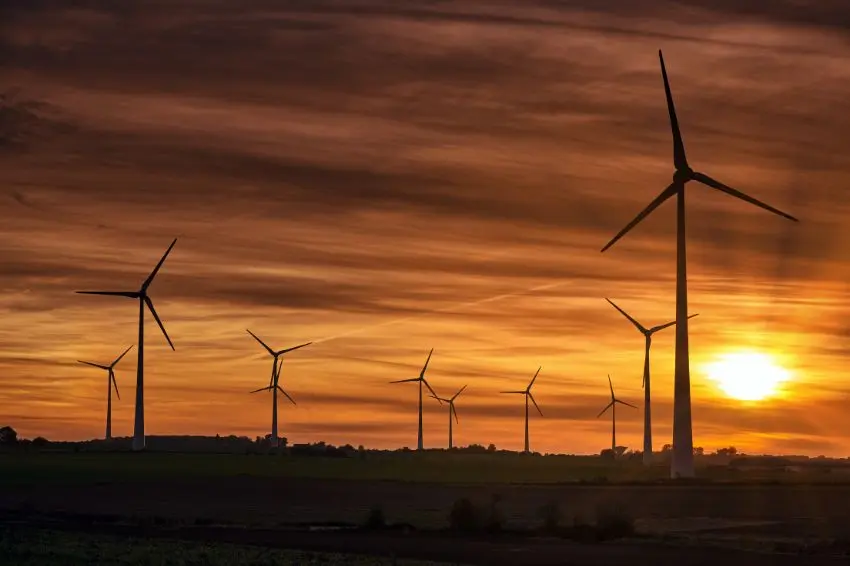
Wind power generation was the energy source that most expanded its production in Latin America and the Caribbean when comparing April 2025 to April 2026, according to data from a study recently released by OLADE (Latin American Energy Organization).
In April of this year, wind farms produced 5,1 TWh more than in the same month of 2025, considering the 27 member countries of the institution. Solar energy also advanced, although at a slower pace, with an additional 0,7 TWh in the same comparison.
Conversely, hydroelectric power plants registered a sharp decline, with 9,4 TWh less generated in April 2026 compared to the same month of the previous year. This drop was accompanied by an increase in other sources in the region.
Natural gas-fired generation grew by 4,6 TWh, second only to wind power in absolute expansion, while bioenergy added another 3,3 TWh. Coal (+1,3 TWh), oil and derivatives (+0,5 TWh), and nuclear generation (+0,4 TWh) also registered growth.

Renewables maintain their leading role in Latin America.
Even with the sharp decline in hydroelectric power, renewable sources continued to account for about two-thirds of all electricity produced in Latin America and the Caribbean.
In April 2026, the countries in the region generated 164 TWh, of which 110 TWh came from renewable sources, equivalent to 67% of the total. The other 54 TWh, or 33%, were produced by non-renewable sources.
And this scenario was not unique to April. Looking at the 14 months between March 2025 and April 2026, renewables remained responsible for more than 60% of regional electricity generation throughout the entire period.
Participation fluctuated between 63% and 72%. The highest point occurred in October 2025, when 113 TWh of the 158 TWh produced in the region came from renewable sources.
The lowest share was recorded in August, but even in that month, clean sources still accounted for almost two-thirds of the electricity generated.
Brazil is among the top five.
When countries are analyzed individually, Brazil appears among those with the highest share of renewable sources in electricity generation.
In April, 88% of the electricity produced in the country came from renewable sources, a percentage 21 points above the average of 67% recorded in Latin America and the Caribbean.
The result placed Brazil in fifth position among the 27 countries analyzed by OLADE. Paraguay led the ranking, with 100% renewable generation, followed by Uruguay (97%), Costa Rica (92%) and Ecuador (92%).
Right after Brazil come Colombia (87%), Venezuela (86%), Belize (76%) and Peru (68%). The reality, however, varies considerably within the region itself.
While some countries have predominantly renewable electricity generation, others still have a strong reliance on non-renewable sources. Trinidad and Tobago, for example, recorded only 1% renewable share, while the Bahamas had 3%, Barbados 5%, and Jamaica 10%.
Check out the full study by clicking here.
all the content of Canal Solar is protected by copyright law, and partial or total reproduction of this site in any medium is expressly prohibited. If you are interested in collaborating or reusing part of our material, please contact us by email: redacao@canalsolar.com.br.




Comments
Comments are moderated before publication.Comments should be respectful and contribute to a healthy debate. Offensive comments may be removed. The opinions expressed here are those of the authors and do not necessarily reflect the views of the author. Canal Solar.