
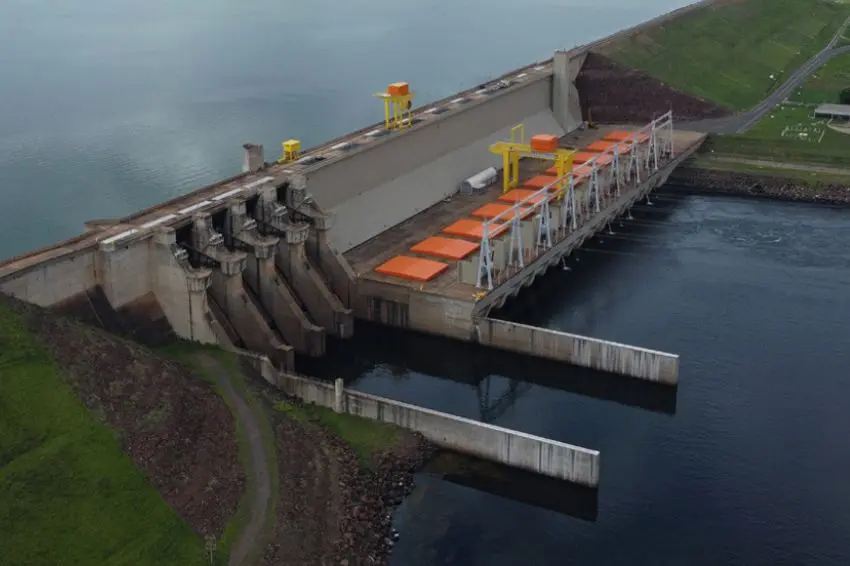
Axia Energia – formerly Eletrobras – has completed the acquisition of the remaining stake it did not yet own in the Três Irmãos hydroelectric plant, the largest plant on the entire Tietê River, according to a statement released to the market this Tuesday (2).
The transaction involved the purchase of shares belonging to Triunfo Participações e Investimentos and Mercúrio Participações e Investimentos in Juno Participações e Investimentos, the holding company of Tijoá Energia, totaling R$ 256 million after updates and contractual adjustments.
With the closing of the transaction, Axia will consolidate 100% of the plant, while also reporting that it has simplified the previously existing corporate structure surrounding the venture.
Prior to the operation, the plant's control structure involved a direct stake by Axia in Tijoá Energia and a second indirect stake through Juno Participações e Investimentos.
Relevant asset
Located in the municipality of Andradina, in the interior of São Paulo state, the Três Irmãos hydroelectric plant has an installed capacity of 808 MW and operates under a quota system, with a concession valid until 2044. In 2025, the plant recorded revenue of R$ 328 million and EBITDA of R$ 145 million, ending the year with a cash position of R$ 39 million.
Located in one of the country's main river basins, the power plant is part of the Tietê River hydroelectric development complex and plays a significant role in supplying electricity to the SIN (National Interconnected System).
Potential
Three brothers preserve a characteristic that stands out within the current context of the Brazilian power generation park, which is lacking in power at the end of the day: the existence of infrastructure already built for future expansion of the plant.
According to Axia, the project has civil structures prepared for the installation of three additional generating units.
Although the company has not announced any expansion plans at this time, the existence of these structures keeps open the possibility of increasing installed capacity in the future, should regulatory and economic conditions be deemed favorable.
Troubled history
Três Irmãos became one of the most emblematic cases of the restructuring of the electricity sector promoted by the federal government starting in 2012. Its trajectory includes regulatory disputes, an auction surrounded by controversies, and a prolonged legal battle involving billions in compensation.
The turning point occurred with the enactment of Provisional Measure 579, later converted into Law 12.783/2013. The Federal Government's proposal was to renew generation and transmission concessions in advance in exchange for the adoption of a new remuneration regime, based essentially on the operating and maintenance costs of the power plants.
Controlled at the time by CESP (Companhia Energética de São Paulo), Três Irmãos was one of the power plants affected by the measure. The company rejected the renewal conditions offered by the government, arguing that the projected amounts would not be sufficient to cover the operational costs of the project and that adhering to the new model would compromise the company's economic value.
The concession was terminated, and the federal government decided to re-tender the asset. The auction took place in March 2014 at the then BM&FBovespa. The process attracted only one participant, the Novo Oriente Consortium, formed by Furnas and the Constantinopla Investment Fund, controlled by the Triunfo Participações e Investimentos group.
Without competition, the consortium won the bid by submitting a proposal matching the value established by the government for managing the power plant. Parallel to the transfer of operations, an extensive legal dispute began between CESP and the Federal Government.
The controversy centered on compensation related to investments made in the plant, which, according to the company, had not yet been fully amortized.
The São Paulo state-owned company argued that it was entitled to receive billions of dollars related to reversible assets linked to the project, including structures associated with the Tietê-Paraná waterway navigation system.
The federal government, in turn, disputed a large portion of the amounts claimed. The Ministry of Mines and Energy (MME) and the ANEEL (The National Electric Energy Agency) argued that several investments had already been financed by public funds or sectoral mechanisms, reducing the amount eligible for compensation.
The pending issue became one of CESP's main regulatory liabilities and influenced the company's market valuation for years. The situation began to change in 2018, when the company was privatized and its control was acquired by a consortium formed by Votorantim Energia and the Canadian fund CPPIB.
The new controllers also inherited the rights related to lawsuits involving Três Irmãos. Subsequently, CESP underwent a corporate restructuring that resulted in the creation of Auren Energia.
In December 2022, Auren reached a historic judicial agreement with the Federal Government. To end the litigation, which had lasted almost a decade, the company accepted a settlement.
all the content of Canal Solar is protected by copyright law, and partial or total reproduction of this site in any medium is expressly prohibited. If you are interested in collaborating or reusing part of our material, please contact us by email: redacao@canalsolar.com.br.
Comments
Comments are moderated before publication.Comments should be respectful and contribute to a healthy debate. Offensive comments may be removed. The opinions expressed here are those of the authors and do not necessarily reflect the views of the author. Canal Solar.