
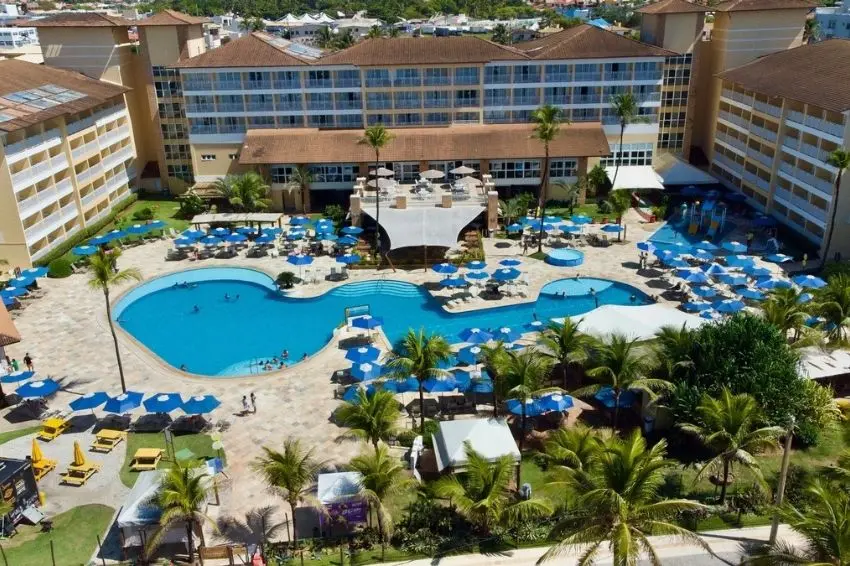
Brazilian tourism is projected to generate over R$ 300 billion in revenue by 2026, according to projections by FecomercioSP (Federation of Commerce of Goods, Services and Tourism of the State of São Paulo), based on data from IBGE (Brazilian Institute of Geography and Statistics).
If confirmed, the result would represent an increase of more than 30% compared to the R$ 228,1 billion recorded in 2025. In the first half of this year alone, the activity generated R$ 168,8 billion, a 3,4% increase compared to the same period in 2025.
This growth reinforces the economic importance of tourism, but it also raises a question: how can businesses leverage this scenario to increase profitability and reduce operating costs?
This discussion becomes even more relevant for micro and small businesses, which generally operate with tighter profit margins and today represent about 97% of companies in the Brazilian tourism sector, according to Sebrae (Brazilian Service for Support to Micro and Small Businesses).
For these establishments, which depend directly on electricity to serve customers, preserve food, and maintain their operations, an interruption in the supply can cause losses that go far beyond a few hours without electricity.
In hotels, power outages can compromise air conditioning, elevator operation, and services offered to guests. In restaurants, it can cause the spoilage of refrigerated food, interrupt meal preparation, and disrupt customer service.
One alternative to reduce these risks is the BESS (Battery Energy Storage System), a battery energy storage system capable of keeping essential equipment running during blackouts and contributing to the reduction of operating costs.
Technology can also complement or reduce the need for diesel generators, which depend on fuel, require maintenance, and may have a downtime after a power outage.
Depending on the configuration, the batteries can quickly take over the power supply, preventing interruptions to essential equipment and services.
Blackouts have already caused millions in losses in the sector.
The impacts of power outages on tourism-related businesses have already been recorded in different regions of Brazil.
In December 2025, a blackout caused by strong winds in São Paulo and municipalities in the metropolitan region affected approximately 5 hotels, bars, and restaurants, according to Fhoresp (Federation of Hotels, Restaurants, and Bars of the State of São Paulo).
The organization estimated that losses could reach R$ 100 million, considering losses of food, equipment, customers, and revenue during the period without electricity.
Another case occurred in September 2026, when a storm hit Rio Grande (RS). The owner of a guesthouse reported the departure of all guests and the cancellation of reservations after the establishment lost power.
Problems have also affected tourist destinations during peak periods. In Ceará, power outages during New Year's Eve prompted the State Tourism Secretariat to demand answers from the power distributor, following reports of losses from businesses in the sector.
The same thing happened in Campos do Jordão (SP), where merchants and residents of the region will be without electricity for more than 100 hours in October 2023. Local tourism in the city was harmed, especially considering that the power outage occurred during the extended holiday of Our Lady of Aparecida.
Why is having a generator not always enough?
Although hotels, shopping centers, and other establishments use diesel generators to cope with blackouts, these devices are not always able to prevent momentary interruptions.
“When a power outage occurs from the distributor, the generator needs to start operating and take over powering the circuits. Depending on the system installed, there may be a delay between the power outage and the effective start of the emergency power supply,” explains Yanael Medeiros, a professional at CS Consultoria, the engineering unit of the Group. Canal Solar.
Even a brief interruption can shut down computers, payment systems, air conditioning equipment, and other devices critical to operations. A similar incident occurred in June 2026 during the broadcast of a Brazilian national team match in the World Cup.
The RioMar Kennedy Shopping Mall in Fortaleza (CE) lost power while customers were watching the game against Japan. The interruption affected the synchronization of the emergency power generation system and led consumers to leave the establishment to watch the rest of the match elsewhere.
At the time, CS Consultoria explained that a properly designed BESS could act as a bridge between a power grid failure and the activation of generators, keeping essential equipment energized during the transition.
The solution can also be applied to hotels, restaurants, event centers, and other tourism-related businesses, provided the system is sized to handle the loads that need to remain operational.
“In certain configurations, batteries can reduce the use of diesel generators. However, autonomy depends on storage capacity and the consumption of the equipment being served. In prolonged blackouts, the generator may still be necessary,” Yanael points out.
BESS can also help reduce your energy bill.
In addition to protection against power outages, energy storage systems can help reduce electricity costs in tourist establishments. One application is... peak shaving, a strategy used to reduce peak electricity demand.
In hotels and resorts, for example, consumption can increase significantly when air conditioners, industrial kitchens, elevators, and other equipment operate simultaneously.
In these situations, batteries can supply some of the necessary power, reducing the demand recorded by the distributor. Depending on the tariff type and consumption profile, this can prevent charges for exceeding the contracted demand and allow for a reduction in the contracted demand.
Another application is the load shiftThis involves storing energy during cheaper periods to use it during times when the tariff is higher. This strategy can be especially interesting for businesses with significant differences between peak and off-peak energy prices.
It is also possible to combine BESS with photovoltaic systems, storing part of the solar energy for later use, according to the technical and economic characteristics of the project. The viability of these applications, however, depends on the consumption of the project, the tariff conditions, and the installation and operation costs of the system.
Load shifting, peak shaving, and backup: understand the main applications of batteries.
Hotel in Santa Catarina saves R$ 18 per month with BESS.
One example of this application is in Chapecó (SC), where the Kinderman Hotel adopted a hybrid system of solar energy and batteries to expand its electrical service capacity without needing to expand the substation.
The project utilizes 170 kWp of photovoltaic modules, 90 kW of hybrid inverters, and approximately 70 kWh of storage capacity. In May of this year, the project began recording monthly savings of approximately R$ 18 on electricity.
The reduction in expenses was attributed to the combination of solar power generation and energy storage, which decreased the purchase of electricity from the distributor and helped to meet peak consumption.
The system also reduced reliance on the diesel generator, which is no longer used in the hotel's daily operations and is now reserved as an alternative for critical situations involving prolonged power outages.
This case study demonstrates how warehousing can meet the diverse needs of a single enterprise, combining operational support, demand management, and cost reduction.
Hotel saves R$18 per month with battery storage and solar energy system.
Zoo relies on BESS to protect essential activities.
Another successful application occurred at the Bioparque Zoo Pomerode, in Santa Catarina, which announced the implementation of a BESS (Build-Energy System) to reduce electricity costs and increase the energy security of its facilities.
The project utilizes a storage system with a capacity of 277 kWh and a power output of 125 kW, designed to provide autonomy of more than three hours under certain operating conditions.
The technology was designed to meet needs that go beyond simply lighting the space. Among the equipment considered essential are cold storage chambers used to store animal feed and climate-controlled environments for species that require strict temperature control.
In addition to providing support during power outages, the project plans to use batteries during peak electricity hours and to manage demand surges. When announced in August 2026, the system was still being implemented, with expectations of generating monthly savings of between R$ 6 and R$ 9.
Brazilian zoo relies on BESS for energy savings and a continuous supply.
Resort in Salvador invests in batteries to reduce costs.
The Gran Hotel Stella Maris, in Salvador (BA), is another that has come onto the radar for energy storage projects. The establishment signed a contract with EDP for the installation of a BESS system.
On-site, the batteries will be charged during off-peak hours when energy tariffs are lower and used during peak periods, when demand on the electricity grid is also typically higher.
The strategy, known as load shiftThe goal is to shift some consumption to less expensive times, reducing electricity costs. Installation is expected to be completed and operations are scheduled to begin in January 2027.
Resort in Salvador (BA) relies on BESS to reduce costs and improve customer hospitality.
When does investing in BESS make sense?
Despite the possibilities, installing batteries is not automatically a winning solution for all tourism businesses. A small restaurant, a large hotel, and a resort have different energy demands.
While one establishment may prioritize maintaining refrigeration equipment during blackouts, another may seek to reduce costs with contracted demand or shift consumption away from peak hours.
Therefore, the analysis should consider consumption history, the frequency and duration of interruptions, energy tariffs, and the equipment that needs to continue operating.
The calculation also includes the initial investment, battery lifespan, maintenance costs, and potential savings from reduced demand, consumption during peak hours, or the use of generators.
With Brazilian tourism projected to reach a new revenue record in 2026, the security and management of electricity supply are gaining importance for businesses that depend on the continuity of their operations.
The cases already recorded show that power outages can lead to losses of customers, products, and revenue, while energy storage projects are beginning to present alternatives to reduce costs and increase the reliability of supply.
In this context, BESS can represent an opportunity for tourism businesses, provided that its application meets specific needs and demonstrates technical and economic viability.
all the content of Canal Solar is protected by copyright law, and partial or total reproduction of this site in any medium is expressly prohibited. If you are interested in collaborating or reusing part of our material, please contact us by email: redacao@canalsolar.com.br.

Comments
Comments are moderated before publication.Comments should be respectful and contribute to a healthy debate. Offensive comments may be removed. The opinions expressed here are those of the authors and do not necessarily reflect the views of the author. Canal Solar.