
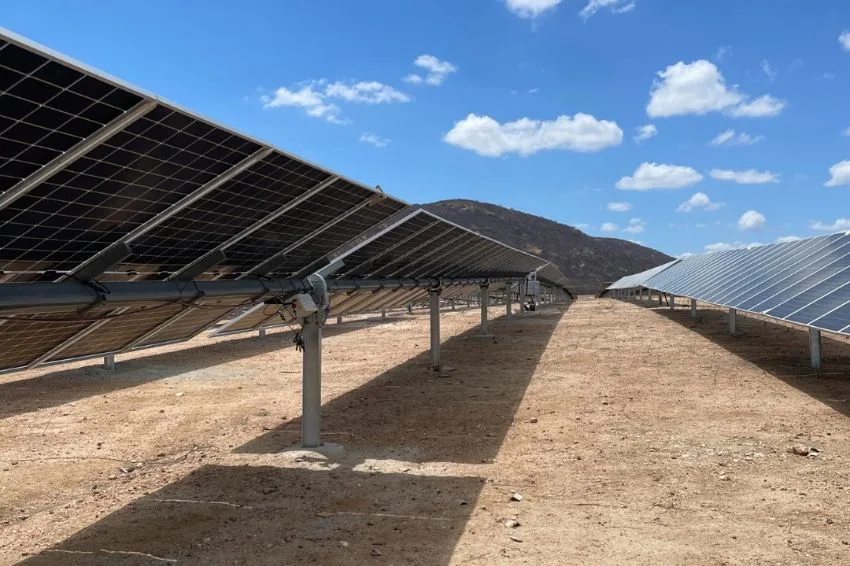
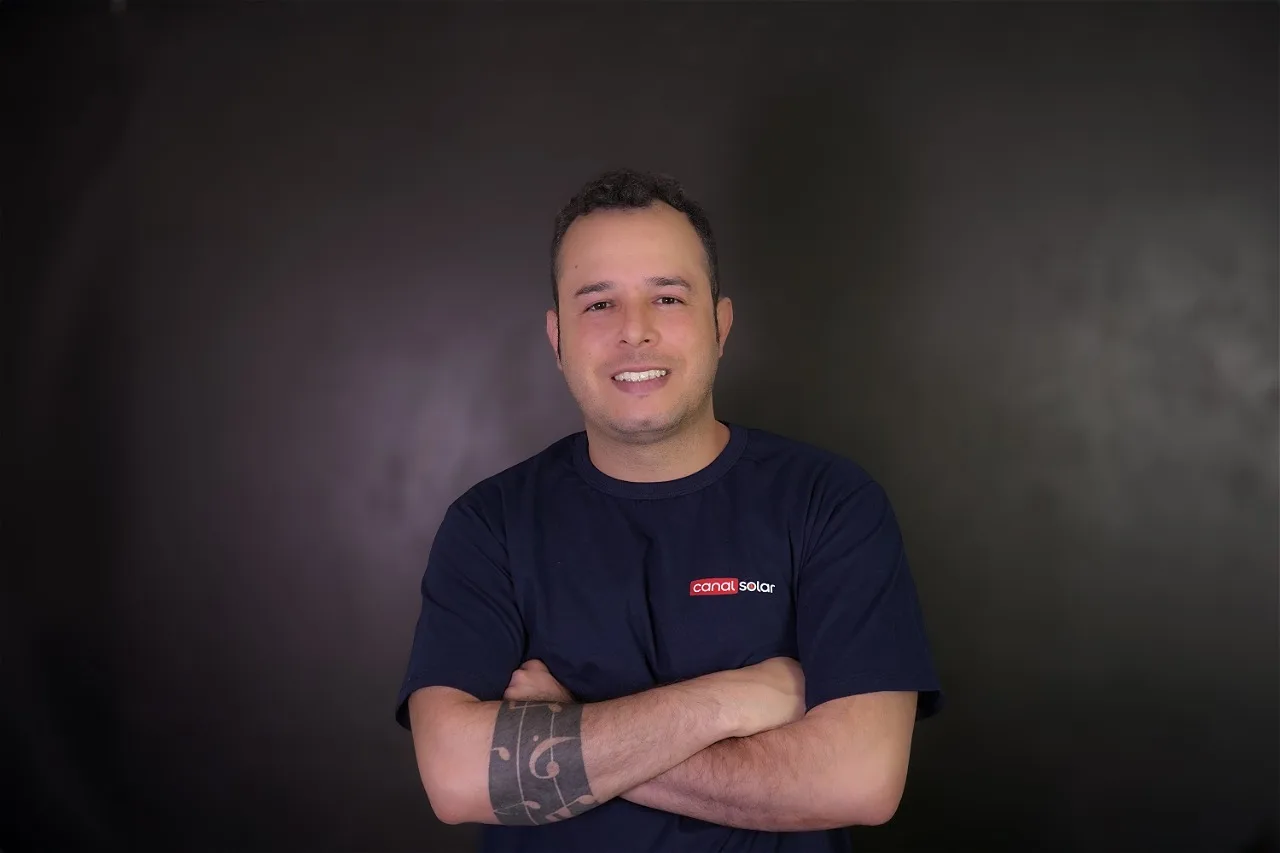
Responsible for TrinaTracker's operations throughout Latin America and the Caribbean, Felipe Tukamoto closely monitors the challenges and opportunities of the photovoltaic sector in the region.
In an interview, the product manager highlights Brazil's leading role in the solar market, but acknowledges that the current scenario is marked by regulatory, tax, and operational instability.
Still, Tukamoto highlights the resilience of the Brazilian market and points to a promising future, driven by large-scale projects, technological advances, and new storage solutions.

In this conversation, he details TrinaTracker's strategies, the role of the factory in Salvador, the recently opened innovation center in Sorocaba, and expectations for Intersolar 2025.
How do you assess the current state of the solar energy market in Brazil?
Felipe Tukamoto: First, thank you for the opportunity. Looking at the region, I'm responsible for all of Latin America down to Mexico, and Brazil is undoubtedly the main driver of this market: higher sales volume, more projects, and greater potential.
But today the scenario is marked by a certain instability.
We're feeling the effects of regulatory changes, new taxes on panels, high capital costs, exchange rate volatility, and even energy flow restrictions—known as curtailment. All of this has led some clients to postpone investments.
Despite this, large-scale projects, especially centralized generation, remain the sector's driving forces. A single utility-scale plant represents, in terms of impact, dozens of distributed generation projects. We still see room for DG, especially in larger-scale plants, but utility projects are truly the focus.
And looking ahead, what are the prospects for the coming years?
Brazil is a challenging but highly resilient market. Despite recent difficulties, we believe the sector will likely stabilize and find a path to growth. We see 2025 as a year of adjustments, but the potential for expansion remains strong. There is optimism, particularly regarding new investments and client maturity.
TrinaTracker has a factory in Salvador. What's the current state of operations there?
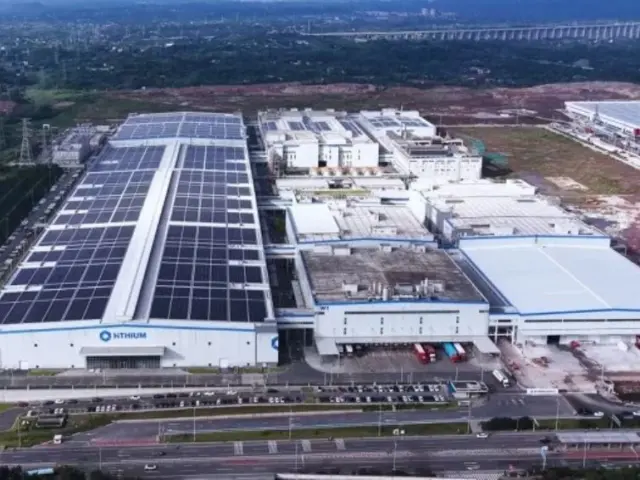
Yes, our Salvador facility has an annual capacity of 2,5 GW and was designed primarily for the Brazilian market, ensuring competitiveness against imported products. In addition to manufacturing, it serves as a storage center for aftermarket components – this allows us to respond more quickly to any replacement needs and reduce the risk of generation losses for our customers.
Another important point is that local production qualifies us with BNDES (Brazilian Development Bank), offering another financing option to customers. Today, the plant is fully operational, with no idle capacity.
Does Brazil present any specific challenges for the use of trackers?
Yes, and increasingly so. The best land has already been taken, and now we're dealing with more complex areas—uneven soils, extreme environmental conditions, and strong winds in some regions. This requires robust and adaptable solutions.
Therefore, we have a local engineering team that adapts each project to the plant's conditions. Our goal is to reduce earthmoving costs, cable count, foundations, and, above all, lower the LCOE (levelized cost of energy). This is a major focus for our clients today.
And in the technological field, what stage are we at and what sets TrinaTracker apart?
Trina has a unique advantage: we work with both modules and trackers. This ensures compatibility, simplifies integration, and strengthens our after-sales service.
In terms of innovation, I highlight our TCU controller and the SuperTrack algorithm, which adjusts panel positioning in real time to optimize generation—even on cloudy days or with diffuse radiation. This ensures more energy and less worry over the plant's lifespan, which can reach 30 years.
This combination of robustness, innovation, and support explains our growth. In four years of operation, we've gone from 15th to 3rd in market share in the region, according to McKinsey data.
You recently opened an innovation center in Sorocaba. What's the purpose of this space?
I had the opportunity to lead this project. The objective is threefold: to create a space near São Paulo to welcome clients and showcase our solutions in modules, trackers, and, soon, batteries; to form a team dedicated to research and development to optimize our technologies; and to offer theoretical and practical training, developing more qualified professionals for the photovoltaic sector.
It's a project that started small, but has enormous potential for expansion.
And at this year's Intersolar, what will TrinaTracker's participation be like?
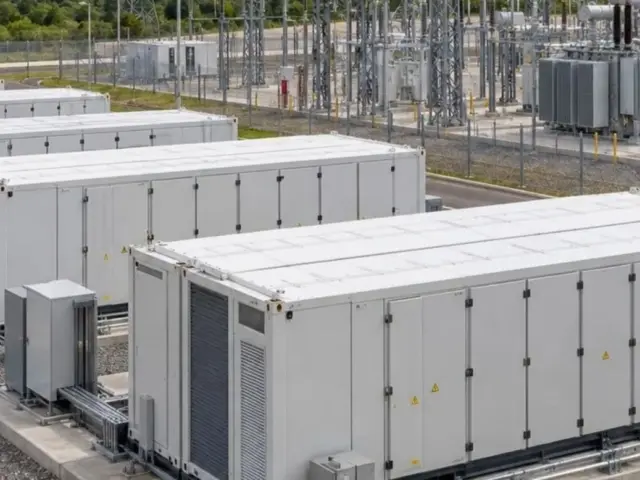
We'll be showcasing our entire line of products: modules, trackers, and batteries. We'll have a tracker mockup set up at the booth, modules on display, and even a scaled-down container of our battery.
We'll also be demonstrating electroluminescence on the panels, and our team will be available to assist customers and visitors. The idea is to showcase innovation, but also to create a space for dialogue and knowledge exchange.
Finally, what are Trina's plans to consolidate its presence in Brazil?
Today, the market is more mature. Developers are no longer just looking for price, but also solutions that deliver real economic returns and a positive impact on LCOE. Therefore, in addition to the product, we offer technical support, value assessment studies, and close monitoring with a local team and parts inventory.
Our goal is to strengthen this bond of trust with our customers. We don't just provide trackers or modules—we deliver a complete solution, with reliability, fast support, and optimized generation.
And, of course, batteries will play a central role in this strategy. We already have projects in Chile, and we believe Brazil will demand significant storage in the coming years. It's a path of no return, and Trina is already prepared for this transition.
all the content of Canal Solar is protected by copyright law, and partial or total reproduction of this site in any medium is expressly prohibited. If you are interested in collaborating or reusing part of our material, please contact us by email: redacao@canalsolar.com.br.
Comments
Comments are moderated before publication.Comments should be respectful and contribute to a healthy debate. Offensive comments may be removed. The opinions expressed here are those of the authors and do not necessarily reflect the views of the author. Canal Solar.