
The expectation of expanding energy storage in Brazil is already mobilizing local manufacturers, investors, and suppliers. Transforming this interest into operational projects, however, requires resolving issues that span the entire lifecycle of the systems, from equipment certification to the division of responsibilities in case of failure.
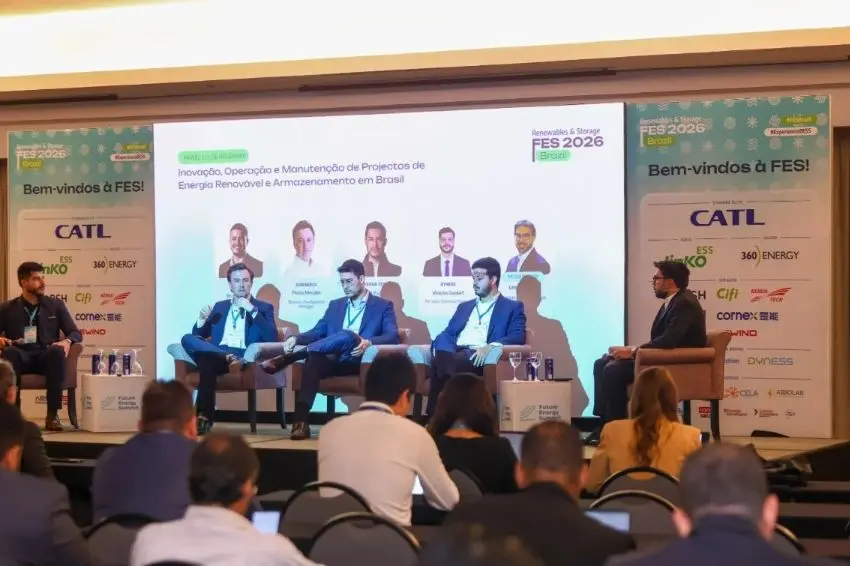
This was one of the recurring points in the debates at the FES (Future Energy Summit). In the panels on batteries, executives presented nationalization strategies and discussed how financing, insurance, maintenance contracts, and operating rules influence the viability of projects.
This move comes at a time when the sector is seeking resources to keep pace with changes in the generation profile. The expansion of solar and wind energy increases the importance of technologies capable of adjusting supply to the needs of the grid.
Battery energy storage systems, known by the acronym BESS, enter this discussion because they allow energy to be stored and made available at a later time.
Nationalization requires defining who is responsible for the system.
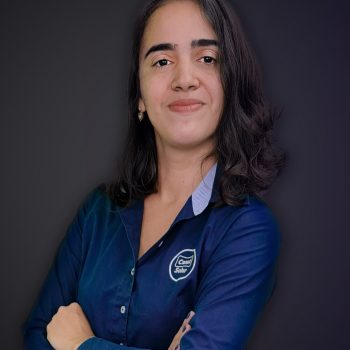
In the panel on renewables and nationalization, moderated by Bernardo Marangon, from Canal Solar, The companies presented different approaches to structuring the supply of storage systems in the country.
Bruno Mininel, Sales & Business Development Manager at Jinko ESS, reported that the company sought partners with existing industrial infrastructure to develop its local solution. According to the executive, the strategy involves a partnership with UCB and the evaluation of national suppliers for system components.
The discussion also touched on the time required to certify the products, the demands of the funders, and the organization of contracts between the companies involved.
In the assessment presented by Mininel, the development of the offer needs to clarify who supplies each component, what guarantees are offered, and who assumes responsibility throughout the operation.
This definition is important because a storage system brings together equipment and services from different suppliers. Batteries need to operate in an integrated way with converters, transformers, control systems, and other components of the installation.
The contractual division of these responsibilities can influence the security of the investment and the response to potential problems.
Equipment integration was also a key topic in the technological discussions at FES Brazil 2026. Adauto Otto and Cosme dos Santos presented new developments in CATL's storage systems, while Marcelo Thiele, from Hopewind, and Vinícius Guolart, from Dyness, shared their experiences in developing hybrid projects with batteries.
In this context, the structuring of long-term service contracts was another point highlighted in the debate. For the investor, the analysis needs to consider how maintenance and technical assistance will be carried out, what performance guarantees will be offered, and who will be responsible for any failures during operation.
Manufacturers are evaluating different paths to local production.
Rafael Pagliarini Nascimento, Senior Sales Manager at Kehua Tech, described a strategy based on integrating the company's equipment with solutions that use locally sourced components.
According to the executive, the company evaluated the local manufacturing of its power conversion systems, known as PCS, but at that time opted to work with partnerships and imported equipment integrated with other components supplied in Brazil.
The debate showed that nationalization requires assessing which steps can be carried out in the country, the scale needed to sustain production, and the compatibility between equipment. Industrial timelines, certifications, and eligibility for financing options are also factors into this assessment.
For suppliers, the prospect of new projects can help justify local investments. The decision to expand production, however, depends on the continuity of demand and the predictability of the rules that will govern this market.
Financing and insurance for project development.
Another company participating in FES Brazil was 360Energy, a company that builds and operates solar projects in Argentina, Brazil, and Mexico. Pedro Mecabô, Business Development Manager at 360Energy, reaffirmed his commitment to strengthening strategic alliances that allow the development of profitable and sustainable projects that drive the energy transition in Latin America.
Guilherme Alice, CEO of CIFI/Finenge, highlighted the great importance of sustainable financing systems for the implementation, development, maintenance, and operation of renewable energy projects.
The possibility of obtaining insurance was another point of attention. During the panel on regulatory opportunities and challenges at BESS, Marcelo Santos, Project Leader for E&P Risk Consulting at Marsh, argued that risk assessment should accompany the development of the project.
Among the aspects observed by insurers and reinsurers, the participant cited battery monitoring, certifications, fire protection, warranties, and the emergency response plan.
One of the risks discussed was thermal runaway, an uncontrolled heating process that can spread between cells. The battery management system, known as BMS, and the detection and protection mechanisms are part of the assessment presented in the panel.
The analysis also involves how the facility will respond to an incident. The layout of the equipment, the protection features, and the emergency procedures need to be considered in conjunction with the characteristics of the batteries.
In the assessment presented during the debate, involving risk engineering from the outset helps identify necessary adjustments so that the project is eligible for coverage. This discussion affects manufacturers, integrators, owners, and financiers, who need to understand their responsibilities at each stage.
Batteries can help alleviate network restrictions.
The use of batteries to alleviate transmission restrictions was also discussed. According to participants, when network capacity is compromised only at certain times, battery storage can be an alternative to building or expanding lines.
Feasibility depends on the installation location, consumption profile, and how well the batteries can reduce overcharging during those periods.
The application opens a regulatory discussion on how the investment would be recognized and remunerated. Participants pointed to the need for greater clarity regarding the actions of transmission companies and the treatment of revenues associated with services provided by the systems.
The choice of installation location was also presented as relevant to the result. A battery can offer different contributions depending on the point in the network where it is connected and the conditions under which it charges and discharges.
Compensation must reflect the services provided.
In the panel on energy transition, nuclear power, and flexibility, executives discussed how to remunerate the resources needed to operate a system with a greater share of variable energy sources.
Direct contracting in the free market and auctions were presented as complementary instruments. While supply contracts meet the commercial needs of consumers, auctions can be structured to contract power and other specific system requirements.
Participants also discussed the importance of prices reflecting the contribution of each resource, including availability during peak demand times and the ability to adjust operations. Nuclear energy was advocated during the debate as a complementary option for continuous supply.
For storage, predictability involves both revenue and equipment usage conditions. Operating frequency and contractual obligations are factored into performance, maintenance, and return on investment projections.
These are definitions that need to accompany the expansion of the supply chain so that projects can progress to the operational stage.
all the content of Canal Solar is protected by copyright law, and partial or total reproduction of this site in any medium is expressly prohibited. If you are interested in collaborating or reusing part of our material, please contact us by email: redacao@canalsolar.com.br.
Comments
Comments are moderated before publication.Comments should be respectful and contribute to a healthy debate. Offensive comments may be removed. The opinions expressed here are those of the authors and do not necessarily reflect the views of the author. Canal Solar.