
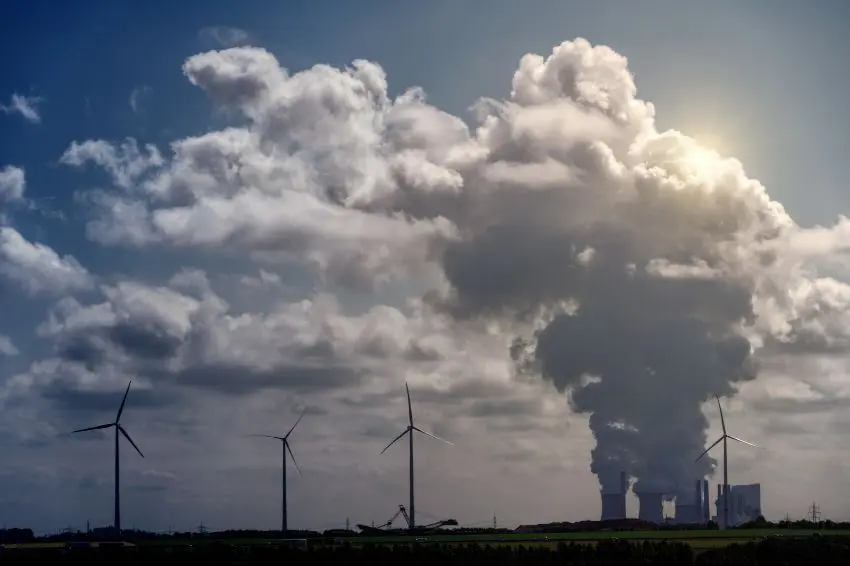
After a 13% drop in 2024, Brazil's greenhouse gas emissions fell by a further 6% in 2025, reaching the lowest gross level since 2018. The data comes from SEEG (System for Estimating Greenhouse Gas Emissions), from the Climate Observatory.
Last year, Brazil emitted 2,06 billion tons of CO₂ equivalent (CO₂e), compared to 2,19 billion in 2024. Net emissions, which account for carbon removal by vegetation and protected areas, totaled 1,41 billion tons, a 9% decrease and the lowest result since 2012.
The reduction was driven primarily by the fight against deforestation, especially in the Amazon and Cerrado biomes. In the land-use change sector, gross emissions fell by 15%, from 957 million to 814 million tons of CO₂e.
Despite the positive result, other sectors showed little progress. In agriculture, emissions remained practically stable at 626 million tons of CO₂e. The energy sector, however, registered an increase of 1,2%, rising from 422 million to 427 million tons in 2025.
As a result, energy now accounts for 21% of Brazil's gross emissions, behind only land-use change, responsible for 39%, and agriculture, with 30%.
According to David Tsai, from Iema (Institute of Energy and Environment) and coordinator of Seeg, the results demonstrate the importance of policies to combat deforestation, but also highlight the need to make progress in other sectors.
“The fact that this decline is happening so quickly after years of a sharp increase in deforestation shows the country's success in creating and implementing command-and-control policies. However, it is concerning that our climate performance still depends so much on a single sector, land use. It is essential to make progress in other sectors so that the next targets, for 2030 and 2035, can be met.”
Brazil is getting closer to its climate goals.
With the 2025 results, the country came close to the climate target set for that year, which aimed to limit net emissions to 1,32 billion tons of CO₂e. The Climate Observatory expects Brazil to make even more progress in 2026.
Preliminary calculations by SEEG indicate that net emissions from the land-use change sector could become negative for the first time, reaching -24 million tons of CO₂e.
Considering the trend in other sectors, the estimate is for total emissions close to 1,23 billion tons, a volume close to the 2030 target, set at 1,20 billion tons of CO₂e.
all the content of Canal Solar is protected by copyright law, and partial or total reproduction of this site in any medium is expressly prohibited. If you are interested in collaborating or reusing part of our material, please contact us by email: redacao@canalsolar.com.br.


Comments
Comments are moderated before publication.Comments should be respectful and contribute to a healthy debate. Offensive comments may be removed. The opinions expressed here are those of the authors and do not necessarily reflect the views of the author. Canal Solar.