
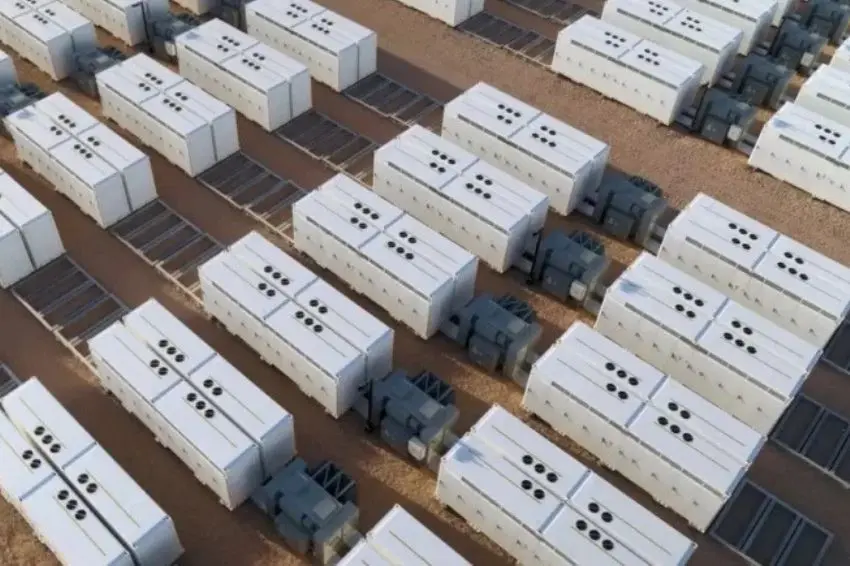
The Brazilian electricity grid should not pose an obstacle to the country's first battery auctions, scheduled to take place between December 2nd and 4th. This assessment comes from ABSAE (Brazilian Association of Energy Storage Solutions), which points to ample available connectivity for new projects.
According to calculations by the entity, based on a technical note from ONS (National System Operator) and EPE (Energy Research Company), Brazil currently has approximately 56 GW of connection capacity for battery storage systems.
According to the organization, the volume is equivalent to five to twelve times the estimated power requirement for the period from 2028 to 2030, calculated between 4,5 GW and 10 GW.
In locations offering location bonuses, the connectivity margin reaches 13,7 GW. Of the 129 busbars covered by the benefit, 93 have available capacity, mainly in Bahia, Piauí, Ceará, and northern Minas Gerais.
Competition and auction prices
With over 6 projects registered in the bidding process, fierce competition for the contracts is expected. According to ABSAE, the established prices are also aligned with market expectations and the projections discussed during the auction planning phase.
The values are R$ 1,76 million per MW/year for the auction with a national content requirement and R$ 1,58 million per MW/year for the auction without this requirement.
According to the association, the prices take into account the costs involved in storage projects, make the bidding processes attractive to investors, and allow for effective competition among participants.
The organization also believes that the economic and financial eligibility requirements and the performance bond offer assurance that winning projects will be effectively implemented without imposing disproportionate barriers on qualified companies.
Another point that was positively evaluated was the reduction in guarantees, accompanied by a revision of the reference investment to R$ 6 million per MW. For ABSAE, the adjustment helps to filter out companies without the effective capacity to execute projects, without deterring investors who have the real ability to deliver them.
Broadcasters and funds can increase competition.
The participation of energy transmission companies, private equity funds (FIPs), and pension entities is also considered positive by the association.
According to ABSAE, transmission companies contribute expertise in the deployment and operation of assets connected to the electricity grid. Meanwhile, private equity funds and pension funds can provide long-term capital, especially when participating in consortia with other companies.
According to the entity, this investment profile is compatible with the 15-year contracts foreseen in the auctions, which require the financial capacity to sustain the projects throughout their operation.
“Investment funds and pension funds, in consortia with other companies, bring long-term capital, which combines well with 15-year contracts. Together, these measures increase competition and strengthen project financing, which is fundamental to the success of the country's first battery auction,” ABSAE highlighted.
all the content of Canal Solar is protected by copyright law, and partial or total reproduction of this site in any medium is expressly prohibited. If you are interested in collaborating or reusing part of our material, please contact us by email: redacao@canalsolar.com.br.



Comments
Comments are moderated before publication.Comments should be respectful and contribute to a healthy debate. Offensive comments may be removed. The opinions expressed here are those of the authors and do not necessarily reflect the views of the author. Canal Solar.