
Contracting for energy in the free market requires an analysis that goes beyond the price negotiated per MWh. To plan energy expenses, companies need to consider the commercial terms of the contracts, applicable charges, and opportunities to optimize consumption.
In a changing landscape within the electricity sector, the combination of contracting strategy and energy management solutions can contribute to greater control over expenses. This assessment comes from Armor Energia, an energy management and trading company.
“A proper contract needs to consider not only the price of energy, but also the components that may vary throughout the contract and how these costs are distributed between the parties. This analysis is fundamental for the company to understand the risks assumed and plan its expenses more consistently,” says Fred Menezes, the company's Commercialization Director.
According to him, the need to assess these conditions becomes more relevant with the expansion of the free energy market. From January to September 2026, approximately 18,3 new consumer units migrated to this environment, according to data from CCEE (Chamber of Electric Energy Commercialization).
The expectation is that the movement will expand with the gradual opening of the market to consumers served at low voltage, scheduled to begin in November 2027.
According to ANEEL According to the National Electric Energy Agency, Group B – which includes small businesses, rural properties, and residences – comprises approximately 89,6 million consumer units in the country.

Among the available models, fixed-price contracts allow for the pre-establishment of the value of the energy traded during a specific period, according to the conditions agreed upon between buyer and seller.
This option can make planning the contracted installment easier, but it does not, by itself, guarantee stability in all costs related to the supply.
The treatment of sector-specific charges, tariffs, and any regulatory changes depends on the contractual clauses and rules applicable to each component.
This distinction is important given the projections for electricity sector charges. In June, the technical area of ANEEL It was estimated that expenses related to the Power Charge for Capacity Reserve (ERCAP) could increase by approximately R$ 2,3 billion between April 2026 and April 2027.
The estimate takes into account the start of operations of the plants contracted in the Capacity Reserve Auction in the form of Power (LRCAP), held in March 2026.
Sectoral charges finance public policies and mechanisms necessary for the operation and security of the electricity system. For consumers, the impact of these charges depends on the method of collection and the terms of the contract.
Therefore, the analysis of a commercial proposal must identify which costs are included in the negotiated price, which can be passed on, and how any changes will be handled during the term of the agreement.
In addition to contracting, companies can act on operational factors that influence energy expenditure. Behind-the-meter solutions, installed after the utility company's meter, allow for the development of initiatives focused on efficiency, demand management, and more strategic energy use.
Energy efficiency projects can reduce facility consumption, while management systems help identify usage patterns and opportunities for operational adjustments.
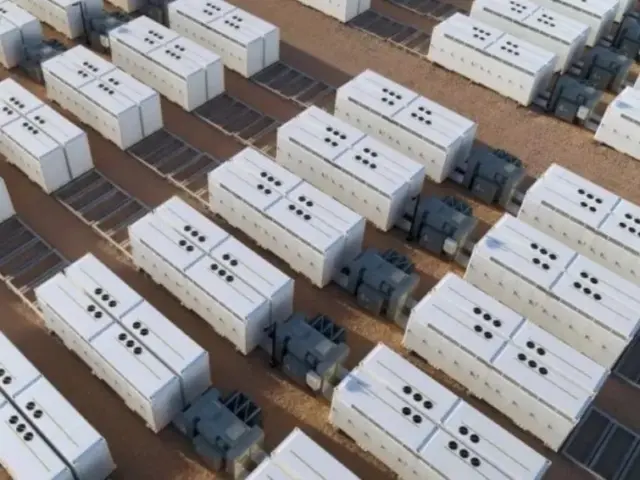
Battery energy storage systems (BESS) can help reduce peak demand and shift some consumption to more advantageous times, depending on the operational profile, tariff structure, and economic viability of each project.
"It's also important to understand how energy is consumed within a facility and what opportunities exist to optimize operations," explains Menezes.
The strategy definition must consider the consumption profile, commercial conditions, tariff structure, applicable charges, and risks assumed by each party.
With an integrated analysis of these factors, companies can identify optimization opportunities and make decisions more aligned with their financial planning and operational needs.
all the content of Canal Solar is protected by copyright law, and partial or total reproduction of this site in any medium is expressly prohibited. If you are interested in collaborating or reusing part of our material, please contact us by email: redacao@canalsolar.com.br.


Comments
Comments are moderated before publication.Comments should be respectful and contribute to a healthy debate. Offensive comments may be removed. The opinions expressed here are those of the authors and do not necessarily reflect the views of the author. Canal Solar.