
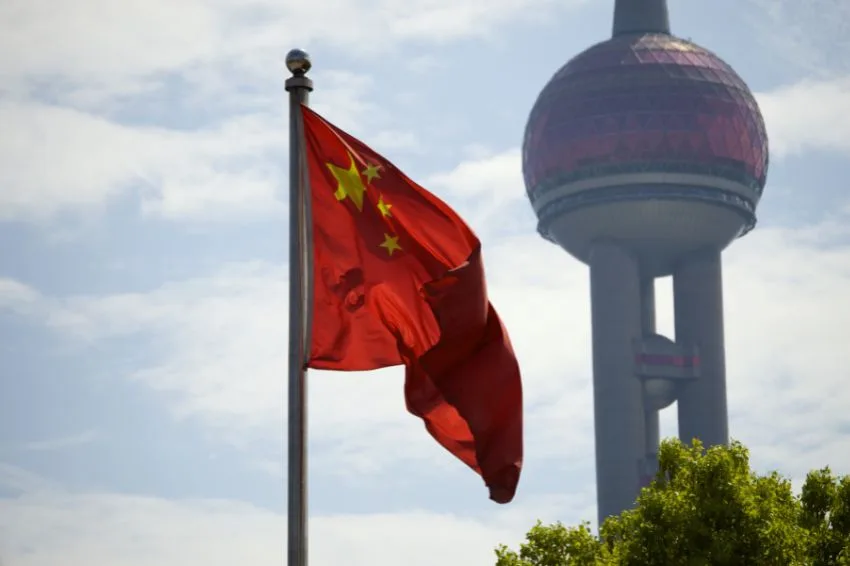
A Chinese solar industry is facing a dilemma that threatens to spread to other strategic sectors of the country's economy: excess production capacity.
Wladimir Janousek, of JCS Consultoria, explains that the oversupply of equipment, especially solar modules, has led to predatory competition in the domestic market, with manufacturers of all sizes operating in the red.
The drop in global demand, he said, only worsened the situation, amid trade restrictions imposed by the United States. There were also tax increases in Brazil, another key market for Chinese exporters.
According to Janousek, this dynamic resulted in a price collapse throughout the production chain.
“From polysilicon to photovoltaic cells, the reductions are gigantic, with solar modules today worth around 60% less than at their peak in 2020,” he noted.
He highlights that, instead of competing for innovation and technological robustness, many companies began to launch increasingly simpler and cheaper products, betting that they would survive solely by reducing costs.
Emergency decisions
This situation has led the Chinese government to adopt tougher measures. The Ministry of Industry and Technology, together with the local solar industry association, announced regulatory proposals to prevent the so-called "competition by devolution" from taking hold.
The idea is to encourage good practices and a focus on quality, in order to prevent the degradation of the industry, which is vital for both the domestic economy and exports.
The severity of the problem is evident in the numbers: industry leaders accumulated billion-dollar losses in the first half of 2025, reversing profits made in previous years. The record installation of 212,2 gigawatts of photovoltaic capacity during the period, while significant, was not enough to absorb the flood of modules produced. As a result, prices fell to their lowest level since 2011, according to official data.
Contamination
"This yellow light is no longer limited to the solar sector," Janousek warned. He noted that segments such as electric vehicles and batteries are beginning to face similar dilemmas, with production exceeding one million units beyond the market's absorption capacity.
The risk, says the consultant, is that the same combination of oversupply, falling demand, and trade barriers will create a downward spiral that will jeopardize the sustainability of Chinese industry on several fronts.
Green technology at risk
Tensions with the US reinforce this picture. Market data indicate that Washington raised tariffs on Chinese products by up to 30% and imposed surcharges of up to 3.400% on solar cells from Southeast Asia, where manufacturers sought to circumvent previous barriers.
For some companies, this meant a drop of up to 85% in exports in just one semester.
When asked, an executive from a large Chinese manufacturer with significant business in Brazil said that the company does not authorize statements on the issue of the tariff dispute with the US.
According to Wladimir Janousek, the Chinese government is trying to react to prevent the trade war and the slowdown in global consumption from turning its biggest investment—green technologies—into a source of instability. In the consultant's opinion, the outcome of this crisis will define not only the future of the solar industry but also the balance of the global energy transition.
all the content of Canal Solar is protected by copyright law, and partial or total reproduction of this site in any medium is expressly prohibited. If you are interested in collaborating or reusing part of our material, please contact us by email: redacao@canalsolar.com.br.




Comments
Comments are moderated before publication.Comments should be respectful and contribute to a healthy debate. Offensive comments may be removed. The opinions expressed here are those of the authors and do not necessarily reflect the views of the author. Canal Solar.