
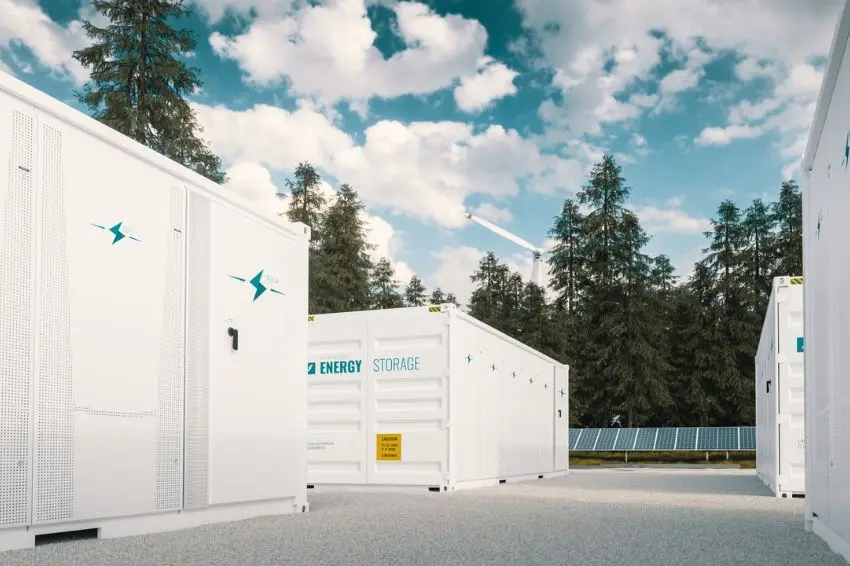
Companies that adopted Route 1 of nationalization from BNDES (National Bank for Economic and Social Development) are contesting CMN Resolution No. 5.353, which reduced the Climate Fund rate from 6,5% to 3% per year for projects involving battery packs produced in Brazil.
The group is asking the CMN (National Monetary Council) to extend the tax to projects that use imported packs and meet the national content criteria of the LRCAP 2026 (2026 Capacity Reserve Auction).
O Canal Solar had access to the six letters in which the companies contest the measure. The documents, dated Friday (27), are addressed to CMN, BNDES, MME (Ministry of Mines and Energy), MDIC (Ministry of Development, Industry, Trade and Services), to ANEEL (ANEEL) and to the TCU (Federal Court of Accounts).
The group is requesting a decision before the December 2nd auction, without asking for the bidding to be suspended.
What changed after the registration period?
When the CMN approved the reduction.On Thursday (26), participants had already registered their projects and submitted their proposal guarantees. According to the letters, both deadlines ended on November 23.
On the 25th, the BNDES has released the financing conditions., which already differentiated routes based on the portion of credit that could be funded by the Climate Fund. The resolution expanded this difference by also reducing the cost of these resources for projects with national packages.
Based on the reference conditions described in the documents, a Route 1 project with an imported package can obtain 80% of its financing from BNDES using resources from the Climate Fund, at a base rate of 6,5% per year.
The remaining 20% is linked to the TLP (Long-Term Rate). In routes 2, 3, and 4, the fund's resources can cover up to 100% of the bank's financing, at a base rate of 3% per year.
The difference lies in the bidding process because all projects are competing for the same product, under the same price ceiling. The winner will assume the obligation to provide power to the SIN (National Interconnected System).
With more expensive debt, entrepreneurs tend to need higher revenue to make the project viable, which limits their margin to reduce the bid. In the letter to the Ministry of Mines and Energy (MME), the companies ask the ministry to assess whether the assumptions used to calculate the ceiling price still accommodate the new credit conditions.
Read more
The National Monetary Council reduces interest rates for projects involving batteries.
Companies question the criteria and timeframe for adaptation.
According to the Ministry of Finance, the interest rate reduction aims to stimulate the use of batteries produced in the country. To access the 3% rate, the The project must utilize domestically manufactured packaging and comply with BNDES's nationalization criteria..
The companies argue that Route 1 also requires industrial and technological activity in Brazil. Although it allows for imported components, this alternative foresees compliance with local content criteria through other stages of the system, such as the manufacturing of electrical components and power conversion systems, the development of management software, and the integration of equipment.
In the letters, the group acknowledges that the CMN (National Monetary Council) can establish different credit conditions to encourage domestic production.
The question is whether the council justified why the origin of the package should determine an additional 3,5 percentage point difference in the base rate, when routes with higher local content already had access to a larger share of the fund's resources.
The deadline also weighs heavily in the dispute. The signatories claim that, when presenting the guarantees, they had already identified suppliers and made commitments to manufacturers and investors.
In the group's assessment, the time remaining until the auction is insufficient to change the packaging, renegotiate the supply, and review the financing conditions.
Group points to risk of concentration in supply.
In the letter to the TCU (Brazilian Federal Court of Accounts), the companies warn that the difference in the cost of credit could reduce the number of projects capable of submitting competitive bids and increase the final price of the contract. Another risk pointed out is the concentration of equipment orders.
According to the signatories, only two companies were certified on the routes that benefited from the project, which could strain supply capacity and implementation deadlines. The letters do not estimate how many projects would lose competitiveness nor do they quantify the potential impact on price.
The request for review is limited to the base rate of the Climate Fund for the LRCAP 2026 – National Storage. If the CMN accepts the proposal, the Route 1 projects will be able to access the 3% annual rate on the 80% of financing covered by the fund.
The supplementary portion will remain linked to the TLP, and each route will continue to be subject to its national content criteria.
all the content of Canal Solar is protected by copyright law, and partial or total reproduction of this site in any medium is expressly prohibited. If you are interested in collaborating or reusing part of our material, please contact us by email: redacao@canalsolar.com.br.





Comments
Comments are moderated before publication.Comments should be respectful and contribute to a healthy debate. Offensive comments may be removed. The opinions expressed here are those of the authors and do not necessarily reflect the views of the author. Canal Solar.