
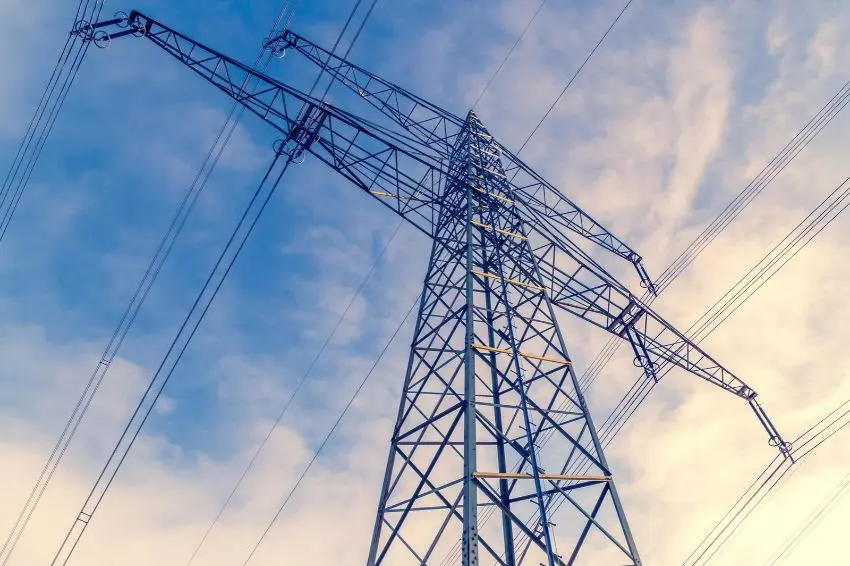
A survey by the consulting firm Volt Robotics, based on public data from ONS (National System Operator), identified 51 critical days between January and August of this year, in which, at least once, more than 60% of available renewable generation was restricted.
On 12 of those days, the cut reached 80%, which equates, cumulatively for the year, to a critical episode every five days.
Historically, between October 1, 2021, and August 31, 2026, Volt Robotics' Curtailment Tracker recorded at least 73,4 million MWh of power cuts, considering the different reasons and power plants present in the analyzed database.
Waste on the rise.
In the first eight months of 2026 alone, the average volume of cuts reached 3.853 MW, 18,3% higher than that recorded in the same period of 2025.
Converted into energy, the amount cut between January and August corresponds to 22,47 billion kWh, which, according to the survey, would be enough to supply approximately 15,6 million homes for eight months, a number close to the total number of residential consumer units in São Paulo, Rio de Janeiro, and Fortaleza combined.
The evolution of extreme episodes is also noteworthy, because throughout the period from January to August 2025, 30 days were recorded with cuts exceeding 60%, compared to 51 this year.
The number of episodes with restrictions exceeding 80% increased from seven to 12. The composition of the problem also changed; that is, cuts classified as energy-related represented 67% of the total in 2026, compared to 49% in 2025 and 21% in 2024.
Billion-dollar account
According to Volt Robotics' methodology, the 73,4 million MWh cut during the analyzed period would correspond to R$ 8,6 billion if valued at the PLD (Price of Settlement of Differences).
When the rules of the individually modeled contracts for each power plant are applied, the estimated impact rises to R$ 13,1 billion, without monetary correction.
The study itself, however, emphasizes that these figures do not represent an official assessment of losses, a payment obligation, or recognized compensation.
These estimates are constructed from data published by the ONS (National System Operator) and the contractual modeling of the consulting firm. Revisions to availability, wind and irradiance measurements, reference generation, and contractual rules may alter the results.
Taking into account additional corrections to the data, Volt Robotics calculates a scenario of up to 75,8 million MWh of disconnected power, with a value of up to R$ 9 billion according to the PLD (Price of Energy in the Spot Market) and R$ 13,6 billion according to the contractual model.
The difference between the scenarios is highlighted by the study as evidence of the importance of data quality and the criteria used to calculate the economic impact.
Compensation in focus
The survey also provides a snapshot directly related to the compensation mechanism governed by Ordinance No. 140 of the Ministry of Mines and Energy, published in July 2026.
MME regulates compensation for solar and wind power plants due to curtailment.
For the cuts classified as reliability cuts that occurred between September 1, 2023, and November 25, 2025, the preliminary estimate reaches R$ 4,4 billion, considering data corrections and contractual valuation.
Of this amount, approximately R$ 3,4 billion would be associated with wind farms and R$ 963 million with solar farms.
In this analysis, the estimated volume of energy cut reaches 21,8 million MWh. Based on the PLD valuation, this would amount to R$ 3,4 billion; according to the contractual methodology, R$ 4,4 billion. Wind power accounts for 17 million MWh, while solar power represents 4,8 million MWh.
Not all cuts have the same cause.
One of the main warnings from the analysis is that curtailment is not a unique problem.
Volt Robotics distinguishes three categories: energy ratio (ENE), associated with excess generation relative to consumption; electrical ratio (REL), related to line unavailability due to maintenance or failures; and reliability ratio (CNF), when the available network cannot handle all generation without increasing operational risks.
The study uses two episodes from 2025 to show this difference. On August 10th, the cuts reached nearly 100%, but solar and wind generation were not exceptionally high.
Consumption was below forecast, with a difference of nearly 15% in some periods, while approximately 13 GW of thermal power plants remained operational during the daytime off-peak.
On May 4th, another Sunday saw cuts close to 95%, but under a different combination of demand, generation, and thermal dispatch.
Diagnosis before investment
For Volt Robotics, the increasing magnitude of the outages makes it necessary to identify the binding constraint that triggers each event before defining investments.
The study links different possible solutions — transmission, storage, generation and demand flexibility, synchronous compensators, automation, and improved forecasting — to the specific causes of the outages.
The conclusion is that the same amount of power outage can result from different problems and therefore require different solutions.
The central recommendation is to advance in the classification of events, expand data traceability, and test alternatives capable of showing which intervention would effectively reduce each constraint. For Volt Robotics, curtailment is the symptom, while the binding constraint is the problem to be solved.
You may also be interested
https://canalsolar.com.br/por-que-usinas-hibridas-minimizar-curtailment/
all the content of Canal Solar is protected by copyright law, and partial or total reproduction of this site in any medium is expressly prohibited. If you are interested in collaborating or reusing part of our material, please contact us by email: redacao@canalsolar.com.br.



Comments
Comments are moderated before publication.Comments should be respectful and contribute to a healthy debate. Offensive comments may be removed. The opinions expressed here are those of the authors and do not necessarily reflect the views of the author. Canal Solar.