
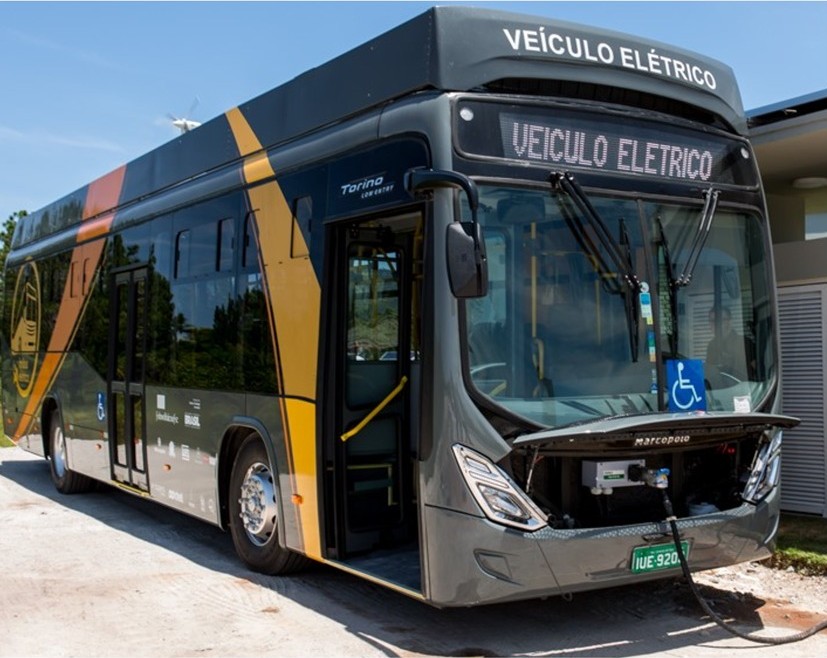
After nearly ten years of operation and more than 150 kilometers traveled, the batteries of an electric bus from UFSC (Federal University of Santa Catarina) They have gained a new purpose: storing energy to support the electrical grid of Santa Catarina.
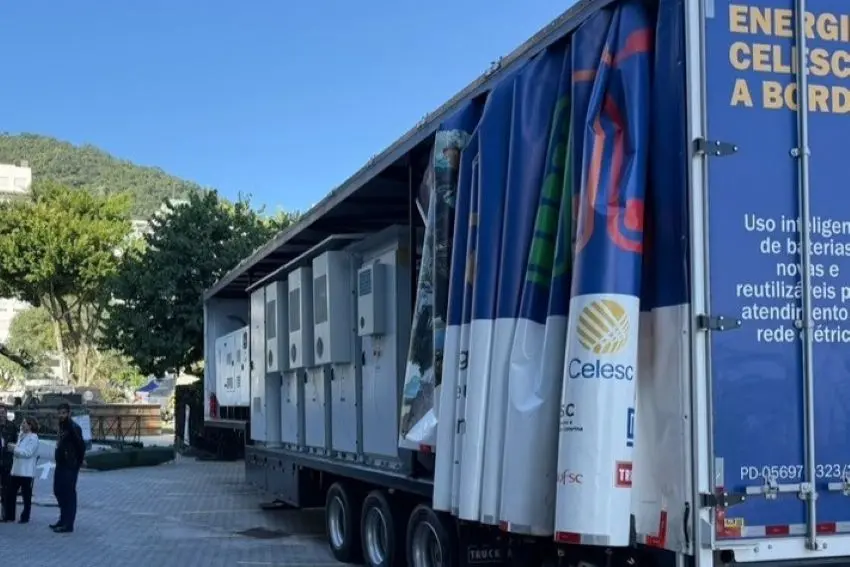
The equipment, which no longer met the vehicle's autonomy requirements, was allocated to a mobile battery energy storage system (BESS), developed in a project funded by Celesc, with technological integration by WEG.
Installed in a 12-meter semi-trailer, the system combines reused and new batteries, with the aim of supporting the distribution network in situations that require an interruption in the electricity supply.
The initiative is part of a line of research led by the professor. Ricardo Ruther, from the Photovoltaic Solar Energy Laboratory at UFSC, which investigates the technical and economic feasibility of reusing electric vehicle batteries.
Although reduced storage capacity may compromise a vehicle's range, this does not necessarily mean that its battery has reached the end of its lifespan.
Depending on the conservation conditions, the equipment can still be used in stationary energy storage applications.
The research began to take shape in 2018, when Nissan offered the laboratory batteries from 12 Leaf electric vehicles that had operated as taxis in São Paulo for five years.
The vehicles, manufactured in 2012, were part of an initiative by the automaker related to the 2014 World Cup. After years of operation, their batteries showed a loss of capacity, compromising the range necessary for taxi service.
Despite this, the equipment still had electrical characteristics suitable for stationary applications, paving the way for the development of different repurposing projects.
From electric cars to storage systems
Using batteries received from Nissan, the researchers developed four projects: autonomous solar-powered streetlights, a 100-liter refrigerator for vaccine storage in the Amazon region, a photovoltaic generation system with storage to meet the laboratory's needs, and an electric vehicle charging station with a solar canopy.
The experience also contributed to the development of the mobile storage project, which uses batteries salvaged from the university's electric bus.
The vehicle has been operating on photovoltaic solar energy since 2016 and has already traveled more than 150 kilometers. After almost a decade of operation and a progressive reduction in range, its battery bank was replaced in 2026.
Instead of sending the equipment directly for recycling, UFSC decided to reuse it in a project funded by Celesc, within the scope of... Research and Development Program of ANEEL (National Electric Energy Agency).
WEG was contracted to integrate reused batteries into new units, forming a mobile BESS system designed to support the utility's distribution network during interventions that require power supply interruptions.
Not all used batteries are in the same condition.
One of the main challenges in reusing electric vehicle batteries is identifying their condition. This indicator is known as State of Health (SoH), or state of health, and allows you to assess the remaining capacity of a battery in relation to its original condition.
According to Rüther, usage conditions and recharging habits directly influence the degradation of equipment. In the case of the batteries received from Nissan, the results were quite different, despite all of them having been removed from vehicles of the same model and with similar periods of operation.
While some taxis underwent multiple quick recharges daily, others received only one slow recharge overnight. Among the 12 batteries evaluated, the most preserved one showed a health status of 80%, while the most degraded one registered 48%.
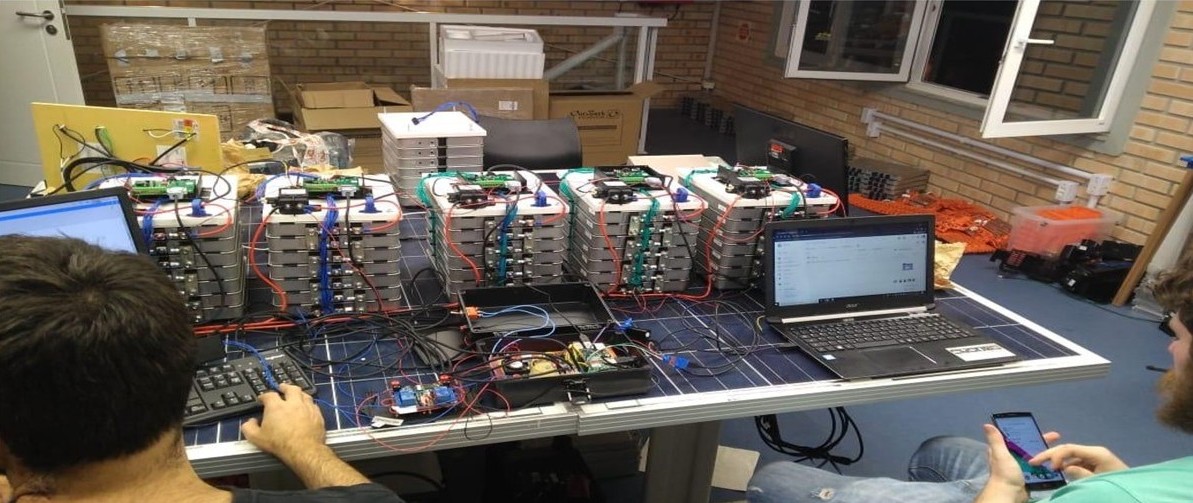
Before a new application, researchers need to conduct tests to evaluate parameters such as internal resistance and health status, as well as select cells with similar characteristics to form homogeneous battery banks.
Cells that do not meet the reuse criteria are sent directly for recycling.
Economic viability of the second life of batteries
In addition to the technical challenges, economic viability is one of the central issues of the research. The process of evaluating, classifying, and preparing batteries requires time, equipment, and energy—factors that need to be considered when comparing them to new systems.
To further this analysis, UFSC received funding of just under R$ 1 million from CNPq (National Council for Scientific and Technological Development), in addition to using the existing infrastructure in the laboratory.
According to the professor, the two largest storage projects, the BESS system in the laboratory and the mobile system installed in the semi-trailer, received investments exceeding R$ 20 million.
Research results indicate that, to be economically viable, a used battery in good condition should cost less than one-third of the price of a new battery with the same capacity.
This means that repurposing is not automatically cheaper. The benefit depends on the condition of the battery, preparation costs, and the application in which it will be used.
Circular economy and the future of batteries
The advancement of electric mobility also brings a challenge for the coming years: what to do with the batteries that are taken out of circulation as the fleet of electric vehicles ages?
For Rüther, the use of this equipment in stationary systems can represent an intermediate step between its use in vehicles and recycling.
Reusing materials allows for extending the lifespan of those already used in battery manufacturing, postponing the need to produce new equipment and extract raw materials.
Even after the end of their second life, recycling remains necessary to recover materials and ensure their proper disposal.
The UFSC research therefore demonstrates the potential for integration between electric mobility, solar generation, and energy storage, taking advantage of equipment that still has useful capacity even after it no longer meets the demands of a car.
More than just finding a destination for used batteries, the challenge is to establish technical, economic, and environmental criteria that allow this reuse to be transformed into a solution applicable on a larger scale.
all the content of Canal Solar is protected by copyright law, and partial or total reproduction of this site in any medium is expressly prohibited. If you are interested in collaborating or reusing part of our material, please contact us by email: redacao@canalsolar.com.br.

Comments
Comments are moderated before publication.Comments should be respectful and contribute to a healthy debate. Offensive comments may be removed. The opinions expressed here are those of the authors and do not necessarily reflect the views of the author. Canal Solar.