
The migration of low-voltage consumers to the free energy market will be carried out through retail traders, registered on a platform of the CCEE (Chamber of Electric Energy Commercialization) and with automatic communication with the distributors. The proposal aims to simplify the procedures for the consumer.
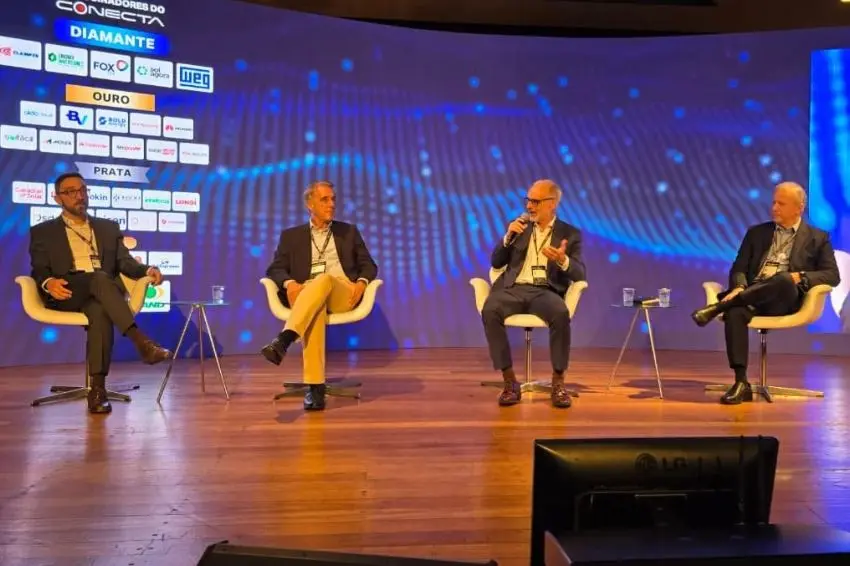
During the Canal At Conecta VI, held in São Paulo (SP), César Pereira, executive manager of Regulation, Market Information and Training at CCEE, explained how the process will work and the challenges to prepare the sector for market expansion.
"Low-voltage consumers will have little contact with CCEE. The entire process will take place through the retailer, and the consumer will have contact with the supplier they choose to provide energy," he said.
The retail marketer is the company that mediates the contracting of energy in the free market and represents the consumer in procedures with the CCEE (Brazilian Chamber of Electric Energy Commercialization). After the supplier is chosen, it is responsible for registering the migration on the Chamber's platform.
The distributor will be automatically notified and will begin forwarding the consumer's measurement data to the trading environment starting the following month.
With this information, CCEE will be able to account for consumption on behalf of the marketer responsible for the customer. To enable this flow, the systems of the agents involved will need to exchange information in an integrated manner.
According to Pereira, the preparation involves discussions with the MME (Ministry of Mines and Energy), regulatory adjustments with the ANEEL (National Electric Energy Agency) and changes in CCEE's own internal processes. "All of this is being discussed so that the migration can begin in November of next year," he emphasized.
The opening will be done in stages.
The expansion of the free market is planned to occur gradually. According to the established schedule, low-voltage commercial and industrial consumers will be able to migrate starting in November 2027.
For other consumers, including residential customers, the forecast is November 2028. The change will significantly expand the market's potential audience. According to Pereira, the sector will grow from 220 high-voltage consumers to approximately 90 million potential consumers.
In this sense, the main challenge will be serving people who are not familiar with contracting energy in the free market. "That's the biggest challenge. It needs to be a simple and secure process," he emphasized.
Adoption of the free market should occur slowly.
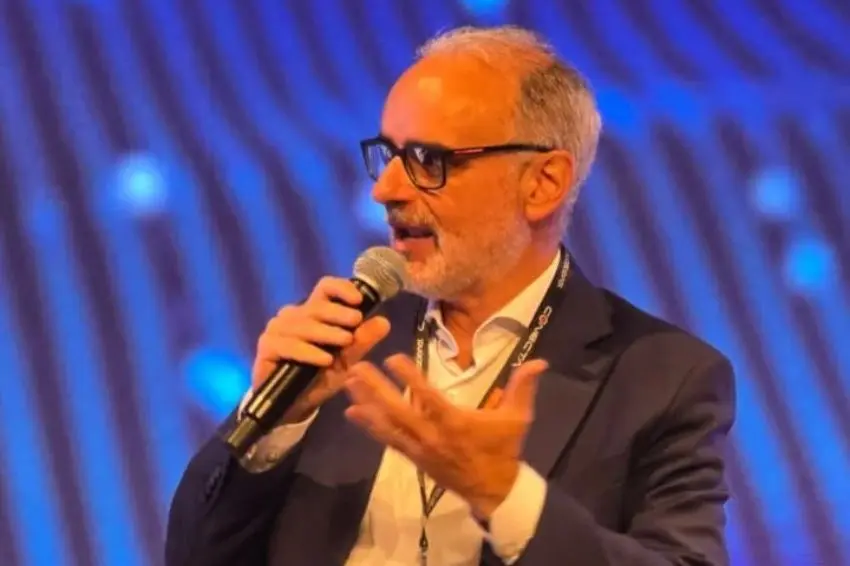
Although the opening allows more consumers to choose their suppliers, the migration is not expected to happen all at once, according to Andrew Storfer, CEO of América Energia SA, a company focused on customized solutions and energy trading in the Free Market.
According to the executive, who also participated in the debate at Canal Conecta VI, the consumer's decision to switch suppliers tends not to depend solely on the savings that can be obtained on the electricity bill.
To illustrate this behavior, he compared the energy market to a savings account, which continues to be used by many people even when faced with higher-yielding investment alternatives.
According to Storfer, familiarity with a service and convenience also weigh heavily in the decision. Thus, even if a cheaper offer exists, the consumer may prefer to remain with their current provider.
The executive also highlighted that consumers who already receive tariff benefits, such as those covered by the social tariff, may have less financial incentive to switch.
According to Storfer, the way offers are presented and compared will also influence consumers' decisions, especially those who are not yet familiar with how the free market works. "The migration may occur somewhat slowly. I don't believe it will happen overnight," he stated.
Comparison platforms should make it easier for consumers to choose.
Transparency in offers will be another important point for opening the market, according to Marcelo Ávila, President of the Advisory Board of Armor Energia. During the panel, he advocated for mechanisms that allow for the comparison of prices, contractual conditions, and benefits before choosing a supplier.
As a reference, Ávila cited the financial market, in which credit operations must present the CET (Total Effective Cost), an indicator that brings together the charges involved in the contract.
According to the executive, a similar logic could help energy consumers understand how much they will actually pay and what advantages are included in each proposal.
Ávila also advocated for the creation of a neutral comparison platform by CCEE. The tool should present standardized information about the products, but, in his assessment, it doesn't need to be the only one available on the market.
The executive emphasized that other companies could develop their own platforms to compare offers. He also noted that the obligation for each trading company to make a product available on the CCEE tool was still dependent on regulatory definition at the time of the debate.
In addition to the price, the offers may include additional services, such as energy efficiency solutions and consumption management tools. Therefore, Ávila considers it important that the information be presented clearly, allowing the basic supply conditions to be distinguished from the extra benefits of each contract.
Data sharing can increase competition.
Another point raised by Ávila was access to customer consumption data. This information allows us to understand how much energy each consumer uses and at what times their demand is concentrated.
The executive advocated for a model similar to Open Finance, in which the customer authorizes the sharing of their data with different companies. Applied to the electricity sector, this logic would allow energy suppliers to develop offers better suited to each customer's consumption profile.
According to Ávila, access to information should also occur under equivalent conditions for market participants, in order to promote competition among suppliers.
The opening of the free market for low voltage, therefore, involves more than just allowing the switching of suppliers. For professionals, the preparation of systems, the ease of migration, and the transparency of offers will be important so that consumers understand the available options and assess whether the change is worthwhile.
all the content of Canal Solar is protected by copyright law, and partial or total reproduction of this site in any medium is expressly prohibited. If you are interested in collaborating or reusing part of our material, please contact us by email: redacao@canalsolar.com.br.


Comments
Comments are moderated before publication.Comments should be respectful and contribute to a healthy debate. Offensive comments may be removed. The opinions expressed here are those of the authors and do not necessarily reflect the views of the author. Canal Solar.