
In general, temperature derating is the automatic reduction of an inverter's output power when the ambient or internal temperature of the device exceeds the manufacturer's specified limits. This is a form of thermal protection to protect internal components.
When an inverter operates at high temperatures, internal components such as transistors and capacitors can experience accelerated wear, overheating, or even failure. To prevent damage, inverters are designed to gradually reduce their output power (derating) from a certain temperature limit, typically between 45°C and 60°C.
Temperature derating characteristics
Equipment Protection: reducing power at high temperatures prevents components from overheating, increasing the inverter's service life;
Reduction of failures and interruptions: without this mechanism, the inverter could shut down or fail completely on very hot days;
Performance: In hot climates or in places where the installation does not have good ventilation, temperature derating can occur frequently, reducing energy generation.
How to minimize the effects of thermal derating?
To minimize the effects of thermal derating, it is important to follow the best practices below:
- Install the inverter in a ventilated and shaded location;
- Avoid direct exposure to sunlight;
- Choose inverters with good thermal dissipation or forced ventilation;
- Check the derating curves in the manufacturer's datasheet.
Real case: proof of concept
Tests conducted at the UFSM (Federal University of Santa Maria) laboratory demonstrated the performance of Huawei's residential inverters compared to their competitors when subjected to high temperatures. All inverters tested are single-phase, on-grid, 220V, and have a power output of 5 kW.
Rehearsal routine
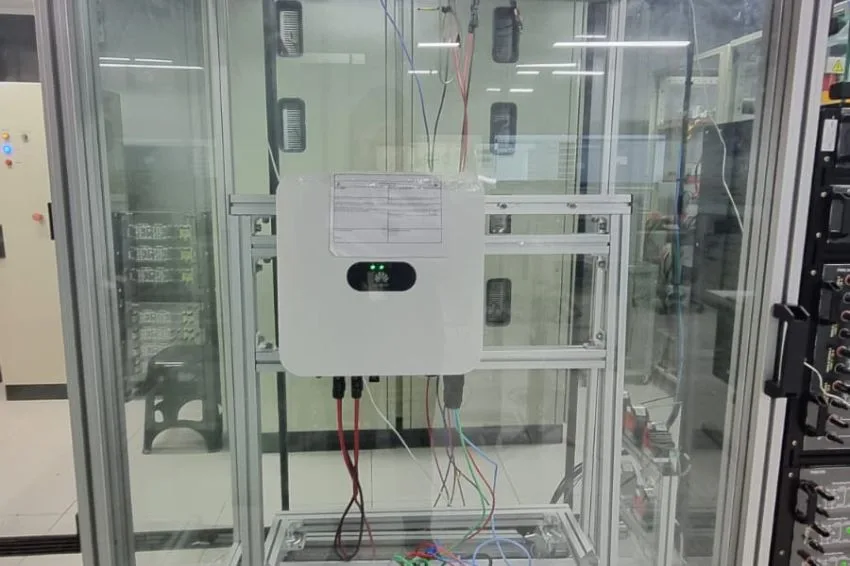
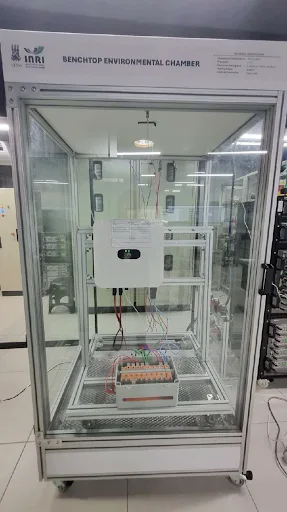
The testing routine began with the installation of the inverters in the thermal chamber.
From this configuration, it was possible to perform controlled temperature adjustments, to which the inverters were subjected. Based on this procedure, the inverters' nominal power variations were recorded as the temperature varied between 25°C and 60°C.
The objective of this step was to verify whether the actual operating values of the inverters follow the specifications provided by the respective manufacturers.
Results obtained
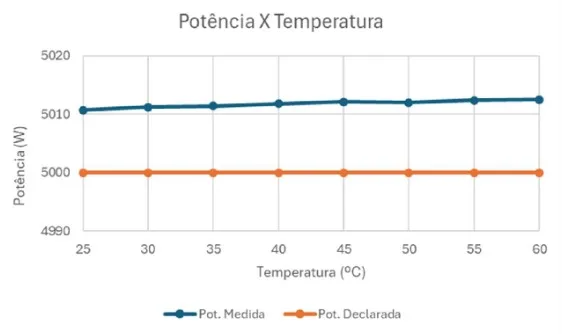
The graph below shows the test results for the Huawei inverter, where it can be seen that the measured power is on average 10W above the nominal power, demonstrating that the Huawei inverter meets the declared power of 5 kW within the operating temperature range indicated on its label. Therefore, there was no power reduction (derating) in this range.
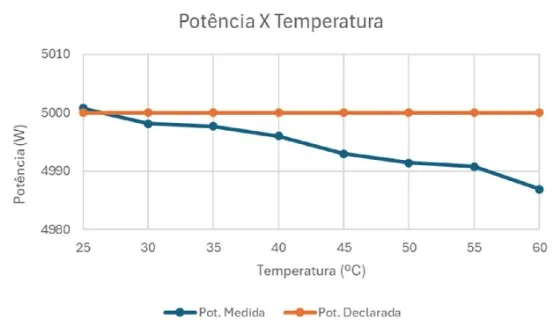
On the other hand, the inverter of brand “B” at temperatures of 30ºC, already begins to present the measured power below the declared one and this difference increases with the increase in temperature, reaching a variation of up to -0,3% in relation to the nominal value on the label as can be seen in the graph in Figure 3.
In inverter “C”, the scenario is even worse, because the inverter did not reach its nominal power at any of the temperatures, reaching a maximum of 98% of the nominal power declared on the label, which can be seen in the graph in Figure 3.
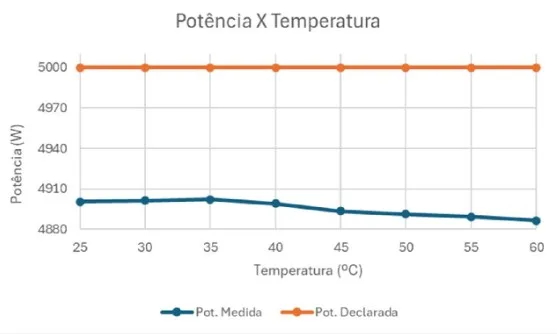
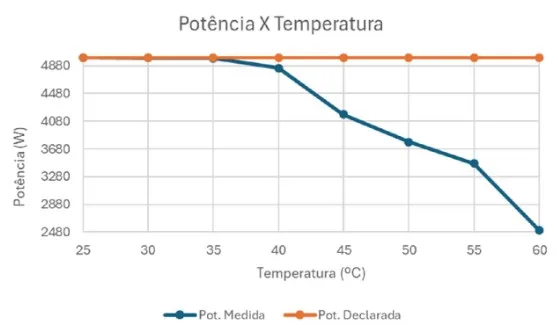
In the case of inverter “D”, the nominal power was even reached at the beginning of the temperature range, but when it reached 40ºC the measured power was below and at 60ºC it was less than half of the nominal power.
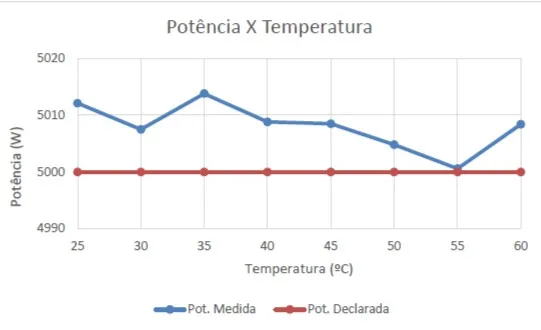
Inverter “E” presented power consistent with its label, remaining above the declared power, as shown in the graph below.
Test Conclusion
Based on the results obtained in the tests, it is concluded that the Huawei inverter demonstrated significantly superior performance in relation to power variation under high temperatures.
Although the "E" model also performed satisfactorily under these conditions, a power variation was observed that did not occur with the Huawei inverter. This behavior highlights the advantage of the Huawei device, combined with the higher quality of its components and the efficiency of its cooling system.
The opinions and information expressed are the sole responsibility of the author and do not necessarily represent the official position of the author. Canal Solar.

Comments
Comments are moderated before publication.Comments should be respectful and contribute to a healthy debate. Offensive comments may be removed. The opinions expressed here are those of the authors and do not necessarily reflect the views of the author. Canal Solar.