
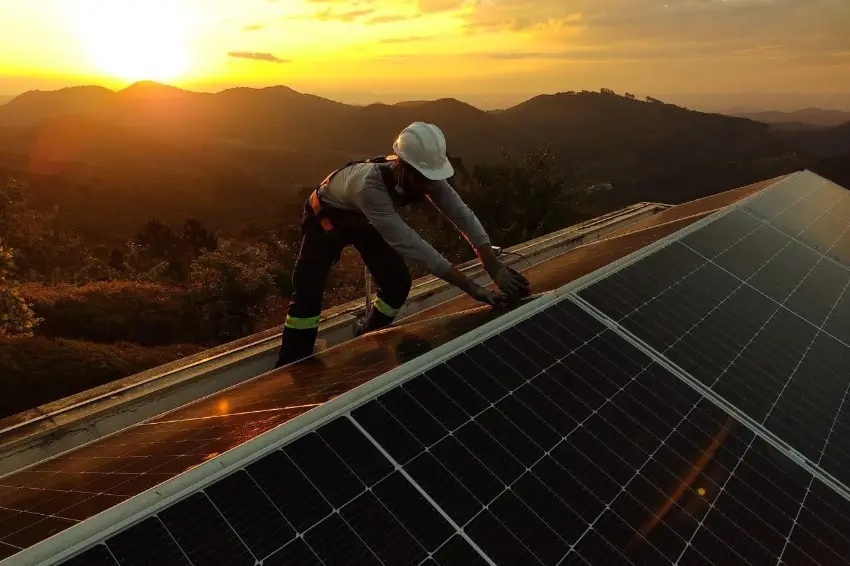
The photovoltaic integration market showed signs of recovery in the first half of 2026, after the contraction observed in 2025. The monthly average of quotes prepared by integrators increased from 20 to 25 proposals per company, a rise of 25%, but still far from the average of 42 quotes recorded in the first half of 2022.
Sales followed the trend, increasing from four to five systems sold per month, while the distribution by conversion rate reached 18%, compared to 20% in the first half of 2025.
The numbers are part of the study presented this Wednesday (23) by Márcio Takata, CEO of Greener, and Luíza Bertazzoli, Head of Market Intelligence at the consultancy.
The survey gathered 496 responses from integration companies in different regions of the country, of which 434 were considered valid, with an approximate margin of error of 5%.
The improvement in the volume of proposals does not, however, signify a full recovery in demand. The conversion rate itself shows that integrators are working with more opportunities, but are facing difficulties in converting some of them into contracts.
Financing loses market share.
Credit remains an important component of this equation, but its share of sales has decreased. Only 33% of sales made by integrators in the first half of the year were financed, compared to 41% in 2025.
Participation varies regionally, reaching 44% in the North and Midwest, 38% in the Northeast, 31% in the South, and 26% in the Southeast.
Another relevant trend is the increasing prevalence of reverse flow as a commercial obstacle. A total of 38% of integrators reported such cases in the first half of the year, ten percentage points higher than the previous year. To circumvent this restriction, 57% resorted to the so-called fast track, while 41% reduced the power of their projects.
Unfulfilled projects decreased from 34% in the first half of 2025 to 18% in the first half of 2026, suggesting a greater capacity to find alternatives before losing the sale.
After-sales service gains ground.
The existing installed base is starting to open up an additional business opportunity. Around 85% of integrators stated that they have already been approached by orphaned customers, that is, consumers who were left without service from the original supplier.
Among the services requested, maintenance comes in first place, cited by 54%, followed by system expansion, with 32%.
Operation and maintenance are also advancing in the commercial portfolio. A total of 53% of integrators offer O&M services, compared to 45% in the first half of 2025.
The activity is beginning to shift from a maintenance-focused approach to one more geared towards optimization. Among the possibilities offered, 44% mention performance improvement studies and 35% indicate retrofitting.
Batteries still face barriers.
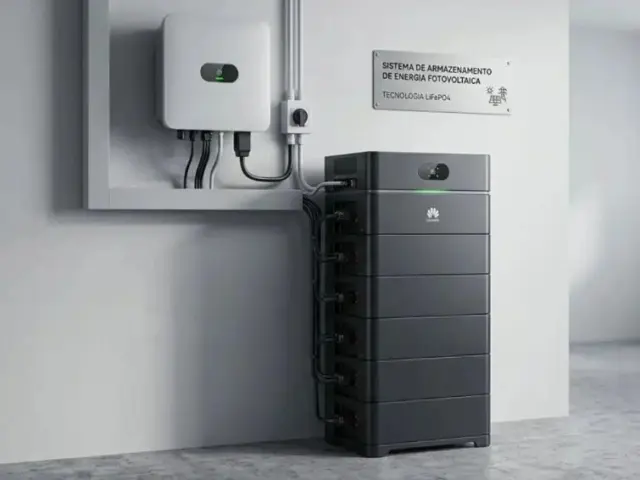
Storage appears as one of the main opportunities for diversification, but conversion is still low. Around 86% of integrators have started offering hybrid systems, an increase of 15 percentage points in one year.
Price is cited as the main barrier. It appears in 36% of responses among integrators offering hybrids, followed by low demand, with 26%. Understanding the benefits of batteries (8%) and difficulty in obtaining financing (5%) were also mentioned.
The research also shows that the market is beginning to mature. Among integrators, 38% have already made at least one sale of a battery-powered system, while 48% offer hybrids but have not yet sold any. Another 11% do not yet offer them, although they intend to do so.
The movement extends to the porters of electric vehiclesThe electrified fleet reached 837 units in the first half of the year, a 34% increase since December 2025, while 63% of integrators already work with chargers, compared to 46% a year ago. For 31% of them, however, the main challenge is finding customer demand.
all the content of Canal Solar is protected by copyright law, and partial or total reproduction of this site in any medium is expressly prohibited. If you are interested in collaborating or reusing part of our material, please contact us by email: redacao@canalsolar.com.br.


Comments
Comments are moderated before publication.Comments should be respectful and contribute to a healthy debate. Offensive comments may be removed. The opinions expressed here are those of the authors and do not necessarily reflect the views of the author. Canal Solar.