
• Friday, June 26, 2026
Facebook X-twitter Instagram Youtube LinkedIn Spotify
  • GC Solar: 22,33 GW
  • GD Solar: 48,33 GW
  • advertise here
  • About Us
  • Expedient
logo site solar channel
  • News
    • Market & Investments
    • International market
    • Politics & Regulation
    • Projects & Applications
    • Renewable
    • Sustainability & ESG
    • Technology & Innovation
    • Electric Vehicles
  • Articles
    • Opinion Article
    • Manufacturer's Article
    • Technical Article
  • Latam
  • Batteries
  • Blog
  • Solar Energy Companies
    • Integrators
  • Magazine
    • Magazine Canal Solar
    • Conecta Magazine
  • Firmare
  • Courses
  • News
    • Market & Investments
    • International market
    • Politics & Regulation
    • Projects & Applications
    • Renewable
    • Sustainability & ESG
    • Technology & Innovation
    • Electric Vehicles
  • Articles
    • Opinion Article
    • Manufacturer's Article
    • Technical Article
  • Latam
  • Batteries
  • Blog
  • Solar Energy Companies
    • Integrators
  • Magazine
    • Magazine Canal Solar
    • Conecta Magazine
  • Firmare
  • Courses
  • News
    • Market & Investments
    • International market
    • Politics & Regulation
    • Projects & Applications
    • Renewable
    • Sustainability & ESG
    • Technology & Innovation
    • Electric vehicles
  • Articles
    • Opinion
    • technicians
    • Manufacturer Items
  • Latam
  • Blog
  • Solar Energy Companies
  • Integrators
  • Magazine
    • Conecta Magazine
  • About Us
  • Advertise Here
  • CS Consulting
  • Courses
  • International market
  • News
    • Market & Investments
    • International market
    • Politics & Regulation
    • Projects & Applications
    • Renewable
    • Sustainability & ESG
    • Technology & Innovation
    • Electric vehicles
  • Articles
    • Opinion
    • technicians
    • Manufacturer Items
  • Latam
  • Blog
  • Solar Energy Companies
  • Integrators
  • Magazine
    • Conecta Magazine
  • About Us
  • Advertise Here
  • CS Consulting
  • Courses
  • International market
logo site solar channel
Home / Articles / Technical Article / Is it allowed to step on photovoltaic modules?

Is it allowed to step on photovoltaic modules?

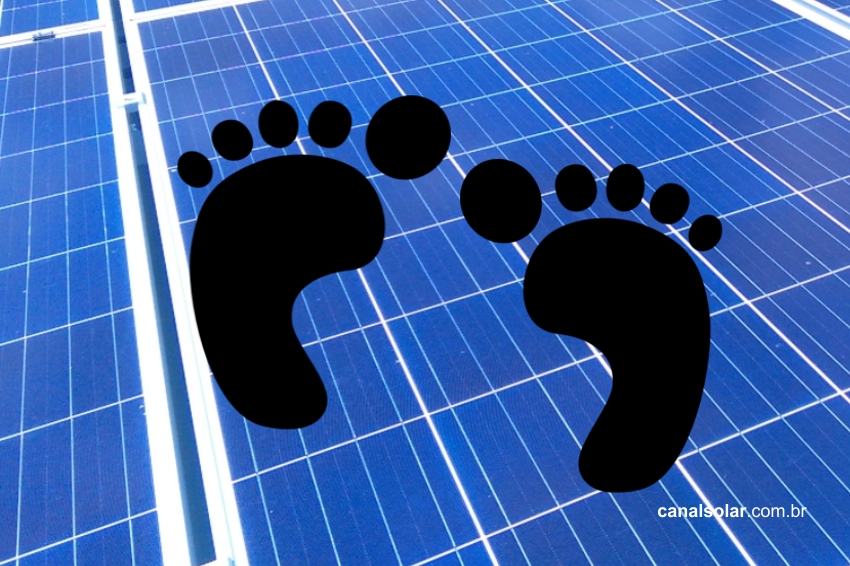
It is common to see photos and videos of people stepping or walking on modules. Is this allowed?
Follow on Whatsapp
  • Photo by Marcelo Villalva Marcelo Villalva
  • January 30, 2019, at 21:54 AM
3 min 33 sec read
Is it allowed to step on photovoltaic modules?
Who has never seen photos of installers leaning on or even stepping on photovoltaic modules?

Can we step on photovoltaic modules? What happens when modules suffer mechanical impacts?

It is common to see photos and videos of people stepping or walking on modules. Is this allowed? The answer to this question is a resounding and definitive “No”.

The answer seems obvious to some, but it is new to many. Who has never seen photos of installers leaning on or even stepping on photovoltaic modules?

Unfortunately, we come across many photovoltaic installations carried out by bad professionals, unprepared and without training in the correct handling of photovoltaic modules.

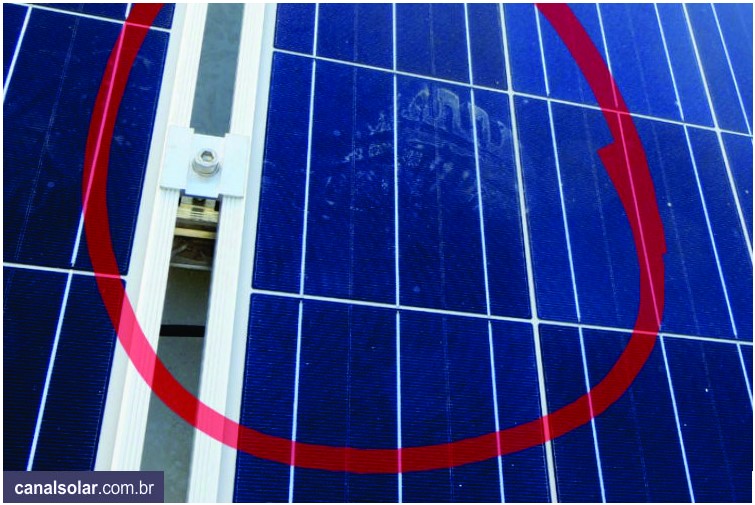
The photo below is just a small example of the terrible things that have been happening in the Brazilian photovoltaic market. The footprint in the photo was captured on a photovoltaic installation shortly after it opened.

The customer, and perhaps the company that sold the system, had no suspicion about the possibility of its modules having been damaged by an unprepared or malicious professional during the installation service.
Don't believe that a simple step could ruin the module? Then see below the result of a thermography of a photovoltaic module in operation. Thermography is a photograph taken with an infrared camera, capable of identifying the temperature across the entire surface of the photovoltaic module. Hot spots and regions, with temperatures well above normal, are an indication that there is a problem in the affected part of the module.
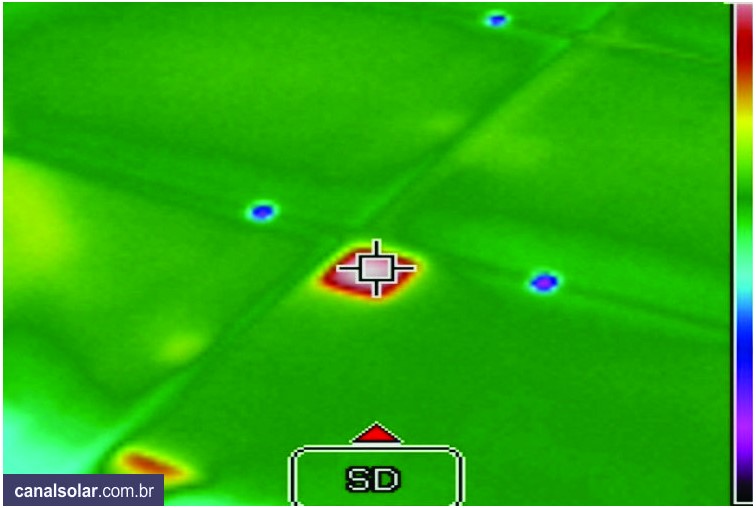
The thermography procedure is normally carried out during the commissioning of the photovoltaic system – a set of tests and inspections carried out shortly after the construction of the solar plant, with the aim of detecting inconsistencies and defects in photovoltaic installations and equipment. In addition to appropriate tools, the professional's experience and attention are very important for detecting defects.

Thermography of the modules can reveal the existence of hotspots (hot spots) caused by defective photovoltaic cells. Defects in cells can be caused by manufacturing issues, but this is unlikely when purchasing modules from reliable suppliers, as all modules are inspected at the end of the production line, before being shipped to customers.

In most cases, when defects and hotspots are detected, the problems are caused by impacts suffered during transportation or mainly during installation. It is not uncommon to see installers stepping over modules, dropping modules, or carelessly stacking modules.

The photovoltaic module needs a lot of love. Any type of impact, even a light step, can cause microcracks in the photovoltaic cells. Microcracks are invisible and their effect can only be detected using specialized tools.

A faulty module can compromise system performance or can cause a fire in extreme cases. The defect will not be noticed if thermal analysis is not performed during system commissioning. Commissioning any photovoltaic system is very important.

And if the module is already defective, how will I know? Firstly, it is always a good idea to use modules from trusted manufacturers and suppliers. Large manufacturers have their products certified by international standards. One of the tests that the standards require is electroluminescence. This test can only be done at the factory, as it uses special equipment that allows a kind of x-ray of the module to be carried out.
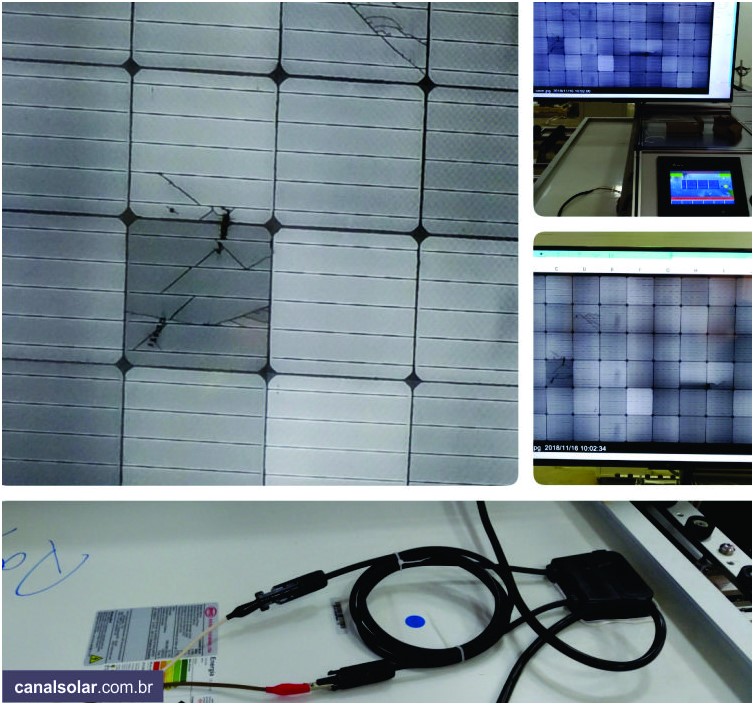
In the photographs above we see the results of an electroluminescence test, in which it is possible to verify several microcracks in some cells of the module. These microcracks are not visible to the human eye and can only be captured by a special camera.

The photovoltaic module used in the experiment above was intentionally damaged to show the result of mechanical impacts on the cells. The electroluminescence test is performed at the factory during the assembly process. Cracked cells are replaced on the production line before the finished module is completed.


solar energy Study with the Canal photovoltaic modules Safety
Photo by Marcelo Villalva
Marcelo Villalva
Specialist in photovoltaic systems. Professor and researcher at the Faculty of Electrical and Computer Engineering (FEEC) at UNICAMP. Coordinator of LESF - Energy and Photovoltaic Systems Laboratory at UNICAMP. Author of the book "Photovoltaic Solar Energy - Concepts and Applications".
PreviousPrevious
NextNext

An answer

  1. Mark said:
    2 November 2021 to 16: 11

    How much hail can the modules withstand?

    Reply

Leave a comment Cancel reply

Your email address will not be published. Required fields are marked with *

Comments should be respectful and contribute to a healthy debate. Offensive comments may be removed. The opinions expressed here are those of the authors and do not necessarily reflect the views of the author. Canal Solar.

News from Canal Solar in your Email

Posts

Energy storage as a regulated asset: what changes with the new resolution of ANEEL?

Energy storage as a regulated asset: what changes with the new resolution of ANEEL?

Understand in practice how to size hybrid battery-powered systems.

Understand in practice how to size hybrid battery-powered systems.

More news

Read More
Canal Solar - Top 10: See which were the largest solar energy markets in the world in 2025.

Solar energy hits record highs in 2025; see the fastest-growing markets in the world.

Brazil falls to 5th position among the largest global solar energy markets.

Brazil falls to 5th position among the largest global solar energy markets.

Regarding the time slot reserved for agricultural flexibility.

Regarding the time slot reserved for agricultural flexibility.

It is a news and information channel about the photovoltaic solar energy sector. Channel content is protected by copyright law. Partial or total reproduction of this website in any medium is prohibited.

Facebook X-twitter Instagram Youtube LinkedIn Spotify

Site Map

Categories

  • News
  • Articles
  • Interviews
  • Consumer Guide
  • Authors
  • Videos
  • Projects
  • Magazine
  • Electric Vehicles

Channels

  • About Us
  • Contact
  • Privacy
  • Quality Policy
  • Work with us
  • Expedient
  • advertise here

Membership and certifications

Copyright © 2026 Canal Solar, all rights reserved. CNPJ: 29.768.006/0001-95 Address: José Maurício Building – Mackenzie Avenue, 1835 – Floor 3, – Vila Brandina, Campinas – SP, 13092-523
Receive the latest news

Subscribe to our weekly newsletter

Fill in the information above and receive your free copy of Canal Solar magazine.