

Videos and images of roofs that collapse during rain and wind frequently circulate online.
Everything would be normal if there were no photovoltaic systems installed on these roofs.
After all, do solar panels encourage roofs to collapse? Should we be concerned about roof safety before installing systems?
Whenever a roof with a photovoltaic system collapses, before blaming the wind, a question should be asked: “Was a structural analysis of the building and roof carried out before installing the photovoltaic system?”.
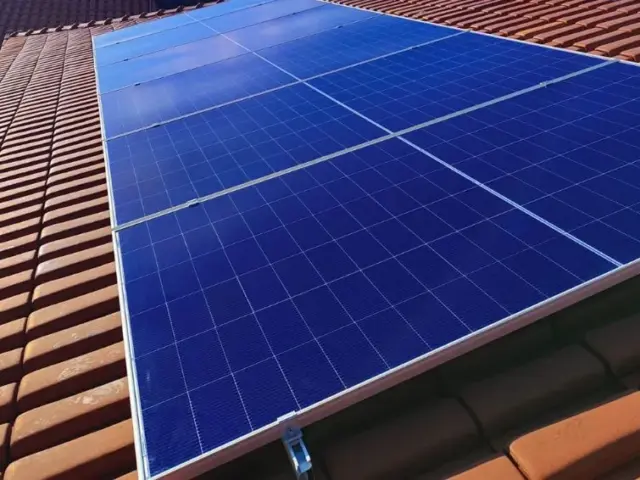
Adding the photovoltaic panels and the fixing structures, there is typically an overload of up to 15 kgf/m² on the roof. This is no small thing.
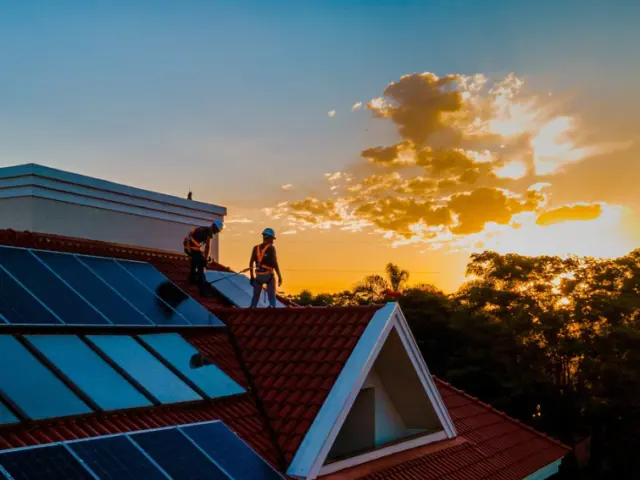
Structural analysis is necessary in any photovoltaic installation. Naturally, in small installations, with half a dozen panels on residential roofs, structural analysis is a precious thing that ends up being dispensed with by common sense. Even so, common sense sometimes fails, as there has been reports of residential roofs collapsing during installation.
Wind and rain must be anticipated in projects. We cannot simply install photovoltaic systems without any concern for the safety of the roof or even the building. Did the roof collapse after a gale of rain? We cannot blame it on the wind.
Installing photovoltaic systems on roofs without structural analysis of the roof and the building is a liability crime. A falling roof can cause material damage and loss of life. This matter is serious and must be treated with all the rigor that engineering allows.
Roof structure analysis
The photovoltaic designer does not need to be a roofing expert. To resolve this issue, there are two engineering specialties: civil and mechanical. The company responsible for the design and installation of the photovoltaic system must seek the assistance of an engineer specialized in structures to carry out an analysis of the roof or the building.
Doing a good project and sleeping peacefully doesn’t cost much more. The value of the structural project must be part of the cost composition of the photovoltaic project.
Structure assessment
It is recommended that the structural engineer visit the site to survey the characteristics of the structure and roof. In many cases, however, due to the distance, the assessment can be carried out by another professional, using sketches and photos, as occurs in some cases.
The dimensions and locations of the pillars, purlins, trusses and roof shears must be surveyed. It is necessary to identify the characteristics of the material that was used in the manufacture of the structures (type of profile, thickness, type of steel) and the type of tile used on the roof.
A tip: you can seek the help of a locksmith to carry out this assessment. Photos and films of structures can also assist the structural engineer in carrying out the project.
Structural design
Does this mean that we are going to do the structural design of the building and the roof just to be able to install the photovoltaic system? Yes, let's do it. But it’s not just about installing the photovoltaic system. It's so you can sleep peacefully. Obviously, the project should have been done before the roof was built, but it wasn't done (or the project even existed, but was lost).
A structural project for a medium-sized warehouse, say, something around 2 thousand m², takes a week or less. It is a service provided by civil or mechanical engineers, who have the professional responsibility for calculating structures.
The structural design does not have a significant impact on the schedule or cost of the PV system. It is a service that must be considered from the beginning of the photovoltaic project design. How many roofs will need to fall for the market to become aware of this?

After all the characteristics of the construction and the roof have been identified, the structures are modeled. This work is carried out by the structural engineer with the help of specialized computer programs, such as STRAP, ANSYS, CYPECAD and others.
What will the structural engineer analyze? Structural analysis is a work of relative complexity, which considers several technical standards, among which we can highlight:
- ABNT NBR 8800/2008: Design of steel structures and mixed steel and concrete structures for buildings;
- ABNT NBR 14762/2010: Design of steel structures made up of cold-formed profiles;
- ABNT NBR 6123/1988: Forces due to wind on buildings;
- ABNT NBR 14323/2013: Design of steel structures and composite steel and concrete structures for buildings in fire situations;
- ABNT NBR 8681/2003: Actions and safety in structures.
In the structural analysis, checks are carried out regarding the actions of gravitational loads, accidental overload and wind.
Gravitational loads
- Self-weight (must be calculated, as it depends on the materials used and the geometries of the structures);
- Weight of the tiles (from 7kgf/m2 to 12 kgf/m2, for simple metal tiles, for example);
- Photovoltaic panels, including the fixing system (15 kgf/m2);
- Utilities (10 kgf/m2 typically) – accessories that are not part of the structure but can be supported or suspended from it, such as electrical and hydraulic installations, linings, etc.
Accidental overload
According to the NBR 8800/2008 standard, a minimum accidental overload of 25 kgf/m2 is considered, corresponding to actions or efforts that were not initially foreseen. This consideration is mandatory by default.
Wind actions
Finally, the action of winds must be added to the analysis. The basic wind speed at the construction site must be considered, in addition to topography, roughness and statistical factors – which change the type of analysis carried out by the structural software. All this knowledge is part of the curriculum of civil and mechanical engineers.
With these considerations, after carrying out all the analyses, we cannot blame the wind for a roof collapse. Known data, statistical factors, safety factors, accidental overloads apply. In an engineering project there should be no chance for bad luck.
Placement of the photovoltaic system within the existing safety margin
In some cases, at the discretion of the structural engineer, aiming to reduce the cost of structural reinforcements, a more aggressive analysis can be carried out, but still safe, in accordance with item B.5.1 of NBR 8800/2010.
The value of utility loads can be included in the overload up to the upper limit of 0,05 kgf/m², which reduces the total weight considered on the roof structure.
Furthermore, the load from the solar panels (15 kgf/m²) can be included within the accidental load limit (originally 25 kgf/m²), leaving an accidental load safety margin of 5 kgf/m².
In summary, the paragraph above says that it is not necessary to have an oversized structure to accept the installation of the photovoltaic system.
This means that, if the structure was designed correctly, within the standards, it should support the photovoltaic system without any changes, as the weight of the solar panels will be included in the safety margin that already existed in the project.
That would be perfect in an ideal world. Unfortunately, most of the structures we find are built outside of standards or without any type of engineering design – in this case, reinforcements are necessary not only due to the presence of the photovoltaic system.
But, because the structure was already deficient anyway. The presence of the photovoltaic system will only precipitate the disaster – that is why any “wind” brings everything down.
Structural reinforcement: to do it or not?
In many cases it is really necessary to reinforce structures. The result of the structural project will highlight this need. The structural engineer will suggest a solution and provide a list of materials. A locksmith can then be hired to carry out the reinforcements according to the engineer's instructions.
After structural analysis of the roof and application of reinforcements suggested by the responsible engineer, the result is a photovoltaic project carried out in compliance with all correct engineering standards and practices.
The installation company and the customer can sleep peacefully. The cost of structural reinforcement, whatever it may be, must be passed on to the customer. Fortunately, the cost of the structural design and reinforcements does not make the photovoltaic system unfeasible, which is good news.
Conclusion
There is no miracle. Do you want to install a solar system safely? So you will have to carry out a structural design and, perhaps, reinforce the structures. It's part of the game. A photovoltaic project is an engineering project and the market needs to see this.
We have seen all types of blunders in photovoltaic installations. The lack of safe use of roofs is just one of the aberrations found. Responsibility, professionalism and safety in photovoltaic installations must be part of the rules. There is no room for amateurism in the photovoltaic market.


Comments (2)
Comments are moderated before publication.Comments should be respectful and contribute to a healthy debate. Offensive comments may be removed. The opinions expressed here are those of the authors and do not necessarily reflect the views of the author. Canal Solar.
Good afternoon!
It was a good experience, I learned a lot, thanks for sharing, I hope for more!
Congratulations Marcelo!
I follow your work and it is great that care for the installation's infrastructure is handled safely.
I have been working in the area of structural verification for 20 years and I know the absurdities that exist out there. Especially now with the acceleration in the growth of photovoltaic installations.
I leave my article on LinkdIn to illustrate.
https://www.linkedin.com/pulse/an%C3%A1lise-de-estrutura-faz-bem-ao-bolso-e-sono-silvio-pariz
Strong hug!