
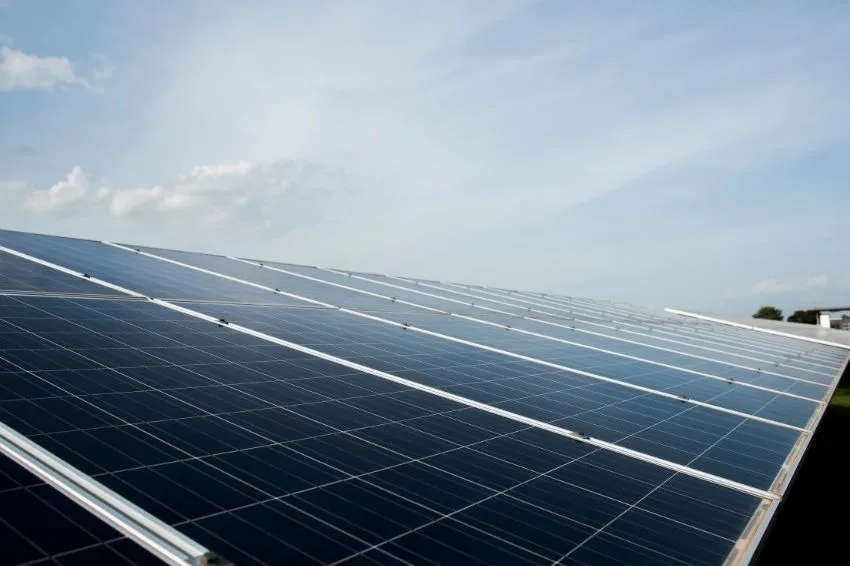
Based in Dourados (MS), the new board of directors of the Frente Sul-Mato-Grossense de Geração Distribuída announced that it is officially part of the National Coalition of the Free Solar Movement, an interstate coordination network that works to defend the generation of clean, accessible and decentralized energy.
The new management is headed by engineer Germano Lima Rodrigues Caires, founder of Evo Brasil Energia, and includes representatives from companies operating in various regions of the state. The election took place on June 11, 2025, in an extraordinary online assembly, and the term will last two years.
The Front's board of directors is composed of:
- Vice President: Leonardo Freire Marques (Soltech Solar Energy);
- Secretary: Leandro Lima Barbosa (LB Solar Energy);
- Treasurer: Roberto Augusto da Silva Filho (AS Energy);
- Advisors: André Luis do Amaral (Proactive Solar Energy) and Gilberto Luis Guimarães de Paula (Sentinel).
“Having our headquarters in Dourados is no coincidence. The city has the highest density of companies in the photovoltaic sector in the state. Our mission is to strengthen the political and technical representation of the sector, connect opportunities and ensure that Mato Grosso do Sul continues to be a national reference in distributed generation,” said Germano Caires.
According to him, the Front is also beginning a process of regionalizing its operations, with the purpose of opening branches in the main municipalities of the state. “We want to listen closely to each reality, understand the local challenges and build solutions that make sense for each territory. The union of municipalities is essential to consolidate a strong, plural and committed action with the advancement of solar energy throughout Mato Grosso do Sul”, he added.
Free Solar Movement mobilizes parliamentarians for legal security of GD
Connection with the Free Solar Movement strengthens national agenda
Joining the National Coalition represents an important alignment with the MSL (Free Solar Movement), an entity based in Brasília and responsible for the legislative and regulatory articulation of the sector with the National Congress, ANEEL and Ministries. The MSL leads a process of decentralization through the creation of State Fronts, such as Minas Gerais, São Paulo, Goiás and Santa Catarina – now totaling 17 with the entry of the South-Mato-Grossense Front.
For Hewerton Martins, president of Free Solar Movement, local action is essential to guarantee consumers’ rights to generate their own energy. “The Coalition is a tool for consumer protection. We are talking about guaranteeing citizens access to clean, cheaper energy that reduces their dependence on traditional tariffs – especially in times of crisis, such as red flags. The entry of the Frente Sul-Mato-Grossense strengthens this national network that fights for legal security, regional development and a fair energy transition.”
Work plan targets qualification, business and public policies
In the coming months, the Frente Sul-Mato-Grossense will put into practice a structured plan with four strategic axes:
- Representation and institutional articulation – Meetings with the State Government, city halls and regulatory agencies to propose improvements in licensing, financing and access to the network;
- Technical training – Holding workshops with IFMS, SENAI and other institutions, in addition to internship and young apprentice programs;
- Business generation – Business rounds, collective purchases for members and rapprochement with national and international suppliers;
- Education and communication – “MS Solar 2030” campaign in the media and schools, newsletters, podcasts and public awareness actions.
The entity is also preparing a business mission to Intersolar South America, the largest solar industry event in Latin America, with support from Sebrae. The goal is to bring entrepreneurs from the state into direct contact with new technologies, global suppliers and potential investors.
Expanding market, persistent challenges
With more than 1 GW of installed power in distributed generation, Mato Grosso do Sul is experiencing a cycle of expansion in the solar sector, driven by high solar radiation, tax incentives and growing demand for more economical and sustainable energy solutions. Cities such as Dourados, Campo Grande and Três Lagoas stand out as development hubs.
Even so, the sector faces significant bottlenecks, such as bureaucracy in the approval processes, a shortage of specialized labor and the need to expand credit to small consumers and rural producers.
“We want to leave a legacy of professionalization, generation of green jobs, regional appreciation and the leading role of Mato Grosso do Sul in decisions that affect the entire sector”, concludes U Caires.
all the content of Canal Solar is protected by copyright law, and partial or total reproduction of this site in any medium is expressly prohibited. If you are interested in collaborating or reusing part of our material, please contact us by email: redacao@canalsolar.com.br.

Comments
Comments are moderated before publication.Comments should be respectful and contribute to a healthy debate. Offensive comments may be removed. The opinions expressed here are those of the authors and do not necessarily reflect the views of the author. Canal Solar.