
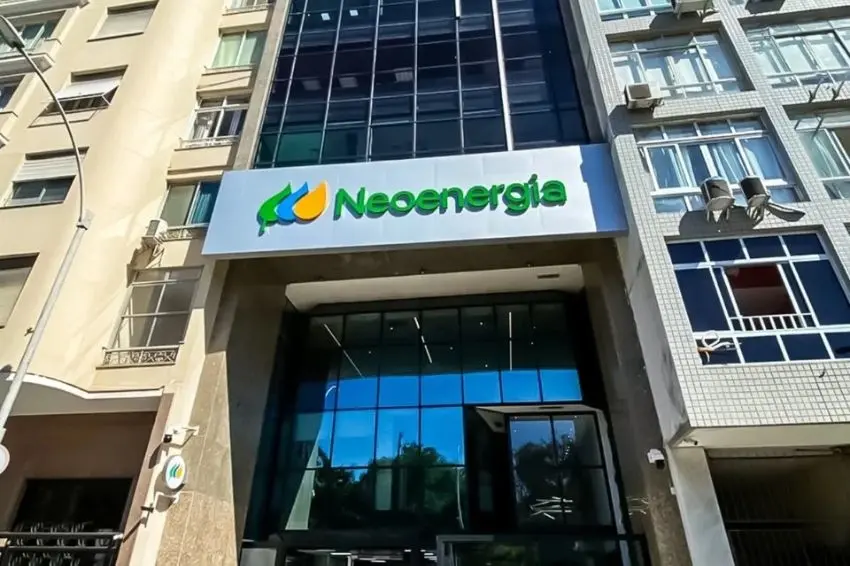
The opening of the free energy market to smaller consumers is changing the way customers are acquired and served. Previously concentrated in companies with teams specialized in electricity contracting, the activities of energy trading companies are now reaching businesses that do not have a dedicated area for this purpose.
According to Daniel Carvalho, commercial manager at Neoenergia, this change requires simpler communication and greater proximity to the consumer. "The customer acquisition model has changed because the customer profile has also changed," he stated in an interview with... Canal Solar.
"This is a client that doesn't have an energy management department, an energy area to take care of its contracts. Therefore, the way to approach and communicate with this client has changed."
The transformation is already evident in the experience with Group A consumers, whose access to the free market was expanded in January 2024. According to Carvalho, Neoenergia's portfolio grew 31 times between that month and July 2026, reaching approximately 3 clients, according to data from CCEE (Chamber of Electric Energy Commercialization) cited by the executive.
To keep pace with this growth, the company strengthened its teams, invested in training, and adapted internal processes. Customer acquisition now combines digital channels, telesales, in-person visits, and partnerships. "Our goal is always to be close to the customer. And, with that goal in mind, what channels and tools bring us closer to them?" said Carvalho.
The next phase, with the inclusion of low-voltage consumers, should increase the need for adaptation. According to the executive, the contracts used to serve Group A companies will need to be revised to facilitate understanding for a public less familiar with the electricity sector.
“When you narrow down the profile of these customers a bit, from medium-sized customers to small, low-voltage customers, we start to have a dialogue that will need to be more simplified. Certainly, we will have to seek greater simplification,” he stated.
However, the terms of these contracts still depend on regulation. Carvalho cited definitions regarding migration deadlines, contract characteristics, and data handling as necessary points to structure the offer to the new audience.
Credit analysis will also need to adapt to the scale of service. According to him, the process will need to become more agile, while preserving the risk assessment mechanisms of the trading company. “The credit analysis model needs to be simplified. We will certainly follow this path of simplifying our processes, always seeking to serve the customer as quickly as possible,” he said.
In the current operation, technology is already being used to reduce migration steps. According to Carvalho, Neoenergia has carried out more than a thousand migrations through the integration of its systems with the CCEE platform for the simplified procedure.
The executive stated that the investments aim to facilitate a journey that may be unfamiliar to consumers leaving the regulated market. "We prepared and invested in this system aspect and in training our team to better serve the customer and simplify their journey," he explained.
The shift in commercial approach also involves what will be offered beyond just energy. According to Carvalho, the trading company needs to identify opportunities to reduce costs and improve clients' production processes. "Energy is practically a commodity. So, we offer this product, and it's important to add value," he stated.
Among the services already offered by Neoenergia, he cited electrification projects, replacement of equipment that uses fossil fuels, and the development of projects and construction of substations.
The proposal aims to expand the relationship beyond negotiating the supply contract. "Our purpose is to be a consultant to the client, to be with them, helping in the process of cost reduction and optimization," he said.
In this relationship, guidance on the risks of contracting also plays a role. Carvalho stated that the company received requests from consumers affected by financial difficulties with other trading companies and addressed some of them.
According to the executive, consumers should assess the supplier's financial capacity and try to understand how they arrived at the price and commercial conditions presented. "Customers need to be careful when offered a contract and seek financially sustainable partners to fulfill that contract," he stated.
Carvalho did not present a target for expanding the portfolio in the low-voltage market. However, he said that the company intends to seek consumers interested in learning about the workings of the free market and the terms of contracting. "Our proposal is to be close to this client, present the solution, and communicate with them to capture as much of this market as possible," he concluded.
all the content of Canal Solar is protected by copyright law, and partial or total reproduction of this site in any medium is expressly prohibited. If you are interested in collaborating or reusing part of our material, please contact us by email: redacao@canalsolar.com.br.
Comments
Comments are moderated before publication.Comments should be respectful and contribute to a healthy debate. Offensive comments may be removed. The opinions expressed here are those of the authors and do not necessarily reflect the views of the author. Canal Solar.