
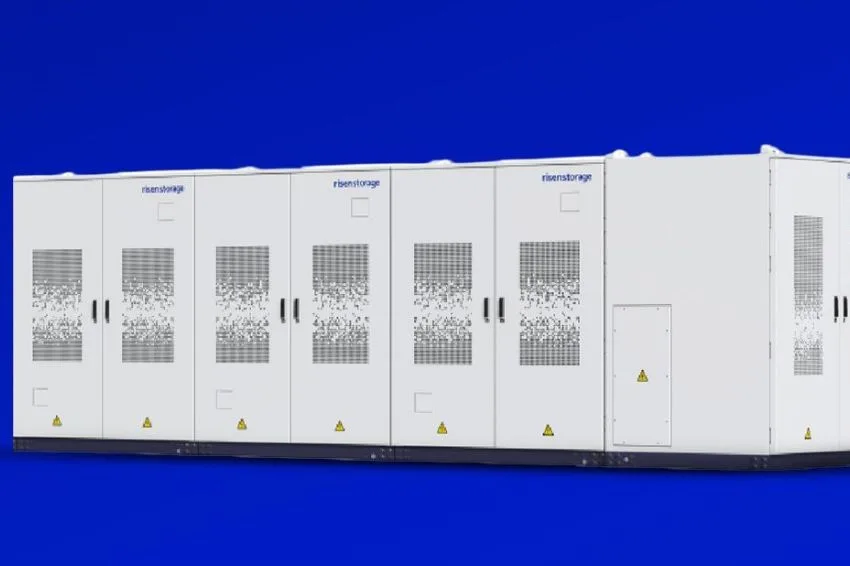
Risen Energy has introduced the eFlex 836 kWh to the market, a liquid-cooled storage system that achieves an energy density of 98,4 kWh/m³, a performance 29% higher than the current industry average, according to the manufacturer.
Energy density, measured in kilowatt-hours per cubic meter (kWh/m³), is an indicator that assesses how much energy can be stored in a given space.
According to the company, in a scenario where space and efficiency go hand in hand, this factor becomes decisive for applications in urban, industrial and commercial environments, such as substations, parking lots, factories and corporate buildings.
"Every 1% increase in density represents 1% less space required for system installation. In the case of the eFlex 836 kWh, this can result in up to 29% savings in usable area, which directly impacts infrastructure costs, such as the concrete foundation, which can be reduced by up to 42%," the company highlighted.
“In addition to saving space, the benefits extend to thermal efficiency, greater operational safety and up to three times faster deployment in compact areas, such as urban centers,” they highlighted.
With less cooling requirements and less thermal radiation, the system also contributes to reducing auxiliary energy consumption and extending the equipment's useful life.
Another difference is the sustainability of the model. According to Risen, by taking up less space and requiring fewer materials for installation and transportation, the system contributes to a smaller carbon footprint and favors projects seeking environmental certifications.
"We emphasize that innovation in energy density is not limited to compaction alone, but represents a broader strategy for optimizing resources, reducing operating costs, and gaining efficiency across the entire energy storage chain," they concluded.
all the content of Canal Solar is protected by copyright law, and partial or total reproduction of this site in any medium is expressly prohibited. If you are interested in collaborating or reusing part of our material, please contact us by email: redacao@canalsolar.com.br.




Comments
Comments are moderated before publication.Comments should be respectful and contribute to a healthy debate. Offensive comments may be removed. The opinions expressed here are those of the authors and do not necessarily reflect the views of the author. Canal Solar.