
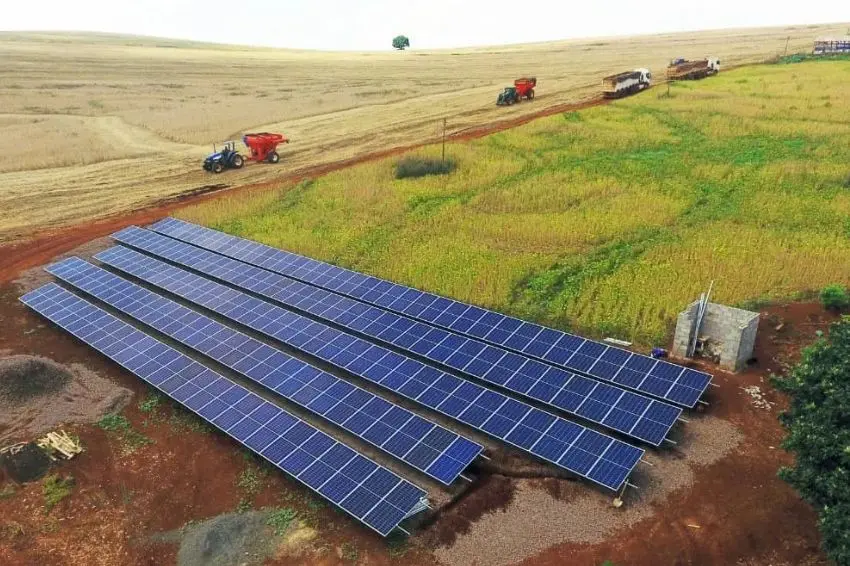
With the goal of protecting rural producers against losses caused by interruptions in the electricity supply, the Government of Paraná expanded the RenovaPR program and began offering a 3 percentage point subsidy on interest rates for the installation of batteries (either independently or integrated into solar energy systems).
The measure seeks to solve a technical bottleneck that accompanies the rapid expansion of photovoltaic energy in the rural areas of Paraná: the lack of power supply at critical times and the loss of production caused by the interruption of machinery.
According to data from IDR-Paraná (Rural Development Institute of Paraná), since August 2021 the State has implemented more than 45,2 rural distributed generation units in the region, which recorded an average of 4,3 interruptions and 7,17 hours without power per consumer in 2025 alone.
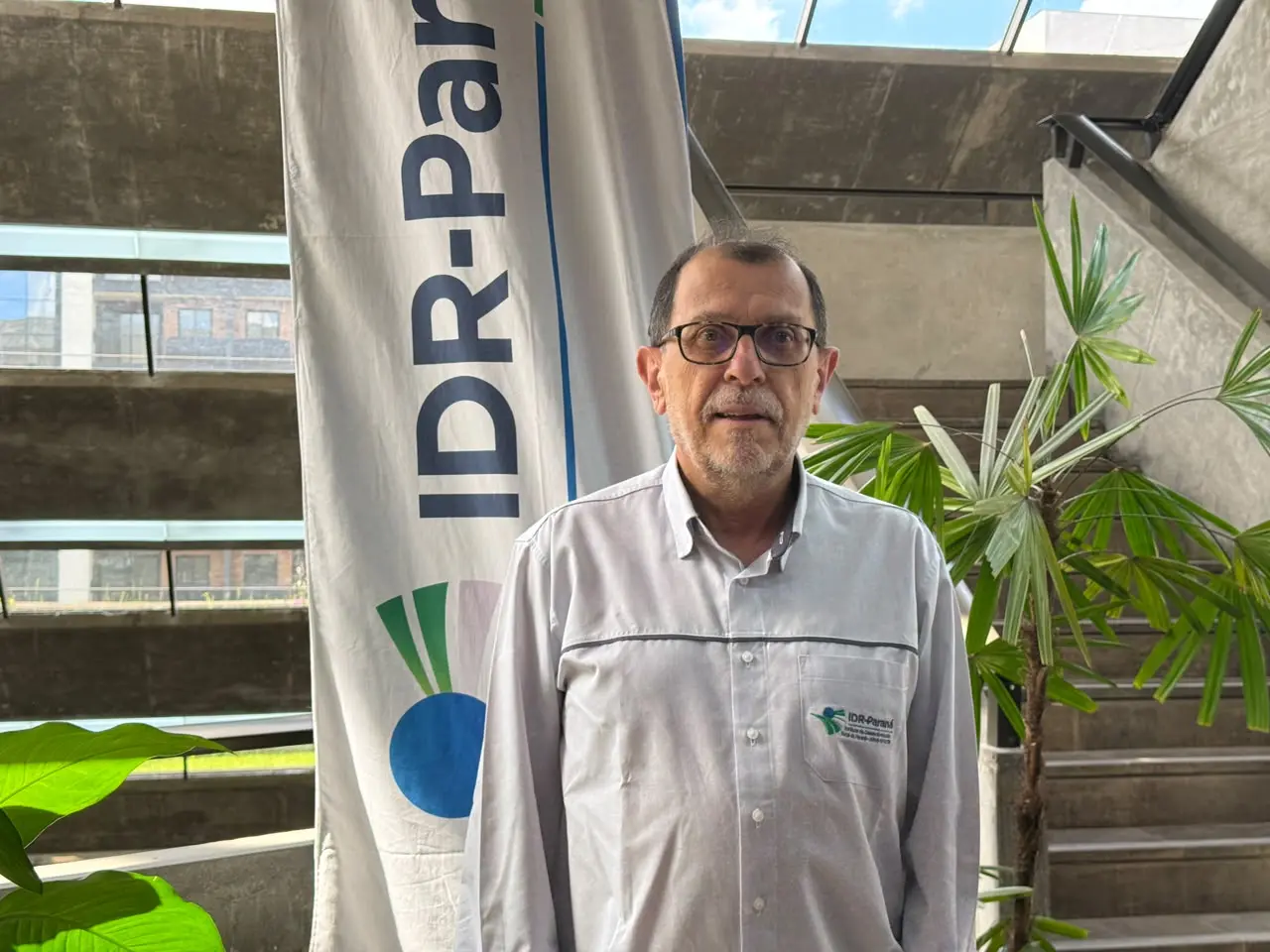
To understand how the program works in practice, who is eligible for the benefit, what the funding limits are, and what equipment is included in the package, the Canal Solar spoke exclusively with Herlon Almeida, coordinator of the Renewable Energy and Rural Connectivity Area at IDR-Paraná.
Check out the interview:
Is there already an estimate of when rural producers will be able to start requesting financing for the acquisition of storage systems?
The possibility of financing for the acquisition of energy storage systems is foreseen in rural credit lines, as well as support for technology within the scope of RenovaPR Energy Security.
The procedures for accessing the funds will depend on the criteria and operationalization of the financing lines with the financial agents.
Which producers will be able to access the financing? Will the benefit be restricted to properties that already have solar energy or biogas, or will it also cover those who wish to install their own generation and batteries in the same project?
Financing for energy storage batteries with a 3 percentage point subsidy on the contracted interest rate can be accessed by all rural producers, regardless of size, and whatever their banking classification: Family Farmer, Medium Producer/PRONAMP, or Business Producer.
And it will work like this: the producer needs to have their own power generation to ensure a reliable supply of batteries even when the power grid fails. If they don't yet have their own generation capacity, it's possible to finance and subsidize it along with the storage system.
Is there a maximum funding limit per producer or property? Does the program establish a minimum amount, repayment term, or grace period?
The battery system and self-generation, within the Program, have a subsidy limit of R$ 500 for solar energy and R$ 2 million for biogas and biomethane.
The financing limit is flexible and depends on the producer's registration classification and the credit limit that the bank establishes for each producer. The grace period depends exclusively on the criteria of the credit line offered by the bank.
What would the interest rate conditions be for these property owners, and what are the technical criteria for project approval?
Interest rates depend on the credit line, which in turn depends on the bank's classification: if a family farmer, between 5% and 6% interest per year; if a medium-sized farmer, up to 9,5%; and if a large producer, up to 10,5% per year.
Project approval depends on technical criteria that are exclusively linked to the actual energy demand of the rural property, which in turn depends on the engine loads required by its installations.
Typically, the electrical engineer responsible for the project selects the priority loads to be protected by batteries, in conjunction with the producer and their historical energy consumption data.
Just to clarify for the producer: with the 3 percentage point subsidy from the State, interest rates for family farmers, which start at 5% to 6%, could fall to 2% to 3% per year? And for medium and large producers, would they fall to 6,5% and 7,5% per year, respectively? Is that correct?
Yes. Exactly.
Has the government determined if any particular rural activity will be prioritized? For example, will poultry, pig, milk, and fish producers, who may suffer significant losses during blackouts, receive any preferential treatment compared to others?
The absolute priority is given to activities related to animal protein, agro-industries, irrigation, and other electricity-dependent sectors, provided they have their own energy generation capacity.
Will the financing cover only the batteries or also the equipment needed to adapt existing solar systems? For example, hybrid inverters, protection panels, management systems, and electrical upgrades.
Everything necessary to guarantee energy security for rural producers. But normally, in addition to batteries, there are hybrid inverters and some adjustment to the number of solar panels, since after all, another piece of equipment is being added that depends on more energy for self-generation.
What steps should a rural producer take to contract the project and access the interest rate discount from RenovaPR?
Prepare a budget based on a technical project developed by one of the 745 integrating companies registered with RenovaPR and coordinate with the financial agent the rural credit line that the producer qualifies for.
After that, go to the municipal office of IDR Paraná where your rural production unit is located. To present this information and join the Program and receive the interest rate subsidy.
all the content of Canal Solar is protected by copyright law, and partial or total reproduction of this site in any medium is expressly prohibited. If you are interested in collaborating or reusing part of our material, please contact us by email: redacao@canalsolar.com.br.

Comments
Comments are moderated before publication.Comments should be respectful and contribute to a healthy debate. Offensive comments may be removed. The opinions expressed here are those of the authors and do not necessarily reflect the views of the author. Canal Solar.