
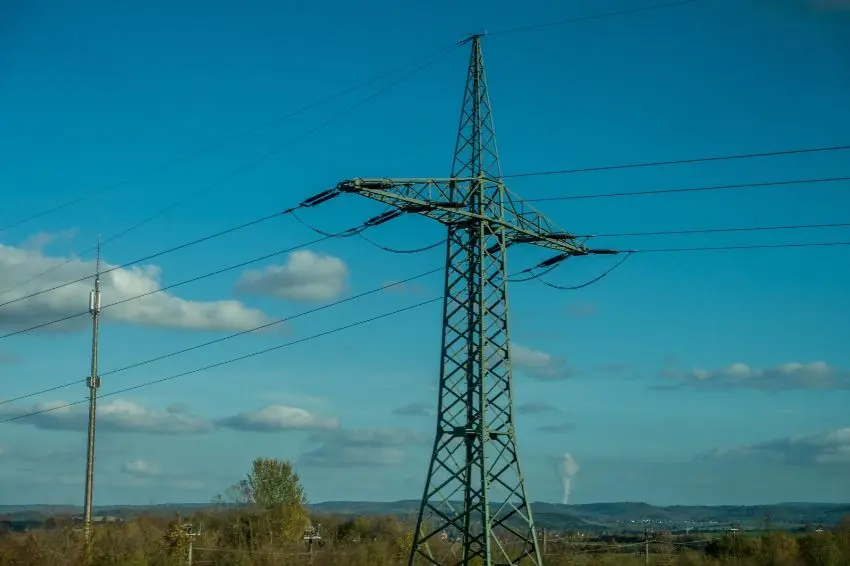
Dcide and TR Soluções developed the ACL Thermometer, a tool that will provide monthly indicators on the economic attractiveness of the ACL (Free Contracting Environment) compared to the ACR (Regulated Contracting Environment).
The initiative aims to provide agents with a benchmark to monitor market conditions and assess how the relative advantage between the two hiring environments is evolving.
The information will be disseminated free of charge and will include four national indices, divided into two categories: the IAML Attractiveness Index (Free Market), in conventional and 50% incentivized modalities, and the Potential Savings in the EPML (Free Market, also for both products).
The results will be published on the Dcide and TR Soluções websites on the 10th of each month, referring to the previous month.
The first edition, referring to October 2026, recorded an IAML of 115,3% for conventional energy and 127,9% for 50% incentivized energy.
The indicators for potential savings stood at 5,7% and 11,6%, respectively. Compared to September, all four indices fell by 1,8 and 2 percentage points in the conventional and incentivized IAML, and by 0,6 percentage points in each modality of the EPML. Over 12 months, the declines were even greater, ranging from 6 to 22 percentage points.
Two indicators, two perspectives.
IAML measures the relationship between the break-even price and the forward price of energy in the free market. The former represents the maximum value that could be paid for energy in the free market so that the costs of the free and regulated environments would be equivalent for the reference consumer.
When the result exceeds 100%, it means that the forward price is below that limit, indicating a relatively more favorable economic condition for the free market.
EPML complements this analysis by expressing the difference between the two prices as a percentage of the total cost of energy in the regulated environment, excluding taxes. In this way, it seeks to quantify how much this advantage represents in relation to the total expenditure of the reference consumer.
The incentivized indicators take into account the specific characteristics of this product, including tariff benefits related to the use of transmission and distribution systems and regulatory changes that affect its attractiveness.
How are the indices calculated?
The methodology combines two information sources. Dcide provides consensus forward curves, constructed from the systematic comparison of future price references used by industry agents for pricing, risk management, and other activities. According to the companies, these values reflect trading conditions observed at the time of calculation, and not forecasts about future prices.
TR Soluções is responsible for tariff and financial modeling, carried out through the SETE system. This tool estimates, for 51 concessionaires considered in the analysis, consumer costs in the regulated market and the respective equilibrium prices for a potential contract in the ACL (Free Contracting Environment). Current and projected tariffs, regulatory components, and characteristics of the profile adopted as a reference are incorporated.
In this first stage, the model considers a medium-voltage consumer from subgroup A4, Blue modality, with a contracted demand of 1.000 kW off-peak and 800 kW peak.
The contracting horizon is 36 months, starting in the sixth month after the base date and extending to the 41st month. The distributors' results are aggregated nationally, weighted by the relative consumption of each one.
Market reference
Both companies emphasize that the indices do not necessarily represent the situation of each consumer, nor do they guarantee savings in the event of a switch.
Factors such as load profile, specific tariff conditions, seasonality, profit margins, credit risk, and representation costs can alter the actual outcome of a contract.
The ACL Thermometer was designed to serve as a benchmark for current conditions, that is, it allows one to observe whether the free market is becoming more or less competitive in relation to the regulated market, but it does not replace individualized studies.
The proposal also foresees expanding the range of indicators in the future to include other consumption profiles, including low-voltage units, in line with the gradual opening of the market.
all the content of Canal Solar is protected by copyright law, and partial or total reproduction of this site in any medium is expressly prohibited. If you are interested in collaborating or reusing part of our material, please contact us by email: redacao@canalsolar.com.br.



Comments
Comments are moderated before publication.Comments should be respectful and contribute to a healthy debate. Offensive comments may be removed. The opinions expressed here are those of the authors and do not necessarily reflect the views of the author. Canal Solar.