
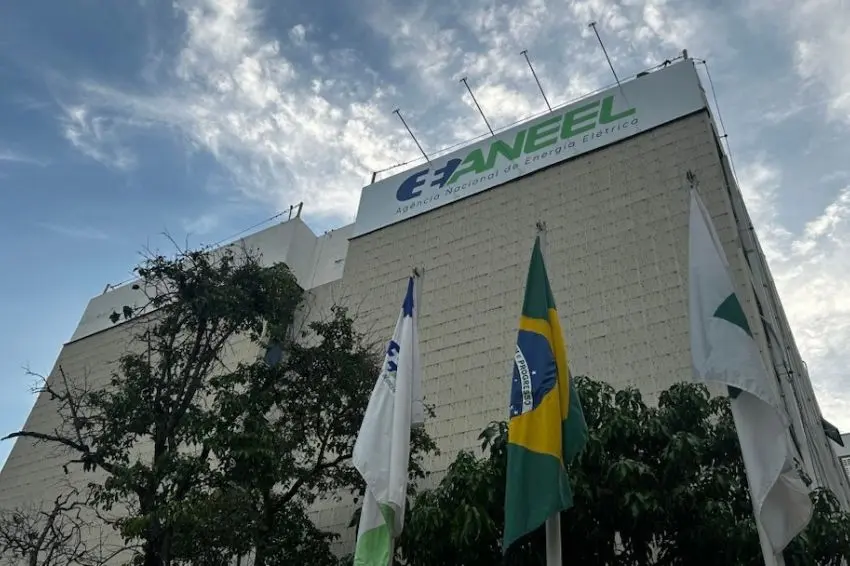
A ANEEL (National Electric Energy Agency) will analyze, this Tuesday (17), a proposal to open a public consultation to discuss changes in the rules for accounting for surplus energy produced by DG systems.
The proposal stipulates that the individual credits of consumers participating in the SCEE (Electric Energy Compensation System) will be preserved.
The measure is included in Joint Technical Note No. 23/2026, prepared by the Agency's technical areas, which recommends opening a public consultation to discuss changes to PRORET (Rules for the Commercialization of Electricity and Tariff Regulation Procedures).
The goal is to correct distortions caused by the growth of distributed generation, especially during periods when the energy produced by DG systems exceeds the consumption of customers served by distributors in the regulated market.
Currently, when this happens, the CCEE (Chamber of Electric Energy Commercialization) replaces the negative values found in the distributors' load with zero, ceasing to account for part of the surplus energy.
According to ANEELThis energy ends up being indirectly appropriated by other agents in the SIN (National Interconnected System), through the reduction of losses accounted for in the Basic Network, causing distortions in the energy balance of distributors and in other regulatory mechanisms.
To solve the problem, the technical areas propose that the surplus of distributed generation be recognized in the energy balance of the distributors and settled in the MCP (Short-Term Market), at the PLD (Price of Settlement of Differences).
One of the main points of the proposal is the preservation of the rights of consumers who own distributed generation systems.
According to the Technical Note, the Federal Prosecutor's Office attached to ANEEL It concluded that there is no legal impediment to the accounting and settlement of surplus generation in the short-term market, provided that the individual credits of the generating consumers are maintained.
The opinion also establishes that surplus energy cannot be characterized as self-generation by the distributors, who will continue to act exclusively as representatives of the regulated market and the SCEE (Brazilian Electricity Regulatory System).
Furthermore, any economic results obtained from the sale of this energy must respect the neutrality of the distributors and be reinvested for the benefit of consumers or to balance the tariffs.
According to the Attorney General's Office, valuing the surplus of distributed generation can also contribute to reducing the difference between the value of the energy injected into the grid and the cost of its subsequent compensation in the SCEE (Brazilian Electricity Regulatory System), thus promoting more moderate tariffs.
Changes could begin in January 2027.
The proposal presented by the technical areas foresees the implementation of the changes in two stages. Initially, the ANEEL It may authorize, on a provisional basis, the accounting of surplus distributed generation in the energy balance of distributors and the correction of the loss factor of the Basic Network, with effects from the accounting period of January 2027.
Subsequently, after the public consultation, the Agency may expand the regulatory treatment to other mechanisms in the electricity sector, including the allocation of charges, contractual modulation, the treatment of contractual exposures, and parameters used in tariff processes.
According to the technical note, the need to revise the rules is likely to increase in the coming years, given the expansion of distributed generation and the opening of the free market to low-voltage consumers. If the board approves the opening of the public consultation at Tuesday's meeting, the public will have 45 days to submit contributions on the proposed changes.
all the content of Canal Solar is protected by copyright law, and partial or total reproduction of this site in any medium is expressly prohibited. If you are interested in collaborating or reusing part of our material, please contact us by email: redacao@canalsolar.com.br.
Comments
Comments are moderated before publication.Comments should be respectful and contribute to a healthy debate. Offensive comments may be removed. The opinions expressed here are those of the authors and do not necessarily reflect the views of the author. Canal Solar.