
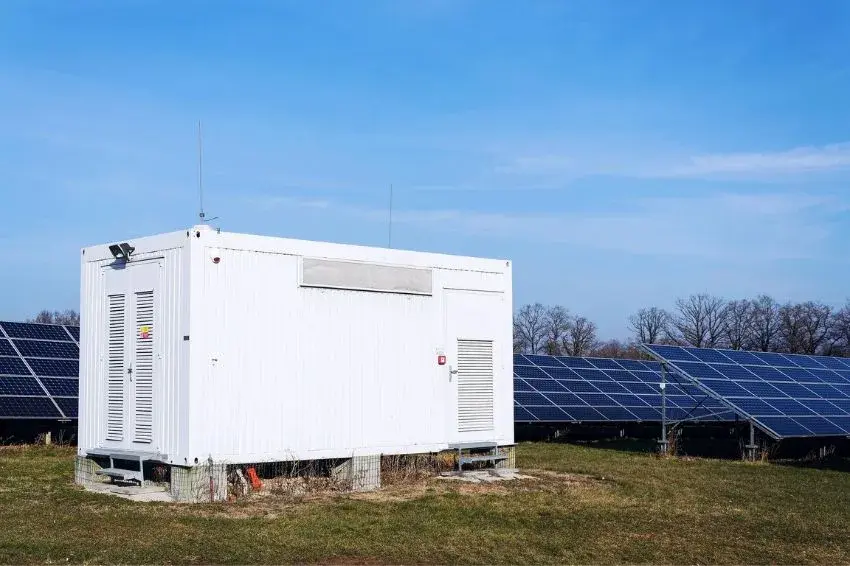
The Brazilian electricity sector is undergoing a historic transition. After more than a decade of accelerated growth in distributed photovoltaic generation, a new technological stage is beginning to gain global prominence: hybrid systems with batteries, EMS (Energy Management Systems), dynamic export control, and "zero grid" operation.
These technologies represent a profound shift in the traditional energy paradigm. For the first time, consumers will be able to:
- To store energy;
- Dynamically control your interaction with the network;
- Reduce exports;
- Shift consumption;
- To operate partially autonomously;
- To mitigate systemic impacts locally.
However, just when distributed storage is starting to become economically viable in Brazil, reports are multiplying of:
- Systematic denials of access;
- Making hybrid projects practically unfeasible;
- Technical requirements that are not transparent;
- Requests for "approvals" without a clearly defined public procedure.
The phenomenon is noteworthy because many of these systems:
- They have batteries;
- They use EMS;
- They operate at "zero export";
- They do not inject energy into the grid;
- They use internationally certified equipment;
- They meet recognized technical standards.
Nevertheless, they are being rejected or rendered operationally unfeasible. The inevitable question that arises is: is a silent blockade being created, in practice, against the distributed storage market in Brazil?
Reversing the flow and changing the regulatory paradigm
Historically, electrical distribution systems were designed to operate in unidirectional flow:
- From the centralized generation;
- For end consumers.
The accelerated expansion of distributed generation has altered this logic. In several regions of the country, scenarios have begun to emerge where:
- Reverse export;
- Voltage increase;
- Changes to the feeder loading;
- Flux reversal in transformers.
From a technical standpoint, this is a legitimate concern. The Normative Resolution itself ANEEL Decree No. 1000/2021 recognizes the need for systemic impact studies for the connection of distributed generation.
However, the regulator itself also began to explicitly acknowledge:
- Systems without export;
- Control of injected power;
- Mechanisms of dynamic limitation;
- Operation “zero grid”.
In other words, the Brazilian regulatory framework already allows modern systems to operate without causing the impacts traditionally associated with conventional distributed generation. This point is crucial.
CPFL itself officially recognizes zero-grid systems.
The discussion becomes even more relevant when analyzing the distributor's own technical documentation. GED DIST-19397-2025 explicitly acknowledges:
- Hybrid systems;
- Storage systems;
- Export control;
- Energy arbitrage;
- Island operation;
- Zero-grid functionalities.
The standard explicitly states that "such arrangements must not allow the injection of active power into the distributor's electrical grid; that is, they must supply the local load and have zero-grid functionality." This passage has enormous technical and regulatory relevance.
He demonstrates that:
- The technology is recognized;
- The operational concept exists;
- The distributor formally acknowledges the functionality.
Moreover, GED states: "hybrid systems have become an excellent solution for integrating MMGDs" and adds: "mainly with the aim of avoiding flow reversal."
This is perhaps one of the most important points in the entire discussion. The distributor's own technical standard officially recognizes that batteries, EMS, export control, and hybrid systems can function precisely as mitigating mechanisms for the main basis currently used for denying access: flow reversal.
The technical paradox
Here arises an extremely relevant regulatory paradox. If:
- The problem is the flow reversal;
- And batteries can mitigate it;
- Zero-grid systems do not export active power.
Why are these systems becoming progressively unviable?
From a technical standpoint, a modern hybrid system behaves profoundly differently from a conventional photovoltaic power plant. While traditional systems:
- They generate passively;
- They export surpluses automatically;
- They possess low operational intelligence.
Hybrid systems:
- They monitor flow instantly;
- They adjust generation in real time;
- They control exports;
- They charge batteries;
- They reduce injections;
- They respond dynamically to the local load.
In many cases, the battery ends up absorbing the surplus energy that would previously have been exported to the grid.
In other words, distributed storage can act not as an aggravating factor, but as a mitigating solution to the systemic impacts of distributed generation. And this is recognized by CPFL's own GED (Distributed Generation).
CPFL's Manual 150217/2025 and the modeling of flow reversal studies.
Perhaps the most sensitive point in the discussion lies in the analysis methodology currently used. CPFL's "Instruction Manual for Analyzing Estimated and Connection Budgets for Micro and Mini Distributed Generation Systems" describes this in detail:
- Power flow studies;
- Load modeling;
- Modeling the generation curves;
- The criteria for analyzing flow reversal.
The document makes it clear that the studies use:
- Typical curves;
- Statistical averages;
- Presumed generation;
- Standardized consumption and generation profiles.
The methodology considers:
- Average curves;
- Historical profiles;
- Statistical modeling;
- Aggregate consumer behavior.
This is perfectly normal in electrical engineering. The problem arises when this same methodology is used to evaluate intelligent hybrid systems with dynamic behavior.
Intelligent systems being analyzed as passive generation.
The manual itself barely goes into detail:
- Dynamic EMS modeling;
- Instant export control;
- Intelligent battery dispatch;
- Transient behavior of SAEs;
- Operational logic of "zero export".
In practice, this raises an extremely relevant technical hypothesis: the studies currently being used may still be modeling modern hybrid systems as if they were conventional passive photovoltaic generation.
This distinction is enormous. Because a system with EMS, battery, millisecond response, dynamic control, and instantaneous export limitation does not behave in the same way as a conventional photovoltaic system.
This is perhaps the main technical discussion in the Brazilian distributed electricity sector today: the requirement for approvals without a clear public procedure. Another critical point is the increasing number of reports of requirements related to the approval of:
- EMS;
- Hybrid inverters;
- “Zero export” systems;
- Export controllers.
In principle, demanding technical safety is legitimate. However, the problem arises when:
- There is no transparent public ritual;
- There is no consolidated public list;
- There are no officially defined laboratories;
- There are no widely publicized criteria;
- There are no clear deadlines for the analysis.
In practice, this creates a situation that is potentially impossible to fulfill. And here another extremely relevant aspect emerges: GED DIST-19397-2025 itself apparently does not establish a formal system of mandatory prior approval in the manner operationally reported by the market.
The document primarily requires:
- Functional verification;
- Essays;
- Manufacturer's technical documentation.
GED establishes “tests or supplier declarations that prove the system's operation” and “tests or supplier declarations that prove the system's operation if it operates in a way that limits injected power.” This suggests that:
- The normative logic is centered on technical verification;
- Not necessarily in discretionary approvals without clear public operationalization.
GED 15303 and the issue of microgeneration
Another relevant point is that GED 15303 itself recognizes the regulatory limits defined by ANEEL for distributed microgeneration. In other words:
- Microgeneration continues to be recognized up to 75 kW;
- There is no explicit regulatory provision for the widespread blocking of hybrid systems;
- There is no generalized limitation at levels close to 7,5 kW in the higher regulatory framework.
This makes the debate about possible indirect operational barriers even more relevant. The risk of an indirect technological blockade. When:
- A ANEEL recognizes zero grid;
- The distributor recognizes hybrid systems;
- GEDs recognize batteries as mitigating reverse flow; but simultaneously:
- Projects are no longer being approved;
- Requirements become virtually impossible;
- Criteria cease to be transparent;
- The market is losing predictability.
This creates a scenario that can potentially be characterized as an indirect technological blockade. And this has profound impacts.
The economic impact of the storage freeze.
The distributed storage market represents:
- Modernization of the electrical infrastructure;
- Increased resilience;
- Support during blackouts;
- Peak mitigation;
- Reduced demand;
- Greater systemic stability;
- National technological advancement.
Furthermore, it is a sector that is intensive in:
- Engineering;
- Software;
- Automation;
- Power electronics;
- Technical qualification.
Its practical infeasibility may:
- To discourage investment;
- Reduce competitiveness;
- Eliminate jobs;
- Delaying innovation;
- Delaying Brazil's energy transition.
The apparent divergence between standard and operational practice.
A combined reading of REN 1000, PRODIST, CPFL's GEDs, and Manual 150217/2025 suggests a possible divergence between the normative recognition of the technology and the practical operationalization of the connection process.
The regulations recognize hybrids, "zero grid" systems, energy arbitrage, reverse flow mitigation, and EMS. However, the market reports widespread rejections, regulatory uncertainty, lack of predictability, and opaque criteria.
This scenario generates increasing litigation, market contraction, legal uncertainty, and a deterioration of regulatory confidence.
The sector needs clarity, not a lack of rules. The debate should not be conducted as a matter of "liberating everything" or "eliminating technical criteria."
The sector needs objective criteria, methodological transparency, predictability, auditable procedures, and alignment between standards and operational practice.
If "zero export" systems require specific validation, then the market needs to know the criteria, the required tests, the accepted laboratories, the approved equipment, the processes, and the deadlines. Without this, an environment incompatible with regulatory safety is created.
Conclusion
The debate on hybrid systems and distributed storage has ceased to be merely a technical discussion. It has become a strategic discussion about innovation, energy decentralization, modernization of the electricity sector, technological competitiveness, and the future of Brazil's energy transition.
CPFL's own technical documentation demonstrates that:
- The technology is recognized;
- The concept of "zero grid" exists;
- Batteries are accepted as mitigating factors for flow reversal;
- Hybrid systems have regulatory support.
Therefore, the main question no longer seems to be "whether the technology can exist." The central discussion becomes: how to prevent technical requirements lacking transparency, clear public procedures, or methodological adaptation from functioning, in practice, as silent mechanisms to block the distributed storage market in Brazil.
The opinions and information expressed are the sole responsibility of the author and do not necessarily represent the official position of the author. Canal Solar.

Comments (1)
Comments are moderated before publication.Comments should be respectful and contribute to a healthy debate. Offensive comments may be removed. The opinions expressed here are those of the authors and do not necessarily reflect the views of the author. Canal Solar.
It's Brazil being Brazil once again. The face of the corrupt government that misgoverns this nation.